
Thailand and Cambodia Turn to UN Mechanism to Resolve Maritime Oil and Gas Dispute
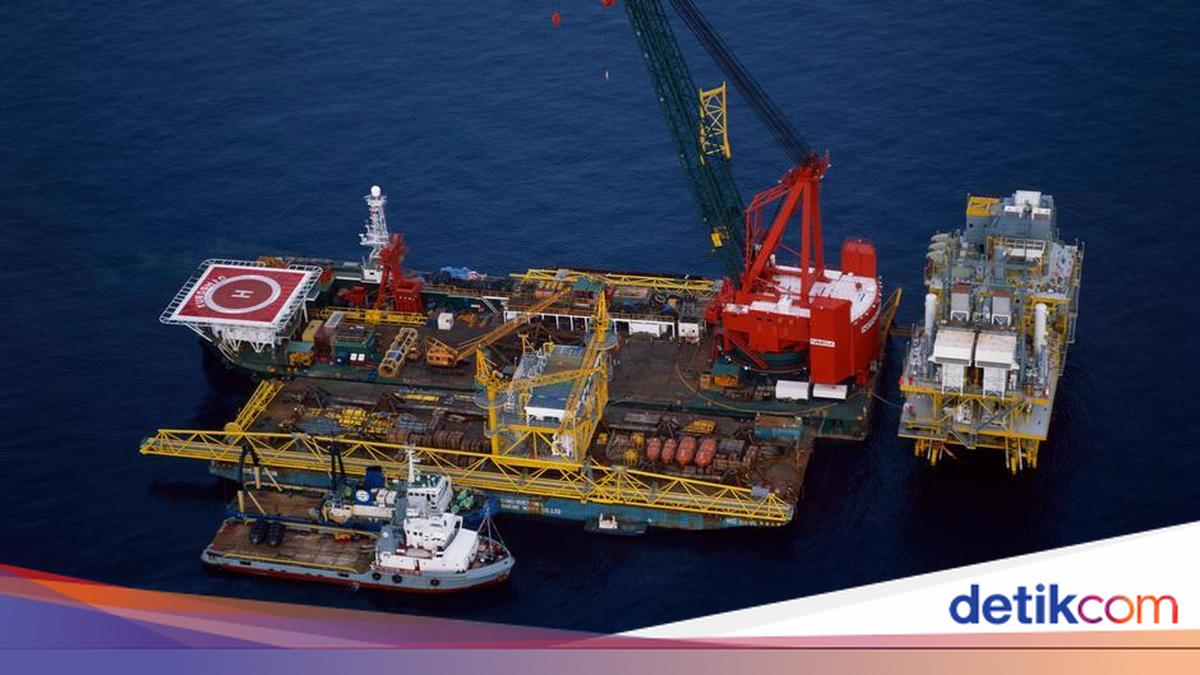
Cambodia and Thailand are attempting to utilise a rarely used United Nations (UN) mechanism to resolve a maritime boundary dispute that has persisted for decades. If successful, this move could potentially unlock access to oil and gas reserves worth hundreds of billions of US dollars.
In early June 2026, Phnom Penh activated the ‘compulsory conciliation’ mechanism under the UN Convention on the Law of the Sea (UNCLOS). Both Cambodia and Thailand are signatories to this convention.
The move essentially invites Thailand to participate in a UN-facilitated conciliation process regarding overlapping territorial claims covering approximately 26,000 square kilometres in the Gulf of Thailand.
This submission follows Thailand’s withdrawal in May 2026 from a 2001 Memorandum of Understanding (MoU) with Cambodia, which previously governed dispute resolution and the joint development of oil and gas fields in the region.
Thailand’s decision occurred amidst a period of heightened bilateral relations, following land border disputes that triggered bloody clashes in 2025.
“This compulsory conciliation process could serve as a pathway to help Cambodia and Thailand reach an agreement regarding overlapping maritime claims,” said Matthew Wheeler, Senior Southeast Asia Analyst at the International Crisis Group.
In this process, Cambodia and Thailand will each appoint two independent experts to serve on an ad hoc commission, a mediation team specifically formed to handle this dispute.
The commission is tasked with examining the facts and the legal positions of both nations before drafting non-binding recommendations, which will then be submitted to the UN Secretary-General.
Both nations have interests in the energy sector
According to estimates from the Thai and Cambodian governments, the disputed area in the Gulf of Thailand is believed to hold oil and gas reserves worth approximately $300 billion, including around 11 trillion cubic feet of natural gas.
“Both countries stand to benefit greatly. Declining oil production in recent years has made Thailand increasingly dependent on natural gas imports,” said William Jones, a lecturer at Mahidol University, Thailand.
Meanwhile, Cambodia is entirely dependent on oil and gas imports. As it does not yet possess its own refineries, production from the Gulf of Thailand would likely need to be sent to Thailand for processing, at least until Cambodia has the capacity to process it independently.
“Amid high energy prices, significant dependency, and additional uncertainty from the Middle East, the Gulf of Thailand could serve as a vital buffer for consumption and a significant source of national revenue,” Jones added.
However, the path to an agreement between the two nations is not easy. The impact of last year’s border clashes is still felt, with several armed incidents resulting in the deaths of dozens of soldiers and civilians.
Although there has been no gunfire in recent months, tensions between the two parties remain palpable and characterised by mistrust.
Furthermore, the recommendations from the ad hoc commission are non-binding, meaning implementation depends entirely on the willingness of both nations.
How does the UN mechanism work technically?
The independent experts appointed by both countries have until the end of July 2026 to select a commission chair. Following this, the commission will have 12 months to prepare a report containing the non-binding recommendations.
Bangkok was initially reluctant to involve itself. Previous losses in territorial disputes with Cambodia in international forums have made Thailand inclined to avoid UN mechanisms.
“However, once Cambodia officially initiated this process, Thailand essentially had two choices: to not participate and look bad, while allowing the UN Secretary-General to appoint a conciliator for them, or to participate in this process while also being aware of the risks involved,” said Jones.
The fact that Thailand has ultimately chosen to participate is a “positive signal,” said Phattharaphong Saengkrai, an international law lecturer at Thammasat University, Thailand.
He added that because the four conciliators will eventually hail from Denmark, France, Germany, and South Africa, their input could provide new perspectives.
“We need a way out, and that could come from either side. However, with these five experienced international lawyers and diplomats, there is a possibility they can offer ideas that are acceptable to both countries,” he told DW.
International Crisis Group analyst Matthew Wheeler noted that the involvement of foreign lawyers and diplomats could provide Cambodia with the “political space” to retract some of its claims, which are considered overly broad in the Gulf of Thailand, potentially paving the way for a fairer agreement.
Since the conciliation provisions of UNCLOS were implemented in 1994, this mechanism has only been used once, by Timor-Leste against Australia in 2016. Within two years, the two nations eventually reached an agreement.
Saengkrai noted that the initial conditions between Timor-Leste and Australia were even more difficult than the current situation between Thailand and Cambodia, particularly after revelations of Australian spying during previous negotiations.
Nevertheless, an agreement was reached, partly due to the trust-building efforts of the conciliators.
With figures who were involved in that process now present, Saengkrai believes that such diplomatic experience could play a role in resolving the current issue.
Political challenges remain a deciding factor
However, with relations between the two nations at their lowest point in recent years, the task for the UNCLOS conciliators will not be easy.
“The political situation is clearly not conducive. There is much resentment and dislike on the Thai side, and I believe the same exists in Cambodia,” said Jones.
Source: jawawa.id (https://jawawa.id/newsitem/thailand-and-cambodia-turn-to-un-mechanism-to-resolve-maritime-oil-and-gas-dispute-1782806011)
Originally published by detikcom (https://news.detik.com/dw/d-8553676/thailand-dan-kamboja-bawa-sengketa-migas-lewat-mekanisme-pbb), translated from Indonesian