
Thailand Allows Myanmar Refugees to Work, but What Is the Reality?
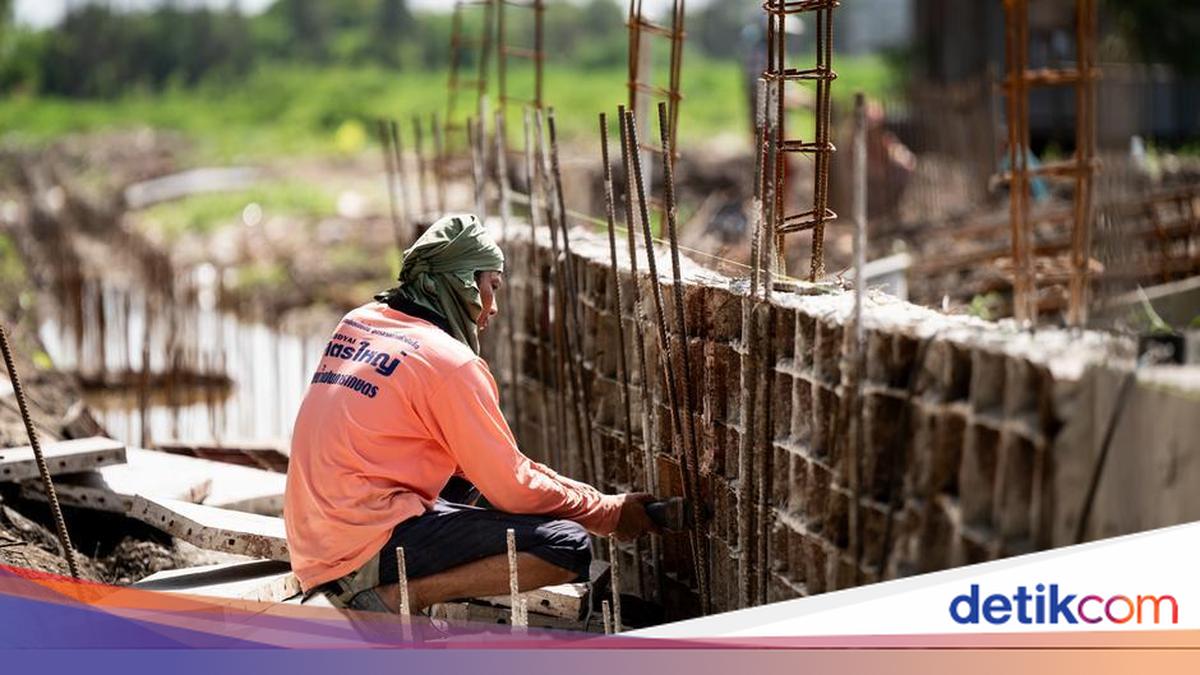
At first glance, Ray Boe looks no different from the tens of thousands of migrant workers employed on construction projects in Bangkok.
But the 31-year-old came from one of nine Myanmar refugee camps in Thailand. Stretching along the Thai-Myanmar border, the camps accommodate more than 100,000 people. Some have lived there since the 1980s, when waves of refugees began arriving amid the protracted conflict in Myanmar.
Until October last year, the Thai government prohibited refugees from leaving the camps to work. As a result, many relied on humanitarian aid from international donors to meet their everyday needs.
The situation changed in October 2025. Cuts to foreign aid, particularly from the United States, forced refugee camps to reduce food distributions and healthcare services.
At the same time, border conflict between Thailand and Cambodia led hundreds of thousands of Cambodian migrant workers to return home, creating a significant labour shortage in Thailand.
Myanmar refugees allowed to work outside camps
To address the labour shortage, the Thai government reversed a policy that had been in place for decades. Myanmar refugees began receiving permits to work outside the camps so they could provide for themselves.
Ray Boe was among the 6,800 camp refugees said to have entered the labour market in the programme’s first year.
“After aid cuts by USAID and other organisations, there was no longer regular support for everyday necessities such as rice and other food. Healthcare services in the camps had also been greatly reduced,” he said.
The situation forced him and his parents to borrow money from neighbours and cut back on their already limited food rations.
Since last month, he has worked as a construction labourer on a 12-storey apartment project in central Bangkok. He earns 400 baht (about Rp213,000) a day.
“This income will help us meet our food and other basic needs, as well as pay for my parents’ healthcare,” Ray Boe said.
“Compared with our previous life in the camp, this will be a major change. I can earn my own income and help my family without continually relying on other people’s assistance,” he told DW.
Work programme still faces obstacles
The programme allows refugees to work in 43 of Thailand’s 76 provinces and in a range of sectors not reserved specifically for Thai nationals.
Thailand’s Foreign Ministry said the government had expanded skills training in refugee camps to better prepare refugees for the labour market.
“We hope this policy will broaden opportunities and empower refugees to develop their potential while contributing to Thailand’s social and economic development,” ministry spokesperson Praporn Waenluang said.
Workers’ and refugees’ rights groups have welcomed the policy.
“I have met many refugees who have left the camps to work. They are very happy because they can earn much more than they could in the camps,” said Siwawong Sooktawee of the International Detention Coalition.
“It is positive because they feel they can be self-reliant, support themselves and no longer depend on humanitarian aid,” he said.
Nevertheless, he said the programme’s implementation remained far from ideal.
Some refugees say they have not received clear employment contracts. They have also encountered arduous work and working environments, and wages below those promised. Observers say there is no clear, easily accessible complaints mechanism.
“Many refugees travel back and forth between the camps and their workplaces. Some families have to raise money or borrow so that a family member can return from the worksite,” said K’nyaw Paw, secretary-general of the Karen Women’s Organization, a non-profit that supports ethnic Karen communities in the camps.
Financial burdens facing refugees
Siwawong and K’nyaw Paw said some refugees were charged various costs from the moment they were recruited. Medical examinations, government work permits and transport to workplaces are often deducted directly from their wages.
As a result, many refugees begin working in debt without having known this would happen.
Akwah, a father of two, had a similar experience. He left the camp in November 2025 with 20 other refugees to work on a sugar-cane plantation, having been promised 250 baht (about Rp133,000) a day.
But on arrival, he was asked to cut down eucalyptus trees, which he considered far more arduous and dangerous, for only 200 baht (about Rp106,000) a day. The workers also had to sleep outdoors without electricity and rely on a nearby pond for water.
“We complained to the business owner, but he didn’t care. He said, ‘Keep working because you’re already here.’ But we told him we couldn’t do it,” Akwah said. He and his co-workers eventually left the job after three months.
DW contacted Thailand’s foreign, labour and interior ministries about these issues, but they had not responded by the time the article was published.
Experts say the programme needs substantial improvement
Siwawong and K’nyaw Paw urged the Thai government to ensure contracts are clear and detailed, and translated into Burmese, Karen or Karenni, the languages spoken by camp residents. They also called for an accessible complaints mechanism to report and resolve grievances.
They further urged the government to expand the programme geographically and strengthen oversight of unscrupulous labour brokers.
Experts say organisations supporting refugees are working with the government to address the programme’s shortcomings. They are optimistic that it will improve over time and attract more refugees.
Despite the problems, even refugees who have had bad experiences still want to return to work.
“I had a bad experience, but I still want to try again because food in the camp is a problem,” said Mu Dah Hsit, who had to stop working after falling ill when her employer refused to cover the health insurance that was supposed to be guaranteed under the programme.
“I don’t have a mother, my father is sick, and I still have to support my younger siblings. So I have to go to work. Otherwise, we can’t survive.”
Source: jawawa.id (https://jawawa.id/newsitem/thailand-allows-myanmar-refugees-to-work-but-what-is-the-reality-1792583587)
Originally published by detikcom (https://news.detik.com/dw/d-8717771/thailand-izinkan-pengungsi-myanmar-bekerja-seperti-apa-realitanya), translated from Indonesian