
Thailand Abandoned by Japanese Automakers: The State of Its Labour Market
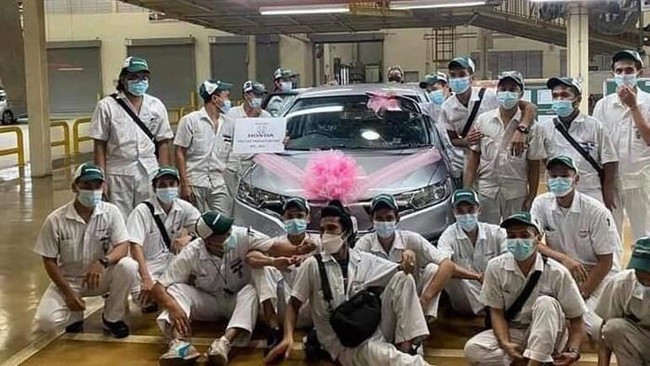
Thailand, long known as a hub for Japanese automotive production, is now confronting new challenges. Several major players are scaling back activities or even leaving the country due to the massive penetration of Chinese electric vehicles in recent years. For instance, Suzuki’s factory has departed since 2025. Previously, Subaru had also announced the cessation of its factory operations in Thailand. What is the state of Thailand’s automotive labour market? One key issue in focus is the use of robots and their impact on the workforce in Thailand. The introduction of robots and automation technology into the automotive industry is often linked to layoffs. However, not all companies view it as a threat to workers. AutoAlliance Thailand (AAT), a joint venture assembling vehicles between Ford Motor Company and Mazda Motor Corporation, is taking a different approach. The company emphasises that technology is used to support workers, not replace them. This transformation is occurring alongside high production targets and demands for efficiency. AAT, one of Thailand’s major vehicle producers, aims to manufacture up to 150,000 vehicles in a single year. In its operations, the company claims to maintain transparent communication with employees and labour unions. Production targets are shared in detail so that all parties understand the company’s direction. “When robots or co-bots are introduced, we explain clearly to employees that they will be moved to jobs with greater responsibilities,” said AAT Vice President (Human Resources) Satirayuth ‘Max’ Sangsuan, as quoted from the International Labour Organization (ILO) podcast. He stressed that technology is never used as a reason for layoffs. “We never say that with the arrival of robots, employees will be dismissed. Instead, they will take on more important roles,” he said. According to him, employees’ experience is the company’s primary asset in maintaining production quality. “We need experienced workers to produce the best vehicles for customers worldwide,” he explained. Additionally, the company has changed its approach to industrial relations. Negotiations are no longer seen as conflicts but as constructive discussions. “We have changed the mindset from negotiation to constructive discussion. That way, both parties can reach mutually beneficial solutions,” said Max. This approach is seen as capable of creating stability and boosting company productivity. Healthy relations between management and workers form the primary foundation. In a high-pressure industry environment, this strategy serves as an example of how technology and labour can coexist. “We believe that a company cannot succeed without its employees. Everyone is an important part of AAT’s success,” said Max.
Source: jawawa.id (https://jawawa.id/newsitem/thailand-abandoned-by-japanese-automakers-the-state-of-its-labour-market-1776437460)
Originally published by CNBC Indonesia (https://www.cnbcindonesia.com/news/20260417162106-4-727723/thailand-ditinggal-mobil-jepang-begini-kondisi-ketenagakerjaannya), translated from Indonesian