
Thai-Malaysia Seafood Trade Dispute Hits Shrimp and Seabass Exports
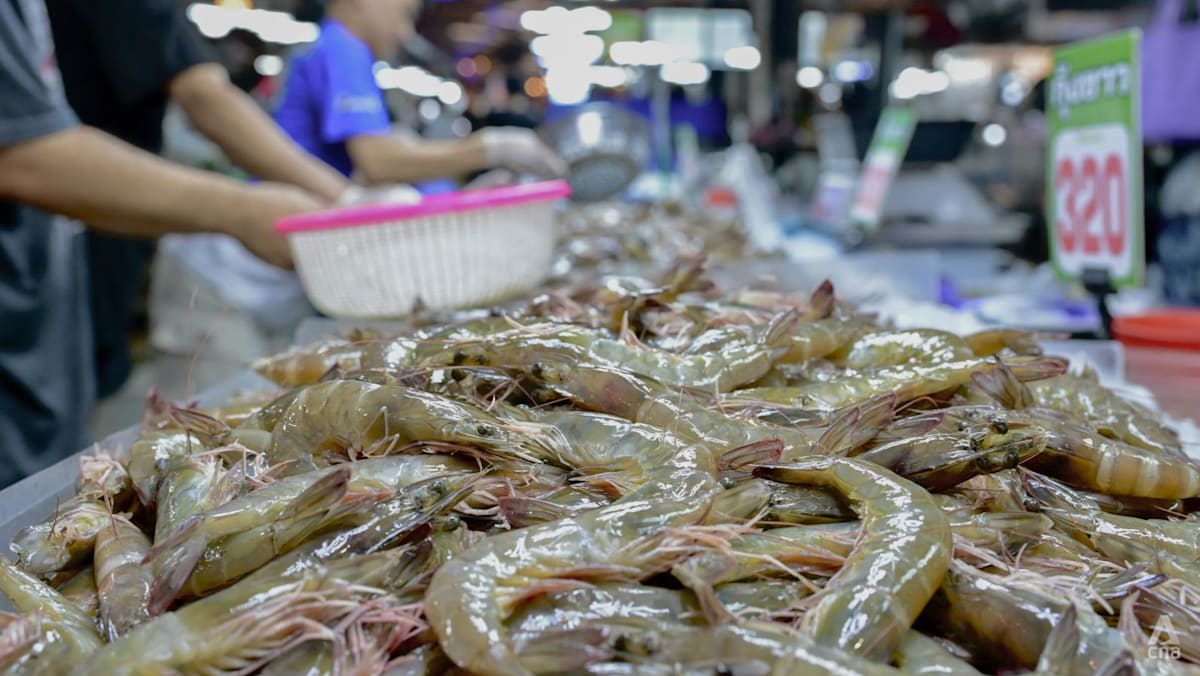
‘Protectionist instincts’: Seafood traders caught in Thai-Malaysia row over shrimp, seabass exports
A seafood trade dispute between Thailand and Malaysia has created uncertainty for Thai farmers and Malaysian sellers.
BANGKOK/KUALA LUMPUR: Shrimp exporters and farmers in southern Thailand are grappling with uncertainty as Malaysian customers postpone or suspend orders in the wake of a seafood spat between the two countries that began last month.
Some seafood sellers in Malaysia have, meanwhile, seen business slow down as the supply of Thai prawns and shrimp, which are typically cheaper than local shrimp, is halted.
The spat began last month, when Bangkok restricted the import of Malaysian sea bass after concerns about chemical residues in the fish.
Malaysia responded by introducing a temporary ban on Jun 1 on the import of five varieties of prawns and shrimp from Thailand – brown tiger, banana and giant tiger prawns as well as whiteleg and blue shrimp – over food-safety controls.
Its Ministry of Agriculture and Food Security also said last month that it would require an extra Certificate of Analysis for Thai sea bass.
With Thai Agriculture and Cooperatives Minister Suriya Juangroongruangkit scheduled to visit Malaysia on Wednesday (Jun 17) for policy-level talks aimed at ending the dispute, industry players in both countries said they are hopeful.
The dispute had earlier escalated, with Thai Prime Minister Anutin Charnvirakul on Jun 2 ordering urgent talks with Malaysia to resolve an issue threatening to hurt Thai farmer livelihoods.
Thai Deputy Prime Minister and Commerce Minister Suphajee Suthumpun then said on Jun 10 that Thailand would consider raising the matter at a regional level or at the World Trade Organization if bilateral negotiations do not produce a resolution.
But ahead of Suriya’s visit, Malaysian Deputy Agriculture and Food Security Minister Chan Foong Hin struck an optimistic tone, telling CNA on Jun 12 he appreciates the “readiness expressed by the Thai government to engage in discussions on this matter”.
“Engagement between the relevant agencies of both countries is ongoing, and we are encouraged by the positive developments in recent days,” he said.
Analysts told CNA that while Thailand’s aquaculture sector is advanced, it needs to innovate and adapt to better shield against such market access shocks.
And while the current dispute may eventually be resolved, there is a larger need for Southeast Asian governments to think about collective food supply resilience instead of defaulting to protectionist measures whenever tensions arise, the analysts added.
“The suspension is a significant concern for Thailand’s shrimp industry,” Ekapoj Yodpinit, president of Thai Shrimp Association, told CNA.
EXPORT DISRUPTION COULD AFFECT LOCAL PRICES
The current saga with its neighbour has piled new pressure on a Thai industry already struggling with rising costs, disease risks and regional competition.
Malaysia imports an estimated 6,000 to 8,000 tonnes of Thai shrimp annually, around 5 per cent of Thailand’s total shrimp exports.
“The most immediate impact has been uncertainty surrounding orders,” said Ploypapus Wiriyathadasak, who is involved in the procurement, grading and export of shrimp in Songkhla province. Malaysia is a regular export market due to its proximity and steady demand from across the border.
“As a result, we have had to adjust our production and shipment plans and look for alternative markets to absorb volumes that would normally be exported to Malaysia.”
With some customers postponing or suspending orders while waiting for greater clarity on the situation, storage and inventory costs have gone up, she said.
Replacing Malaysian buyers was not simple because other destinations have different product specifications, regulations and buyer requirements.
“Our biggest concern is the potential loss of customers and market share. If buyers switch to suppliers from other countries, it may be difficult to win them back,” she said.
The impact of the shrimp restrictions has yet to be fully felt in markets further north in Thailand.
At Thalay Thai Market outside Bangkok, the seafood trade looked routine on a recent weekday morning. Sellers arranged fresh fish, crabs, river prawns and shrimp over beds of ice, as they waited for customers.
But some of them are watching prices nervously. If shrimp that would normally go to Malaysia is redirected into Thailand’s domestic market, they say the increase in supply could put pressure on prices, impacting their profits.
“If shrimp that can no longer be exported to Malaysia is redirected to the domestic market, shrimp prices will certainly decline. There is little we can do about it,” said Rungnapha Sophasri, a seafood seller at the market, in Samut Sakhon province.
But Ekapoj from the Thai shrimp association said any price reduction is unlikely to be dramatic or sustained, as storage, processing and distribution costs remain significant, and efforts are already underway to export to alternative markets.
If the suspension continues for several weeks or months, he said he was concerned about oversupply in the domestic market, downward pressure on farm-gate prices and the potential loss of export customers.
Any disruption affects not only exporters, but also farmers, collectors, processors and logistics operators throughout the supply chain, particularly those that rely heavily on the Malaysian market, he said.
The Thai government in a statement acknowledged the shrimp issue is tied to its tighter inspections on Malaysian sea bass imports.
On Jun 11, it said it was reviewing those procedures and working to speed up testing from around 15 days to about seven days while maintaining food safety and consumer protection standards.
In the meantime, the government said it would monitor prices and address any impact on shrimp farmers.
A FRAGILE INDUSTRY IN THAILAND
Thailand’s shrimp sector has shrunk dramatically from its peak. Production reached ab
Source: jawawa.id (https://jawawa.id/newsitem/thai-malaysia-seafood-trade-dispute-hits-shrimp-and-seabass-exports-1781585420)
Originally published by CNA (https://www.channelnewsasia.com/asia/thailand-malaysia-shrimp-seafood-ban-export-6184316)