
Textile Workers Turn the Tables: From Redundancy Pay to Entrepreneurship
The threat of layoffs looming over the industrial sector does not always lead to rising unemployment. This phenomenon was already visible during the wave of redundancies that hit the textile and garment industry in 2023-2024.
"The issue of layoffs is not new. In 2023-2024, we already felt the wave of layoffs among textile and garment factory workers, especially in West Java and Banten," said Nandi Herdiaman, Chairman of the Indonesian Association of Small and Medium Industries (IPKB), to CNBC Indonesia on Friday (10/7/2026).
Behind this situation lies an opportunity for the emergence of new small and medium industry (IKM) players capable of creating jobs. Many workers chose to use their severance pay to open their own businesses, meaning their source of funding did not come from banks.
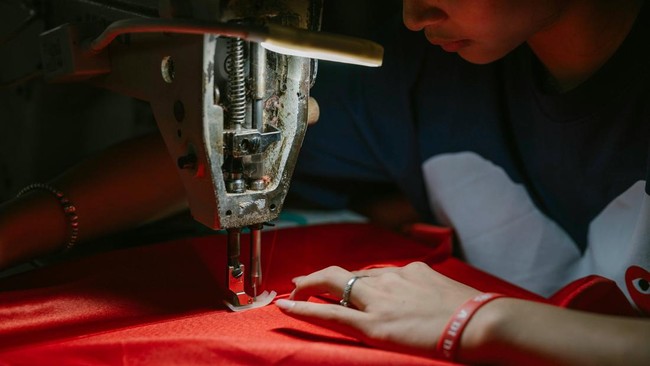
"Most of the layoff victims did not stay idle. They took their severance pay, bought two to three used sewing machines, rented a small shop, and then started their own convection business," Nandi said.
This change shows that workers who lose their jobs do not necessarily leave the industrial sector. Some remain in the same field by becoming independent business owners. This condition creates a multiplier effect because the new, growing businesses reabsorb labour.
"They rose from being labourers to becoming IKM players. From being salaried, they become the ones paying salaries to two to five people. This means that if layoffs happen again, the pattern will likely be the same. Those who are laid off will switch to becoming IKM or MSMEs."
Indonesia’s domestic market remains the main asset for the growth of small industries. With a large population and an ongoing need for clothing, opportunities for convection businesses remain open as long as local products can compete. A number of former workers affected by layoffs have also reportedly succeeded in growing their businesses in recent years.
"The market exists and is very large. Indonesia has around 280 million people with clothing needs that cannot be postponed," Nandi said.