
Textile Industry Rises from the Grave, Indonesia Sees Surge in Profits
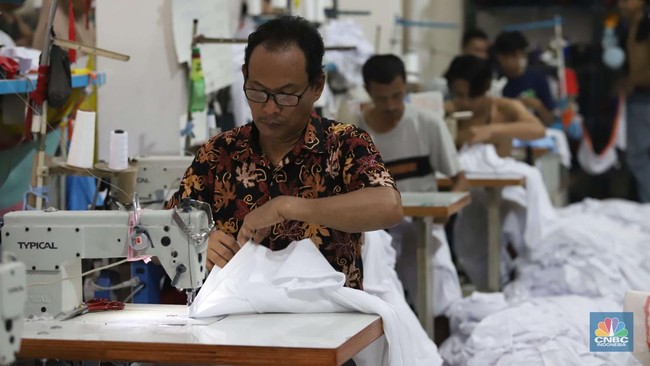
The Indonesian textile industry, which has been under significant pressure for quite some time, is beginning to show signs of recovery. This improvement coincides with Indonesia’s trade balance returning to a surplus after two consecutive months of deficits.
Latest data from Statistics Indonesia (BPS), released on Tuesday (1/9/2026), shows that Indonesia’s trade balance recorded a surplus of US$120 million in July 2026. This achievement reverses the situation following deficits of US$450 million in June and US$1.61 billion in May 2026.
Indonesia’s export value in July 2026 reached US$26.22 billion, while imports were recorded at US$26.09 billion. On a monthly basis, exports grew by 2.98%, higher than the import growth of 0.72%. The increase in exports primarily originated from non-oil and gas commodities.
Non-oil and gas export value increased from US$24.39 billion in June to US$25.43 billion in July 2026, representing a growth of approximately 4.26%. At the same time, oil and gas imports fell by 17.3%, from US$4.56 billion to US$3.77 billion. This decline caused the oil and gas trade deficit to shrink from US$3.49 billion in June to US$2.98 billion in July.
Meanwhile, non-oil and gas trade recorded a surplus of US$3.10 billion, a slight increase from US$3.04 billion in the previous month. However, on an annual basis, imports are still growing faster than exports. July 2026 exports rose by 6.05% compared to July 2025, whereas imports surged by 27.02%.
Textile Industry Supports National Foreign Exchange Reserves
Amid the improving trade balance, the textile industry has contributed to the nation’s non-oil and gas export foreign exchange reserves. In the month of July alone, the export value of the textile industry reached US$329.20 million, or approximately Rp 5.83 trillion (US$1 = Rp 17,710). This value represents an increase of 11.99% compared to the previous month’s US$293.97 million.
Compared to the same period last year, which stood at US$289.08 million, textile exports grew even more rapidly by 13.88%. This achievement serves as a positive signal for the textile industry, which has recently faced intense pressure and various market dynamics. Export values had previously dropped to US$232.01 million in March 2026.
Following that, textile exports began to recover to US$290.65 million in April, dipped to US$278.23 million in May, then rose again to US$293.97 million in June and US$329.20 million in July 2026. This performance suggests the textile industry is beginning to ‘rise from the grave’ after a prolonged period of hardship. However, the road to recovery remains long as various challenges facing the sector have not yet fully subsided.
The heavy pressure on the national textile industry is reflected in the condition of several major players. PT Sri Rejeki Ismawan Tbk (Sritex), for instance, was declared bankrupt, leading to the cessation of operations and mass layoffs. Pressure was also felt by PT Pan Brothers Tbk (PBRX), which underwent a Debt Payment Obligation Suspension (PKPU) process and debt restructuring before eventually avoiding bankruptcy through a homologated settlement agreement.
Spun Yarn Becomes the Engine of Textile Exports
According to BPS classifications, the textile industry comprises nine types, ranging from spun yarn, man-made staple fibres, woven fabrics, and other textile goods to man-made filament fibres, knitted fabrics, textile fibres, embroidered fabrics, and silk. The garment industry is not included in this group as it is recorded separately.
Among these commodities, spun yarn is the largest contributor, with an export value of US$106.54 million in July 2026, accounting for 32.4% of total textile industry exports. Man-made staple fibres follow with US$79.68 million, followed by woven fabrics at US$54.45 million and other textile goods at US$50.38 million. Combined, these four commodities account for approximately 88.4% of textile industry exports.
The dominance of spun yarn is evident not only in its total value but also as the primary driver of monthly growth, increasing by US$17.11 million compared to June 2026. This amount accounts for nearly half of the total textile export increase of US$35.23 million.
Additional export growth came from other textile goods (US$6.11 million), woven fabrics (US$5.51 million), and knitted fabrics (US$4.71 million). Together with spun yarn, these four items contributed nearly 95% of the increase in textile exports in July 2026. In terms of percentage, knitted fabrics recorded the highest monthly growth at 35.74%, followed by spun yarn at 19.13%, other textile goods at 13.80%, and woven fabrics at 11.26%.
However, improvements were not seen across all commodities. Textile fibre exports fell by 6.28% monthly to US$3.67 million, while embroidered fabrics shrank by 13.11% to approximately US’481,000.
Improvements in the textile industry are also visible in production activity, which strengthened in the second quarter of 2026. Based on BPS data, the GDP of the textile and garment industry grew by 6.36% year-on-year in Q2-2026. This rate was higher than the 4.86% growth recorded in the previous quarter. The performance of the textile and garment industry even surpassed the national economic growth rate of 5.29%. This industry group contributed 5.04% to the manufacturing sector’s GDP and provided a 0.34 percentage point contribution to the manufacturing sector’s growth in Q2-2026.
Source: jawawa.id (https://jawawa.id/newsitem/textile-industry-rises-from-the-grave-indonesia-sees-surge-in-profits-1788263879)
Originally published by CNBC Indonesia (https://www.cnbcindonesia.com/research/20260901161228-128-764086/tekstil-bangkit-dari-kubur-ri-banjir-cuan-lagi), translated from Indonesian