
Textile Industry Draws Rp 11.4 Trillion in Investment
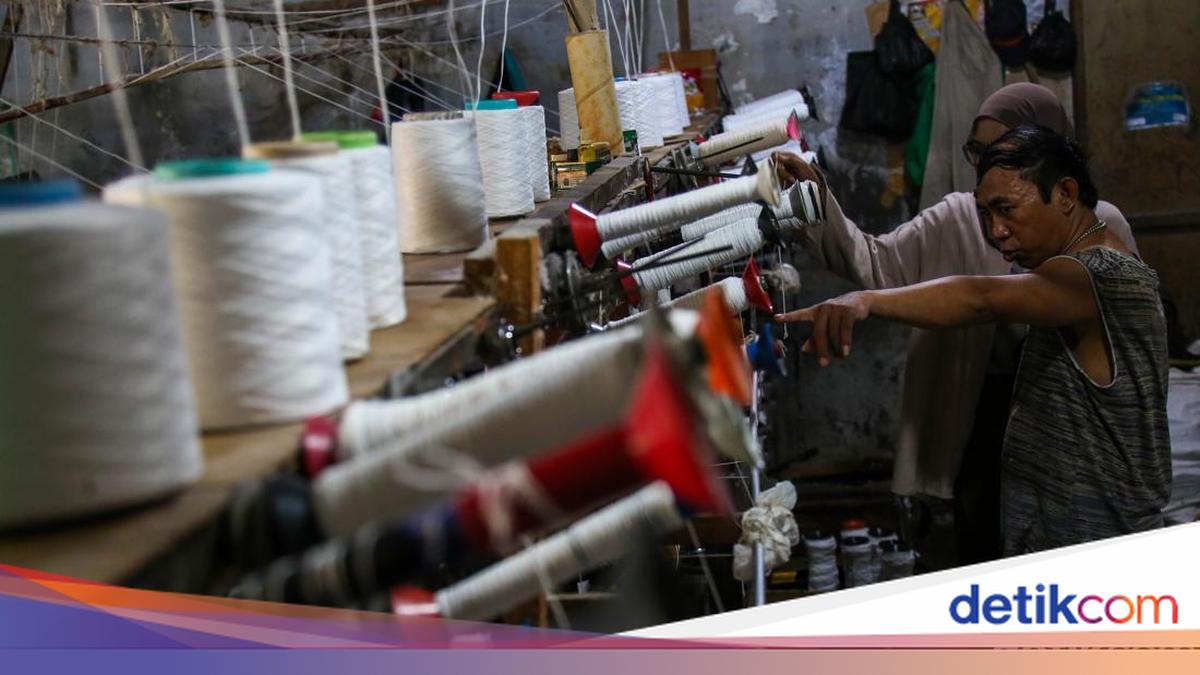
The national textile and garment industry (TPT) recorded 6.36% year-on-year growth in the second quarter of 2026. The figure was up compared with 4.35% growth in the second quarter of 2025.
Deputy Chairman of the Indonesian Textile Association (API), Ian Syarif, said the national TPT industry continues to move towards a recovery phase. According to him, this growth reflects the resilience and expansion potential of the TPT sector.
“After facing severe pressure in recent years, this industry is again growing faster than the national economy and the non-oil and gas processing industry,” Ian said in a written statement on Friday (7/8/2026).
According to Ian, the TPT performance growth was also supported by rising investment, exports, trade surplus, and high labour absorption. Cumulatively up to the second quarter of 2026, investment in the textile and garment industry reached Rp 11.40 trillion. The value increased by 11.85% compared with the same period in 2025 of Rp 10.19 trillion.
Textile industry investment rose from Rp 6.05 trillion in the first half of 2025 to Rp 6.78 trillion in the first half of 2026. Meanwhile, garment industry investment increased from Rp 4.14 trillion to Rp 4.62 trillion. The data show investment in the textile sector as a whole, including suppliers of raw materials and intermediate goods for the national garment industry.
“Investment growth of 11.85% is an important indicator because it shows business confidence in the prospects of the Indonesian market and production base. The investment is needed to add capacity, modernise machinery, improve energy efficiency, and meet global market sustainability standards,” he explained.
Ian said TPT industry investment has a broad economic impact because it connects the fibre, spinning, weaving, knitting, dyeing and finishing, and garment production industries. On trade performance, cumulative export value for January–May 2026 reached US$4.85 billion, up 1.57% compared with US$4.77 billion in the same period the previous year.
At the same time, imports increased from US$3.41 billion to US$3.58 billion. The TPT industry still recorded a trade surplus of around US$1.27 billion, although lower than the surplus of around US$1.37 billion in January–May 2025.
“The US$1.27 billion surplus proves that the TPT industry remains a foreign exchange earner. However, we must not ignore the fact that imports are growing faster and the surplus is narrowing. Therefore, export growth must be accompanied by strengthening the domestic market and supervision of illegal imports and unfair trade practices,” Ian stressed.
According to him, the utilisation of international trade agreements, including access to the United States, European Union, and other partner country markets, needs to be optimised to increase orders and expand the market for Indonesian textile and garment products.
The textile and garment industry is also one of the largest labour-intensive manufacturing sectors, absorbing around 3.86 million workers, consisting of 1.01 million workers in the textile industry and 2.84 million workers in the garment industry.
“Behind every growth and investment figure there are millions of families who depend on the sustainability of this industry. Therefore, maintaining the competitiveness of the TPT industry is not only a corporate interest, but also part of efforts to preserve and create jobs,” Ian said.
Ian said the industry’s achievements in 2026 were the result of synergy between the government and business actors in maintaining production, investment, exports, and labour absorption. He hopes the momentum will be followed by concrete steps, such as ensuring raw material supply, competitive energy prices, machinery modernisation, productivity improvements, industrial financing, optimisation of trade agreements, and enforcement against illegal imports.
According to him, the domestic market must also become the foundation of national industry growth by providing benefits to producers who invest and absorb labour in Indonesia.
“Growth of 6.36% is not the finish line, but an opportunity to bring the TPT industry to the next level. The challenge now is to turn growth into sustainable improvements in utilisation, orders, exports, investment, and worker welfare,” he concluded.
Source: jawawa.id (https://jawawa.id/newsitem/textile-industry-draws-rp-11-4-trillion-in-investment-1786114233)
Originally published by finance.detik.com (https://finance.detik.com/industri/d-8608800/industri-tekstil-tarik-investasi-rp-11-4-t), translated from Indonesian