
Textile Entrepreneurs Fear Criminal Sanctions in New Bill Could Drive Away Foreign Investors
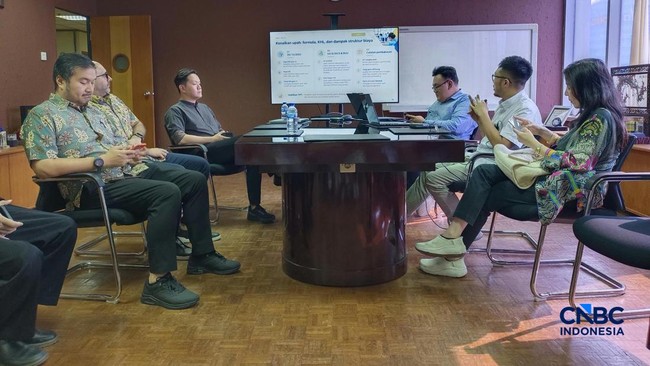
Jakarta, CNBC Indonesia - The Indonesian Textile Association (API) has warned of the potential impact of the proposed Labour Protection Bill on investment in Indonesia. Entrepreneurs believe that overly strict provisions, particularly regarding criminal sanctions, could cause investors to reconsider committing capital to the country.
API Executive Director Danang Girindrawardana stated that foreign investors will consider labour regulations before deciding to invest. He noted that the Bill would also apply to Foreign Direct Investment (PMA) companies.
“If this is enacted, it will not only apply to domestic investors, but also to PMA companies intending to invest here. If they read the law and see this, will they still have an interest in investing in Indonesia? It is not certain,” Danang told reporters at his office in Jakarta on Monday (5/10/2026).
“They will actually be more fearful than our own people. Foreigners facing criminal threats in another country will naturally be wary,” he added.
According to Danang, labour-intensive sectors will be among the first to feel the impact if the regulations are implemented. This is particularly concerning as the textile, footwear, and garment industries are already facing pressure from geopolitical conditions, a dependence on imported raw materials, and the influx of illegal imported goods.
“The labour-intensive sector could potentially collapse in the coming years. Our geopolitical situation has not improved, and our dependence on imported raw materials remains high. Meanwhile, domestic issues regarding illegal imports are still widespread, so the textile, footwear, and garment sectors are facing the same situation as last year,” he explained.
He assessed that the industry’s current struggles could be exacerbated by the implementation of the Labour Protection Bill.
“The situation has not improved; instead, it is being made heavier by the planned legislation. We are essentially facing double the concern,” said Danang.
Danang noted that while the textile industry recorded a production growth of approximately 3% in the second half of 2026, he remains pessimistic about the industry’s prospects for 2027 if the Bill is passed.
“The textile industry in the second quarter of 2026 was relatively good; our exports increased, albeit slightly. We are still confident of an increase this year. However, if this is implemented and sales stagnate, it will be counterproductive because everything will be constrained by very strict regulations. We are pessimistic about 2027 if this rule is applied,” he explained.
He predicted that while the Bill might not cause all factories to close immediately, investment and expansion could be halted, potentially leading to the collapse of numerous factories within the next one to two years.
“Our projection is that if this is implemented, investment will fail to develop. It is not that they will close immediately, but in the next 1-2 years, many factories could collapse because trade conditions are not improving. Our export-import trade will decrease, compounded by increasing domestic burdens,” he said.
Danang also highlighted the potential business model changes companies might have to undertake due to the regulation.
“Beyond the general changes in business models within the textile and garment industry, these changes will result in higher production costs, while selling prices currently cannot be raised,” said Danang.
Focus on Criminal Sanctions
One of the primary concerns raised by API is the expansion of criminal sanctions in the Labour Protection Bill. Danang noted that while Law No. 13/2003 on Manpower contains six articles covering criminal provisions, the new Bill expands criminal threats to 33 articles.
He believes many provisions that were previously administrative in nature now have the potential to enter the criminal realm.
“It is difficult to understand the mindset of the Bill’s drafters, as they seem to be looking at only one side. They are overlooking two other sides: the scope of government authority and the role of government guidance, as well as the position of entrepreneurs. Entrepreneurs have invested capital, yet they are still threatened with criminal charges and face illegal levies on all sides,” he remarked.
Criminal Law Should Be a Last Resort
API Vice Chairman Ian Syarif also addressed the aspect of criminal sanctions in the Bill. He argued that there must be a clear distinction between administrative violations, industrial relations disputes, and criminal offences.
API is pushing for the application of the ultimum remedium principle, meaning criminal law should only be used as a last resort when administrative mechanisms or industrial relations dispute resolutions prove ineffective.
“Employers must comply. However, not every administrative error should be immediately escalated to criminal proceedings. Criminal law should be placed as ultimum remedium—the last resort—not the first response to every labour violation,” Ian explained during the same session.
Ian stated that legal certainty is required so that employers clearly understand the types of violations and the consequences they face.
“Legal certainty means employers must know which are administrative violations that need to be rectified, which are industrial relations disputes that need to be resolved, and which are truly criminal acts. The boundary must be clear,” he said.
He also assessed that overly strict regulations could create various risks for companies, including the ability to meet the standards required by international buyers or brands.
In addition to criminal sanctions, Ian highlighted the restrictions on outsourcing within the draft Bill. He noted that the textile industry possesses an interconnected production ecosystem that relies heavily on cooperation with various partners.
Source: jawawa.id (https://jawawa.id/newsitem/textile-entrepreneurs-fear-criminal-sanctions-in-new-bill-could-drive-away-foreign-investors-1791211975)
Originally published by CNBC Indonesia (https://www.cnbcindonesia.com/news/20261005175535-4-773506/pengusaha-tekstil-takut-ruu-ini-getol-sanksi-pidana-investor-pma-lari), translated from Indonesian