
Textile Boss Warns of Fate of 3 Million New Indonesian Workers
The Draft Labour Protection Bill is currently drawing significant attention as it seeks to restructure various labour regulations in Indonesia. This new regulation is deemed insufficient if it only addresses existing relationships between workers and companies.
Jemmy Kartiwa, Chairman of the Indonesian Textile Association (API), highlighted the Draft Labour Protection Bill, which is currently under discussion. He noted that Indonesia’s labour market dynamics continue to expand with the influx of new workers every year.
“Every year, we have approximately 3 million new members of the workforce. New regulations must be capable of absorbing this workforce,” Jemmy told CNBC Indonesia on Wednesday.
The Draft Labour Protection Bill was drafted following various Constitutional Court (MK) rulings regarding the labour cluster. The draft covers various aspects, ranging from employment relationships and the status of fixed-term (PKWT) and permanent (PKWTT) contracts, wages, severance pay, layoffs, outsourcing, the use of foreign workers, to the protection of female workers. Regulations concerning informal sector workers and digital platform workers, such as online motorcycle taxi drivers, couriers, and freelancers, are also included in the discussions.
On the other hand, Indonesia’s labour market structure is still dominated by jobs outside the formal sector. This condition means that the discussion of the Bill is not only related to the certainty of employment relationships within companies but also how regulations reach groups of workers outside conventional employment patterns.
“Currently, 60% of our workers are in the informal sector. We must not only think about those who are already employed, but we must also think about those who are not yet working,” said Jemmy.
Wage levels and the productivity of Indonesian workers have become a focal point, as industrial competitiveness is not determined solely by low labour costs. In 2025, Indonesia’s productivity growth was recorded at approximately 3.75%, while Vietnam reached 6.5%. This situation poses a challenge when worker wage increases may reach around 6.5%.
Furthermore, changes in labour regulations need to account for the industry’s ability to maintain production costs while simultaneously retaining workers.
“We hope this Bill becomes a balanced Law. In our view, labour regulations should not merely increase labour costs without being accompanied by an increase in productivity,” Jemmy stated.
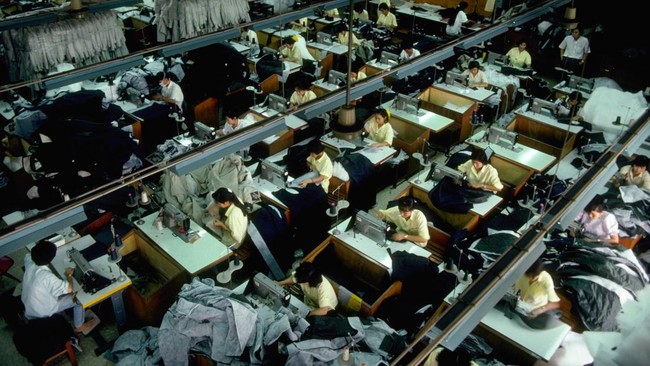
For the textile industry, this issue is directly related to a company’s ability to compete in the market. Increasing worker capacity is one of the keys so that additional costs arising from the labour side can be offset by production output.
“For labour-intensive industries such as textiles, increases in wages and worker welfare must go hand-in-hand with improvements in skills, efficiency, and productivity. We must build a win-win industrial relationship: workers achieve better welfare, while companies achieve higher productivity and competitiveness,” he continued.
Source: jawawa.id (https://jawawa.id/newsitem/textile-boss-warns-of-fate-of-3-million-new-indonesian-workers-1790747640)
Originally published by CNBC Indonesia (https://www.cnbcindonesia.com/news/20260930112441-4-772074/bos-tekstil-wanti-wanti-nasib-3-juta-angkatan-kerja-baru-ri-ada-apa), translated from Indonesian