
Texas Declares War on 'Islamisation': What Is Happening in the US?
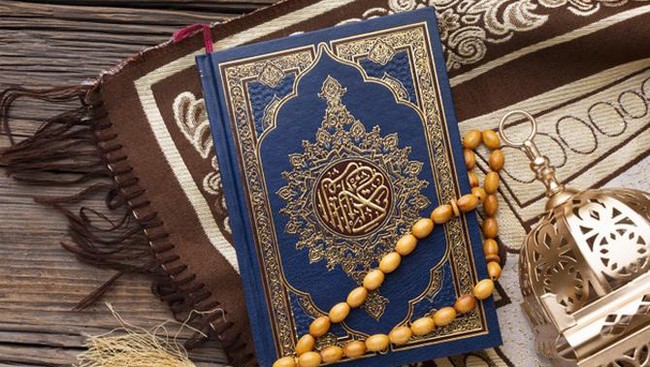
Texas has become a new frontline in the identity politics war in the United States.
Under the leadership of Governor Greg Abbott, the state with the largest Republican Party base has launched a series of policies to halt what they call the “Islamification of Texas”.
Over the past 18 months, the Texas government has taken a number of steps targeting Muslim institutions and organisations.
It all began in February 2025, when Abbott described a housing project proposed by the East Plano Islamic Centre as an example of “sharia cities”. Afterwards, more than a dozen state government agencies opened investigations into the project.
In November 2025, Abbott also designated the Council on American-Islamic Relations (CAIR) – the largest Muslim civil rights advocacy organisation in the US – as a “foreign terrorist organisation” under state policy, and barred the organisation from purchasing land in Texas. Several months later, Islamic schools were also removed from the new education voucher programme.
Now, the Republican Party of Texas has placed the slogan “Stop the Islamification of Texas” as its second legislative priority.
No Longer About Terrorism
If, after the tragedy of 11 September 2001, anti-Islam sentiment was largely associated with the threat of terrorism, that narrative has now shifted. The focus is no longer on a threat from abroad, but on fears that American identity is changing from within.
Among conservatives, support for the idea of Christian nationalism is growing stronger. This idea places Christian values as the foundation of national life in America.
Earlier this year, Abbott even stated that “the United States was founded as a Christian nation”.
Similar views have been voiced by a number of Republican Party figures, including Vice President J.D. Vance, Defence Secretary Pete Hegseth, and the conservative activist Charlie Kirk before his death in 2025.
Islam Becomes a Political Issue
According to the Centre for the Study of Organised Hate, over the 13 months to March 2026 there were 1,111 anti-Muslim posts made by 46 Republican officials – roughly 15 times more than in the previous period.
Many of them portrayed Islam as a threat to American identity. Senator Tommy Tuberville of Alabama, for example, shared a post linking a Muslim mayor of New York to the 11 September attacks.
Meanwhile, Congressman Andy Ogles of Tennessee openly stated that “Muslims have no place in American society”.
President Donald Trump has also repeatedly cited European cities such as Paris and London as examples of places which, in his view, have changed as a result of immigration and the spread of sharia law.
An Increasingly Aggressive Legislative Agenda
A number of Republican members of Congress have begun proposing various draft bills relating to sharia.
Texas Congressman Chip Roy proposed an entry ban on foreign nationals deemed to practise sharia law, while Florida Congressman Randy Fine submitted a draft bill described as protecting America from the influence of sharia.
Texas has gone even further. In addition to restricting funding for organisations deemed loyal to a foreign legal system, the state government has also changed the education curriculum.
Teaching materials on the core beliefs of Islam have been replaced with discussions of the concept of jihad and the historical expansion of Islam. At the same time, schools are required to provide more material from the Bible.
Facing Lawsuits
Abbott’s policies have drawn fierce criticism from civil rights groups. CAIR considers the policies to have moved beyond mere Islamophobia into a form of persecution of religious freedom.
On the other hand, supporters of the policies argue that the threat of Islamic extremism remains real and must be addressed through policy change.
A number of Texas’s measures have also faced resistance in the courts. A judge blocked the state government’s attempt to remove Islamic schools from the education voucher programme, and allowed the religious discrimination lawsuit filed by the East Plano Islamic Centre to proceed.
One federal judge even stated that there was no evidence that the mosque intended to impose sharia law in Texas.
Nevertheless, the agenda is not expected to stop. Texas legislators are scheduled to reconvene in January and are expected to continue the various policies campaigned for by Abbott.
The phenomenon has also begun to attract the attention of other states. A number of Republican politicians believe the issue of “Islam in America” has now become one of the main concerns of conservative voters – even said to be more important than abortion or gun ownership rights.
Religion in America
Although religious identity issues are appearing more frequently in American politics, the religious composition of the country’s population has changed relatively little over the past year.
According to the 2025 PRRI Census of American Religion, around 66% of Americans still identify as Christian. Of that number, 41% are white Christians, while 25% are Christians from other racial and ethnic groups.
Meanwhile, around 28% of the US population has no religious affiliation, while a further 6% follow non-Christian religions, including Islam, Judaism, Hinduism, Buddhism and others. This composition is almost unchanged compared with 2024.
Viewed over the longer term, America’s religious landscape has shifted. In 2013, white Christians made up 46% of the population, but the figure fell to 41% in 2025.
Conversely, the group of citizens with no religious affiliation has continued to grow, from 21% in 2013 to 28% in 2025. However, after rising consistently for more than a decade, the growth of this group has begun to slow and has tended to stabilise in 2025.