
Testing the Palace's Moral and Pragmatic Compass: Notes on Narendra Modi's Visit
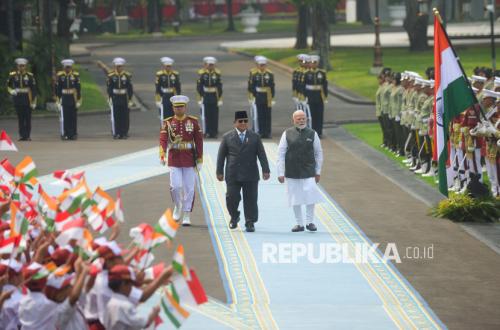
The state visit of Indian Prime Minister Narendra Modi to Jakarta from 6 to 8 July 2026 places Indonesian foreign policy at a fragile crossroads. On one hand, Modi’s aircraft was escorted by Indonesian F-15s and Sukhois, and the red carpet was rolled out at the Merdeka Palace, complete with the conferment of the Bintang Republik Indonesia Adipurna. On the other hand, a wave of protests from the Indonesian Ulema Council (MUI) and various Islamic civil society organisations echoed beyond the palace gates. This dynamic is not merely a domestic affair; it is a reflection of the perennial test of our foreign policy: how to balance a moral humanitarian compass with the pragmatic calculations of national interest.
As the world’s most populous Muslim-majority nation, Indonesia bears a significant moral burden. Our constitution, through the Preamble of the 1945 Constitution, explicitly mandates the abolition of all forms of oppression in the world. In the current global context, this mandate manifests in the commitment to combat Islamophobia. The United Nations General Assembly resolution of 2022, which designated 15 March as the International Day to Combat Islamophobia, serves as a global recognition that systemic hatred against Muslims is a real threat to human rights.
Yet, the socio-political reality in India under the banner of ultranationalist Hindutva sparks global anxiety. Reports from independent research bodies like India Hate Lab indicate a massive surge in hate speech and persecution against the Muslim minority. From the criminalisation of places of worship to legal discrimination through the Citizenship Amendment Act (CAA), ignoring the cries of over 200 million Indian Muslims would make Indonesia appear hesitant in upholding the principle of humanitarian solidarity that has long been the selling point of its diplomacy on the stage of the Organisation of Islamic Cooperation (OIC).
Therefore, the Palace’s accommodative stance must be balanced with a sensitivity to public disquiet. The MUI has officially urged President Prabowo not to miss this golden moment, requesting that he firmly convey the people’s hope for the Indian government to open space for intensive dialogue regarding tolerance and the guarantee of religious rights for Muslims in India. This strategic dialogue is crucial to halt the worrying trend of discrimination, vandalism, and Islamophobic politics. The MUI’s appeal is not an emotional intervention, but a reminder that Indonesian diplomacy has a strong moral anchor in the constitution and world peace.
However, international diplomacy is not a black-and-white moral theatre. As head of state, President Prabowo Subianto is also confronted with the cold, demanding realities of geopolitics. India today is not merely a neighbour in the Indian Ocean; it is an emerging economic giant, a nuclear power, and a comprehensive strategic partner for Indonesia.