
Testing the 'Mecca Model' Pact for Regional Security
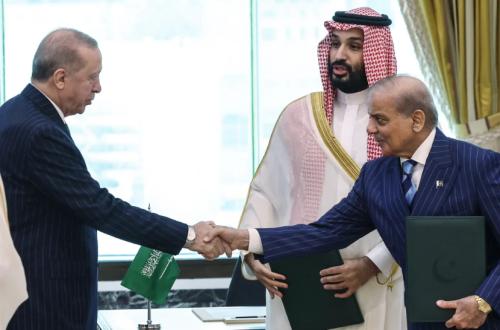
The accession of Turkey, Saudi Arabia, and Pakistan to the Mecca Joint Defence Agreement, signed on 7 August 2026, amid differing security needs and geopolitical interests, indicates that the regional security architecture is undergoing change. This change is occurring not only through existing alliances but also through efforts by regional states to build and diversify their own security capabilities.
The mutual defence provision in the agreement states that an armed attack against one party shall be considered an attack against all three parties. This clause distinguishes the Mecca Pact from conventional military cooperation. However, the concrete military obligations and operational mechanisms remain at an early stage of development.
The three countries have agreed to establish institutional mechanisms, including a ministerial-level committee and a secretariat. Yet operational procedures and collective defence implementation mechanisms still need to be formulated. It is therefore premature to describe the agreement as a fully established and institutionalised alliance such as NATO or AUKUS, which was formed by Australia, the United Kingdom, and the United States in 2021.
Thus, the central question regarding the Mecca Pact is not whether it will become a ‘NATO of the Middle East’, but whether the political commitments within it can eventually be translated into joint capabilities. In this context, AUKUS serves as a relevant comparison. AUKUS demonstrates that political alignment can be translated into tangible technological, industrial, and operational capabilities without fully replicating NATO’s institutional structure.
What distinguishes AUKUS is not merely the similarity of security interests among its three members. The alliance is also directed towards producing concrete and functional capabilities through advanced defence technology, information sharing, defence industrial cooperation, and interoperability. Therefore, the future of the Mecca Pact does not depend on its ability to imitate AUKUS’s institutional structure, but on the extent to which the logic of capability development can be adapted to the specific conditions of West and South Asia.
Technology and resilience are becoming key. The balance of power in the Middle East is increasingly shifting. Military superiority is no longer determined solely by the number of weapons platforms, but also by technology, networks, and resilience. Drones, air and missile defence systems, electronic warfare, cyber capabilities, satellite-based intelligence, and artificial intelligence-assisted decision-making mechanisms are now important components in determining military superiority.
At the same time, strategic energy infrastructure, ports, transport routes, and digital networks hold significance in security calculations no less than conventional military targets. This transformation is encouraging regional states to reduce dependence on a single external security provider. The Mecca Pact can be situated within this broader trend.
However, this character also indicates that the Mecca Pact cannot yet be regarded as a fully established and institutionalised alliance like NATO or AUKUS. Pakistan’s strategic priorities are essentially centred on South Asia. Turkey’s security agenda encompasses NATO, the Black Sea, Syria, and the Eastern Mediterranean. Saudi Arabia’s security agenda is primarily shaped by strategic threats and challenges emerging around the Gulf and the Red Sea.
These differences reinforce the view that the Mecca Pact is not built upon a fully uniform threat perception. Instead, the pact brings together different security needs through a number of intersecting strategic interests. This diversity could be both the pact’s main weakness and its greatest source of flexibility.
If the three countries can reach agreement on a sufficiently broad set of common security challenges, they need not have entirely identical threat perceptions. Pakistan and Turkey, for example, have affirmed that the pact is not directed against any particular country and is defensive in nature. This is important for the pact’s long-term sustainability. Defining the partnership based on strengthening deterrence and developing regional capabilities, rather than forming a bloc to confront a specific enemy, can help sustain cooperation among states with differing threat perceptions.
In considering the future direction of the Mecca Pact, the experiences of AUKUS and the QUAD are also worth noting. The QUAD, comprising Australia, India, Japan, and the United States, is an informal security arrangement. This cooperation has no formal institutions, permanent organisational structure, or joint headquarters. Analysts and academics therefore often refer to it as a ‘dialogue’. Unlike AUKUS, the QUAD has a looser institutional structure and emphasises strategic coordination and cooperation across various fields.
In this context, AUKUS and the QUAD represent two different models. AUKUS emphasises joint capability development, while the QUAD prioritises flexible strategic coordination. From this, the emerging ‘Mecca Model’ can be understood as a blend of three elements: collective defence, joint capability development, and flexible strategic coordination. The uniqueness of the Mecca Pact may lie precisely in its ability to synthesise these two approaches. Its collective defence dimension provides a different framework from AUKUS. Yet its institutional development can remain as flexible as the QUAD. Gradual cooperation in the defence industry and technology sectors may form the basis for this synthesis.