
Testing Pro Control on the iPhone 18 Pro: Here Are the Results
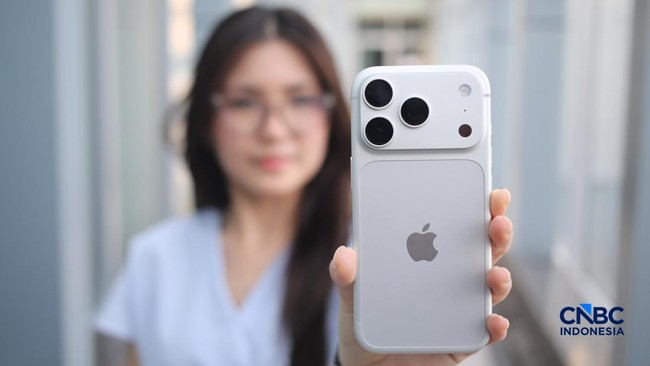
Jakarta, CNBC Indonesia – Apple is once again making the camera one of the iPhone 18 Pro’s main attractions. This time, it has introduced Pro Control, giving users greater freedom to adjust camera settings manually.
The feature is available directly in the built-in camera app. Users can adjust a range of photographic parameters, including aperture, shutter speed, white balance and focus. They can also set the exposure level and image resolution.
The CNBC Indonesia team had the opportunity to test the iPhone 18 Pro’s camera over the past two weeks. The phone was tried in various situations, from documenting a music festival to capturing everyday activities.
These manual controls make taking photographs much more flexible. Users no longer have to rely entirely on automatic mode, and can instead tailor camera settings to the lighting conditions and the look they want to achieve.
The most compelling aspect is the freedom to adjust aperture and shutter speed. These two variables offer plenty of scope for experimentation and for creating distinctive, artistic images.
With Pro Control, the amount of light reaching the sensor can be precisely adjusted through the aperture. Shutter speed, meanwhile, helps determine how the camera captures the movement of a subject.
The flexible aperture settings are a particular selling point. At a wider aperture, the camera can take in more light. Conversely, narrowing the aperture to ƒ/4.0 lets users explore the visual effects produced by bright light sources.
One popular effect is starburst, in which light radiates in a pattern resembling the rays of a sparkling star.
In the sample photograph above, Pro Control was used with a shutter speed of one second, an aperture of ƒ/4.0 and exposure set to -2.0. These manual settings can also be applied when recording video.
Before manual aperture control became available, bright lights in night-time photographs often appeared simply as blobs of light. Now, by narrowing the aperture, streetlights and illuminated city decorations at night can be turned into an aesthetic star effect without the need for third-party editing apps.
Even so, the Pro Control experience is not yet perfect. The main drawback is the accessibility of the user interface.
Some frequently used controls, such as aperture and shutter speed, are stacked in a panel at the bottom of the screen. To use them, users first have to tap the screen and then swipe across the panel. This feels impractical when taking a photograph one-handed or trying to capture a fleeting moment.
For users who value convenience, however, the iPhone 18 Pro’s automatic mode remains highly responsive and effective at selecting the aperture and exposure level.
On paper, the iPhone 18 Pro has a 48-megapixel (MP) Fusion main camera with variable aperture (ƒ/1.48, ƒ/1.8, ƒ/2.8 and ƒ/4.0), as well as a 48MP Fusion Ultra Wide camera with an ƒ/2.2 aperture.
Apple has also equipped it with a 48MP telephoto camera that supports up to 8x optical zoom, equivalent to a 200mm focal length, and produces clear 12MP images.
This combination of lenses makes documenting music concerts both convenient and satisfying. The telephoto lens can capture musicians’ facial expressions and onstage performances in detail, even from a distance.
In the first sample photograph, 8x zoom brings the stage atmosphere and the rows of jubilant spectators closer. In the second, 2x zoom is used to create a tighter, more intimate composition of the singer.
Taking photographs is straightforward: users only need to adjust the zoom level rather than change numerous technical settings. Colour reproduction is rich, with the red, purple and orange stage lighting rendered in sharp contrast.
The iPhone 18 Pro camera also includes Focus Tracking, which locks focus on moving subjects such as people, pets and vehicles.
In the photograph above, a cat is captured sharply, demonstrating the effectiveness of Focus Tracking.
Overall, automatic mode remains the main choice for casual users, as it requires no technical understanding of aperture ratios. For professional photographers and content creators, however, Pro Control offers considerable creative scope to explore lighting and depth of field according to their visual needs.