
Testing Downstreaming (3): Who Controls Indonesia’s Downstream Industries?
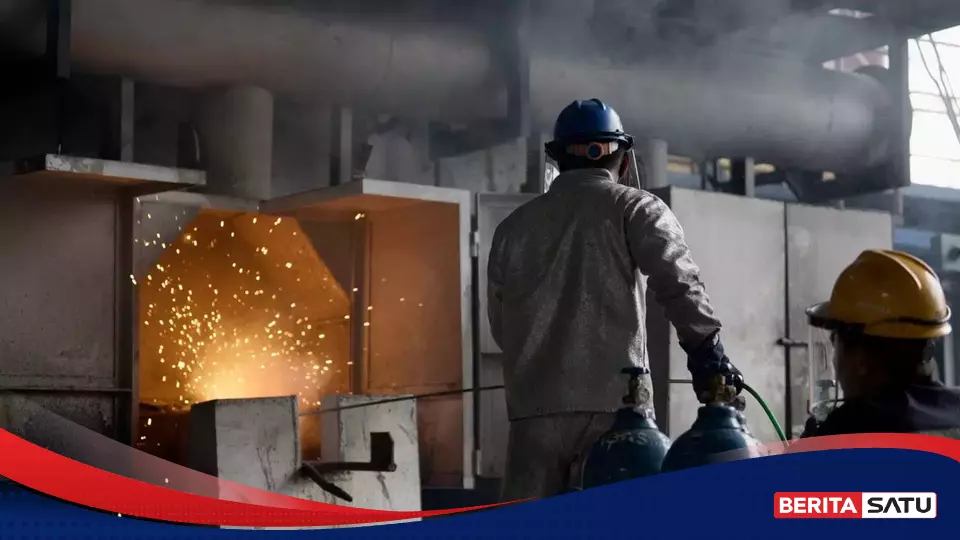
Indonesia has transformed its nickel industry in recent years. Restrictions on nickel ore exports have prompted the construction of domestic processing facilities, attracted large-scale investment and strengthened the country’s position in the global mineral supply chain.
Processing industrial estates have expanded in several areas, particularly in Sulawesi and North Maluku. Smelters turn nickel ore into a range of products, from ferronickel and nickel pig iron (NPI) to intermediate materials for the battery industry.
But behind this progress lies a more fundamental question: who actually controls Indonesia’s downstream industries?
Does Indonesia merely provide natural resources, land, labour and production facilities, while capital, technology and business decisions remain in the hands of foreign investors? Or can such investment help Indonesia build an increasingly self-reliant national industry?
The question matters because the success of downstreaming is not determined only by the number of factories built or the value of exports. Company ownership, control of technology, the ability to shape production and Indonesia’s position in the global supply chain must also be considered.
Foreign investors play a major role
Developing mineral-processing industries requires substantial capital, technology, infrastructure and access to international markets. Domestic companies cannot meet all these needs quickly.
Foreign investment has therefore been a key driver of downstreaming in Indonesia, particularly in the nickel sector.
Chinese companies are leading players in the development of nickel processing. They bring capital, processing technology, supplier networks and access to markets for metals and batteries.
One major player is China’s Tsingshan Holding Group, which is involved in developing Indonesia’s nickel industry and processing industrial estates.
The presence of these investors has accelerated the construction of large-scale production facilities. Indonesia, which previously exported much of its nickel ore, now has far greater processing capacity and can supply processed products to international markets.
The impact is evident in trade figures. According to Reuters, the value of Indonesia’s nickel-product exports rose from about US$3.3 billion in 2017 to more than US$33 billion in 2024, as domestic processing expanded. This figure reflects growth in exports of nickel products, not the net profits received by Indonesia.
However, success in attracting foreign investment also carries consequences. The greater the role of particular investors in a strategic industry, the more important it is for the government to ensure that national interests are protected.
The issue is not simply whether investors are domestic or foreign. More important are the ownership structure and business relationships, how much value remains in Indonesia, and whether domestic companies have the opportunity to grow.
About 75% of nickel-refining capacity controlled by Chinese companies
The scale of Chinese investors’ role is illustrated in a report published in February 2025 by C4ADS, a global security research organisation.
Citing the report, Reuters said Chinese companies controlled about 75% of Indonesia’s nickel-refining capacity, based on a mapping of company ownership in 2023.
The analysis covered about eight million tonnes of refining capacity across 33 companies. Its examination of shareholder structures also found ownership links between several companies.
The figure should be interpreted in context. It describes the ownership structure of capacity in 2023, not the share of the entire Indonesian downstream industry owned in 2026. Refining capacity is also distinct from mine ownership, control of the entire production chain or the profits earned by companies.
Nevertheless, the findings show that Indonesia’s nickel industry is significantly dependent on certain investor groups.
This raises a strategic question: if most refining capacity depends on companies whose capital and business networks are relatively concentrated, how much room does Indonesia have to determine the industry’s direction?
For instance, if global demand changes, nickel prices fall or parent companies alter their strategies, what would the impact be on production, employment and economic activity in Indonesia’s industrial regions?
Dependence on particular investor groups could also pose a challenge as Indonesia seeks to broaden its export markets or develop a more diverse production chain.
Strengthening national industry therefore requires more than attracting as much investment as possible. The government also needs to diversify investors, reinforce domestic companies and build industrial capabilities that can withstand changes in global markets.
Foreign capital does not necessarily mean a loss
Even so, foreign investors’ dominance does not automatically mean that downstreaming is detrimental to Indonesia.
Foreign investment can accelerate the construction of production facilities requiring substantial capital and technology. Without it, developing processing industries could take longer and face financing and technical constraints.
Investors can also create jobs, boost regional economic activity, increase tax and non-tax state revenue (PNBP), and create opportunities for local companies to become suppliers.
These effects can provide a foundation for developing national industry, particularly if investment leads to knowledge transfer, improved workforce skills and the growth of domestic companies capable of supplying industrial needs.
But these benefits do not arise automatically simply because a factory is built in Indonesia.
The scale of the benefits to the national economy depends on several factors, including company ownership structures, the employment of local workers, purchases of goods and services from domestic suppliers, fiscal obligations and the extent to which production is connected to national industry.
Companies operating in Indonesia can generate domestic value added, but some profits may also accrue to shareholders according to their ownership stakes and business agreements. Dividend payments to foreign investors, for example, are part of cross-border investment relations and should be distinguished from value added created domestically.
Evaluations of downstreaming should therefore distinguish between benefits received by Indonesia and income earned by companies overall.
Success should be measured not by whether capital comes from home or abroad, but by whether investment strengthens Indonesia’s economic capabilities over the long term.
Who controls the technology and markets?
Share ownership is an important aspect of control over an industry. But technology and market access are no less decisive.
In modern mineral industries, companies that control processing technology, production standards, supplier networks and access to buyers can have significant bargaining power.
A country may own mines and processing facilities without controlling all the technology used to produce higher-value products.
The same applies to the electric-vehicle battery industry. Processing nickel into intermediate materials is an important step, but it is not the same as controlling the entire battery-making process.
The production chain can involve raw-material processing, precursor production, cathode-material manufacturing, battery-cell production and battery-pack assembly. Each stage requires different technology, capital, quality standards and marketing capabilities.
If Indonesia controls only some stages, there remains an opportunity to capture more value further along the chain.
The government must therefore ensure that investment produces not only facilities but also opportunities to improve national technological capabilities.
Universities, research institutions, domestic companies and technology-development centres need to be connected to industrial activity. Developing skilled specialists must also be part of the long-term strategy.
In this way, Indonesia can move beyond being a production location and gradually improve its ability to design, develop and operate industrial technology.
Control of technology is also important in strengthening Indonesia’s bargaining position when global demand shifts or competition between industry players intensifies.
Government begins to promote deeper downstream processing
The government’s policy direction indicates that downstream development should not stop at building smelters.
In 2025, the government issued Government Regulation No. 28/2025 on the implementation of risk-based business licensing. In practice, the regulation has also served as an instrument for directing the nickel industry towards more advanced production stages.
The Jakarta Post reported in November 2025 that the licensing rules restricted the issuance of new permits for certain types of nickel-smelter projects producing only intermediate products, including ferronickel, NPI, nickel matte and MHP. The policy aims to shift production from initial processing towards industries that produce higher-value-added goods.
The policy is consistent with the government’s view that domestic processing industries need to be developed. Energy and Mineral Resources Minister Bahlil Lahadalia said: “Indeed, we have no other choice; there must be industry in the country.”
The policy highlights a new challenge. Having attracted investment and built refining capacity, Indonesia now needs to encourage industry to move further along the production chain.
But this shift cannot be achieved through licensing restrictions alone. The government must also ensure that infrastructure, energy, human resources, technology and markets are available for the products being made.
Legal certainty is crucial because industrial investment involves large amounts of capital and long timeframes. Policy changes need to be accompanied by clear rules, adequate transition periods and consistent implementation to avoid creating uncertainty for businesses.
At the same time, the government needs to strengthen domestic companies through partnerships, technology development, stronger local suppliers and direct investment in downstream industries.
The aim is not to shut the door on foreign capital, but to ensure that foreign investment goes hand in hand with improved national industrial capabilities.
National companies need more room
One challenge for downstreaming is ensuring that domestic companies are not merely supplementary players in the industrial ecosystem.
National companies need opportunities to participate in every stage of production, from mineral processing and component manufacturing to equipment supply, engineering services and product distribution.
Their involvement can be strengthened through partnerships that enable local companies to improve their technical capabilities and meet industry standards.
The government can also encourage collaboration between large companies, state-owned enterprises (SOEs), national private businesses and research institutions to develop products with clear market prospects.
An important example is the role of state-owned mining company PT Aneka Tambang Tbk (Antam) in developing the nickel and battery ecosystem. National companies’ participation in industrial partnerships can create opportunities for Indonesia to strengthen its position in the supply chain, although the scale of the benefits will depend on ownership structures, the division of responsibilities and the technological capabilities acquired.
The government should also ensure that business opportunities are not concentrated solely among large companies. Local suppliers and micro, small and medium-sized enterprises (MSMEs) can be involved in supplying goods and supporting services, provided they meet requirements for quality, safety and efficiency.
Strengthening national companies does not mean producing everything domestically or restricting all foreign investors. What is needed is a strategy to ensure that foreign investment helps build domestic capabilities rather than creating permanent dependence.
From production location to industry player
Indonesia has the advantages of abundant natural resources and a potentially large domestic market. These can provide a basis for building value-added industries.
But natural resources alone cannot guarantee control of an industry. A country also needs technology, a skilled workforce, competitive companies, adequate infrastructure and consistent policies.
Downstreaming strategy must therefore advance in several directions at once.
First, strengthen existing processing industries so that they can operate efficiently and meet international standards.
Second, extend the production chain towards higher-value products where market prospects and sound economic calculations support it.
Third, build the capacity of national companies so that they can act as producers, suppliers, technology partners and owners within the industrial ecosystem.
Fourth, strengthen research and development so that Indonesia does not remain dependent on technology developed overseas.
Fifth, ensure that the economic benefits of investment are felt through quality job creation, workforce development, fiscal contributions and the growth of local businesses.
These steps will take time. Technological mastery and the creation of competitive companies cannot be achieved simply by building production facilities over a few years.
Without a clear direction, however, Indonesia risks remaining a location for processing raw materials while some strategic capabilities and business decisions continue to be made abroad.