
Testimony of Global Sumud Flotilla Activist Tortured While Detained by Israel
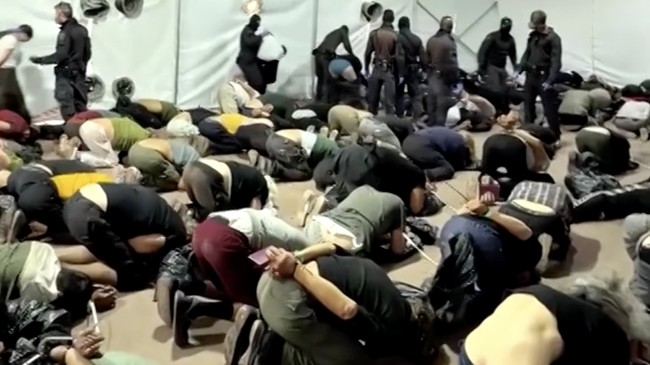
An international humanitarian activist affiliated with the ‘Global Sumud Flotilla’ mission, part of the Flotilla for Gaza, has revealed the extraordinary cruelty of the Israeli military after their aid vessel was forcibly intercepted in international waters. According to AFP, the activist named Julien Cabral arrived at Istanbul Airport with bruising around the left eye, a cut above the left temple, and a shoulder blade injury from a brutal beating by Israeli forces. The 57-year-old man from Antwerp, Belgium, was on a small boat with six cross-national activists from Italy, Malaysia, Finland, Canada–Palestine, and South Africa when they departed from Turkey. Some 10 Israeli security officers intercepted them in international waters more than 500 kilometres from the Israeli coast on Monday (18 May 2026). Cabral said the Israeli marine command deliberately disrupted communications before storming the vessel in broad daylight with full weaponry. Turkish authorities immediately deployed medical teams and ambulances, evacuating 422 people by special flight, including 85 Turkish citizens. “They first disrupted communications, then boarded in broad daylight with weapons and fired rubber bullets just for fun,” Cabral said. Cabral added that his group was astonished as the vessel was immediately surrounded by Israeli corvette ships. He said the forces moved with a high level of violence even though all activists on board had raised their hands in the air as a sign of surrender. Physical abuse immediately targeted the vessel’s leaders once the marines managed to take command of the wheel. Cabral, acting as deputy captain, became one of the first to be struck. “I was the second-in-command on the ship. Our captain, an Italian citizen, was still standing and they targeted him. I was struck on my left temple,” Cabral said. Cabral explained that after the beating, the hostages were roughly moved, hands bound with plastic ties, onto a prison ship containing tight container-like cells. Inside the ship, the humanitarian volunteers endured further suffering amid taunts from the soldiers. “Then they moved us, still using force, our hands bound with plastic cords to this prison ship, inside the containers. I heard them speaking in English, ‘let’s have some fun’,” Cabral said. During the detention aboard the prison ship, the prisoners were left without adequate medical access, even though many suffered severe injuries from the initial assault. The Israeli forces even allegedly seized emergency medications belonging to a volunteer with a chronic illness such as epilepsy. “The detainees asked to see a doctor for three days but were told, ‘later, later’. They confiscated someone’s epilepsy medication. On the Sirius ship, seven people suffered 35 fractures among them,” Cabral added. Conditions inside the container holding area were bleak and far from humane. The soldiers only tossed basic food supplies from the upper deck, insufficient for the 200 people aboard. “We asked for more water, toilet paper, and sanitary pads for the women. We had to beg for everything,” Cabral said. The torture intensified when detainees were removed from the ship on Wednesday and moved to emergency detention facilities in the Ashdod region of southern Israel. They were forced into very tight prison vans in painful positions. “The handcuffs were far too tight and the detainees were bent over for hours. We could not see anything. They pressed on our necks,” Cabral said. He added that during the journey, Israeli soldiers repeatedly slapped, insulted, and jeered at the activists while singing the Israeli national anthem. The Zionist troops are said to have been far harsher toward activists from Jordan and Tunisia before they were eventually taken to Ramon Airport near Eilat on Thursday morning. Despite experiencing profound physical and psychological trauma, Cabral, who hopes to return home to Belgium soon, said the incident would not deter him from continuing the humanitarian mission to break through the Gaza blockade. “Of course. We will carry on,” Cabral declared. Similar testimony about the brutality of Israeli military conduct also came from Bilal Kitay, a Turkish citizen from Bingöl who was evacuated with his wife. Kitay asserted that the interception by Israeli forces this time was far more brutal than their first voyage in April. “They attacked us. Each of us was beaten, women and men… This is what Palestinians experience all the time,” Kitay said. He condemned what he described as the loss of humanity among the soldiers who imprisoned them, claiming their actions were well beyond what living beings could reasonably endure. “Unfortunately, they treat their own animals better. They themselves consider themselves human,” Kitay concluded.