
Territorial Development and National Dakwah Battalions: An Effort to Strengthen National Resilience
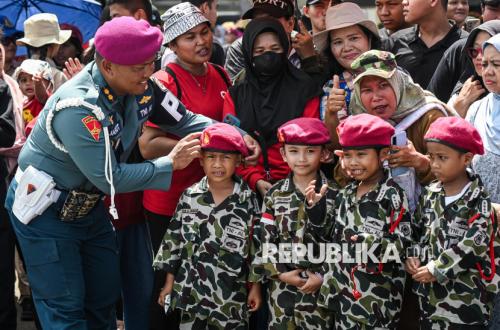
The Indonesian Ministry of Defence’s plan to establish Territorial Development Battalions, which would also play a role in fostering the social and religious life of communities, is very interesting to examine and appreciate. Some parties may question its relevance, and there are even concerns that this move will expand the role of the Indonesian National Armed Forces (TNI) into areas long considered the domain of civilians and religious figures. However, if examined more thoroughly, this idea actually arises from the real needs of a nation facing increasingly complex social, moral, and ideological challenges. We have often viewed national defence solely in the context of military and physical security. Yet the experience of many nations shows that threats to the state do not always come in the form of armed aggression. A nation can weaken when its citizens’ character is fragile, its unity is torn apart, public morality declines, and its social cohesion is eroded. Therefore, the modern concept of defence is no longer solely about weapons strength but also about the ability to maintain the social, cultural, moral, and spiritual resilience of society. It is in this context that the idea of the Territorial Development Battalion finds its relevance. The presence of soldiers who interact more closely with the community is not intended to take over the roles of ulema, preachers, teachers, or community leaders. On the contrary, their presence is expected to be part of a collective effort to strengthen the nation’s character, foster a spirit of unity, and tighten the relationship between the state and the people. When linked to the national development direction formulated by President Prabowo Subianto through Asta Cita, this idea has a fairly strong foundation. The second Asta Cita emphasises the importance of strengthening the state’s defence and security system and promoting national independence. In the current reality, threats to national resilience are not only physical threats from abroad but also various internal issues such as drug abuse, radicalism, extremism, social disintegration, and the moral crisis among the younger generation. Therefore, building universal people’s defence is insufficient if done merely by strengthening defence equipment and military posture; it must also be done by strengthening the Indonesian people as the main subject of national defence. On the other hand, the eighth Asta Cita emphasises the importance of reinforcing social harmony, culture, and tolerance among religious communities. Indonesia is a great nation built on a foundation of diversity. National stability is determined not only by the strength of state institutions but also by the quality of social relations within society. When soldiers are present as friends of the people, becoming part of social, educational, and community development activities, they are actually contributing to building the social harmony that is one of the main goals of national development.