
Terrifying! Russia Drills to Disable Subsea Cables, NATO Responds
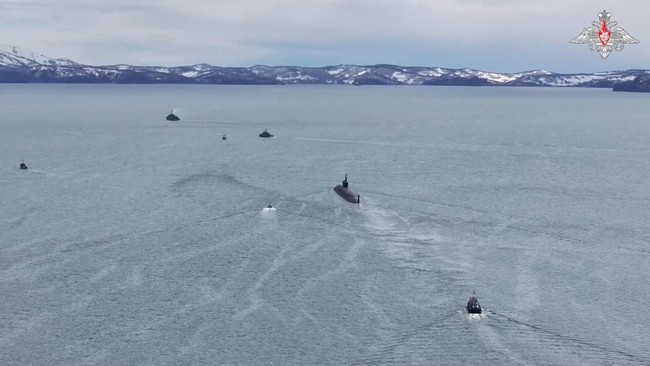
NATO allies have reportedly managed to thwart a secret Russian exercise in Arctic waters that allegedly simulated the use of weaponry to disable vital undersea cables. The exercise took place around the Svalbard archipelago, Norway, this spring.
Two Western officials told Reuters that the operation involved Russia’s Main Directorate of Deep-Sea Research, known as GUGI. They deployed deep-sea submersibles to simulate the use of high-impact destructive technology.
The technology is said to be designed to disable undersea cables without leaving a trace. The United Kingdom, Norway, and the United States subsequently tracked and intercepted the involved Russian vessels.
“Through our joint operations, we are sending a clear message to Russia that they cannot operate in secret,” said Norwegian Defence Minister Tore Sandvik, as quoted on Thursday (10/9/2026).
Sandvik emphasised that any attempt to target vital infrastructure would be detected and would carry consequences. According to Western officials, Russia did not actually damage the cables because the exercise was halted before completion and the Russian ships left the location.
This operation was previously partially revealed in April when the UK and Norway stated they had detected secret Russian activity in the Arctic region. However, the involvement of the US, the specific location of the drills, and the existence of new technology to simulate attacks on cables had not been reported previously.
Concerns are now mounting as Western intelligence officials assess that Russia may be testing the resilience of the NATO alliance and could even trigger a situation potentially related to Article 5. Undersea cables carrying internet, satellite data, and financial transactions are considered strategic targets in the event of open conflict.
Around Svalbard, two fibre-optic cables approximately 1,400 kilometres long connect the archipelago to mainland Norway at depths of up to 2,700 metres. This infrastructure carries massive amounts of data from the SvalSat satellite station, one of the largest satellite facilities in the world and part of NASA’s Near Space Network.
Threats to European undersea infrastructure are also evident from the increased activity of vessels sailing slowly around cables and pipelines. This is suspected to be used for mapping the location of infrastructure.
“The current view is that Russia and China are likely the most active and critical undersea threats,” said Ami Daniel, CEO of the maritime analytics firm Windward.
Meanwhile, Brookings Institution researcher Bruce Jones assessed that Europe is now late in rebuilding its infrastructure protection capabilities amidst “increasing Russian threats.”