
Teodoro's Hardline Stance Against China Seen as Potential Political Capital
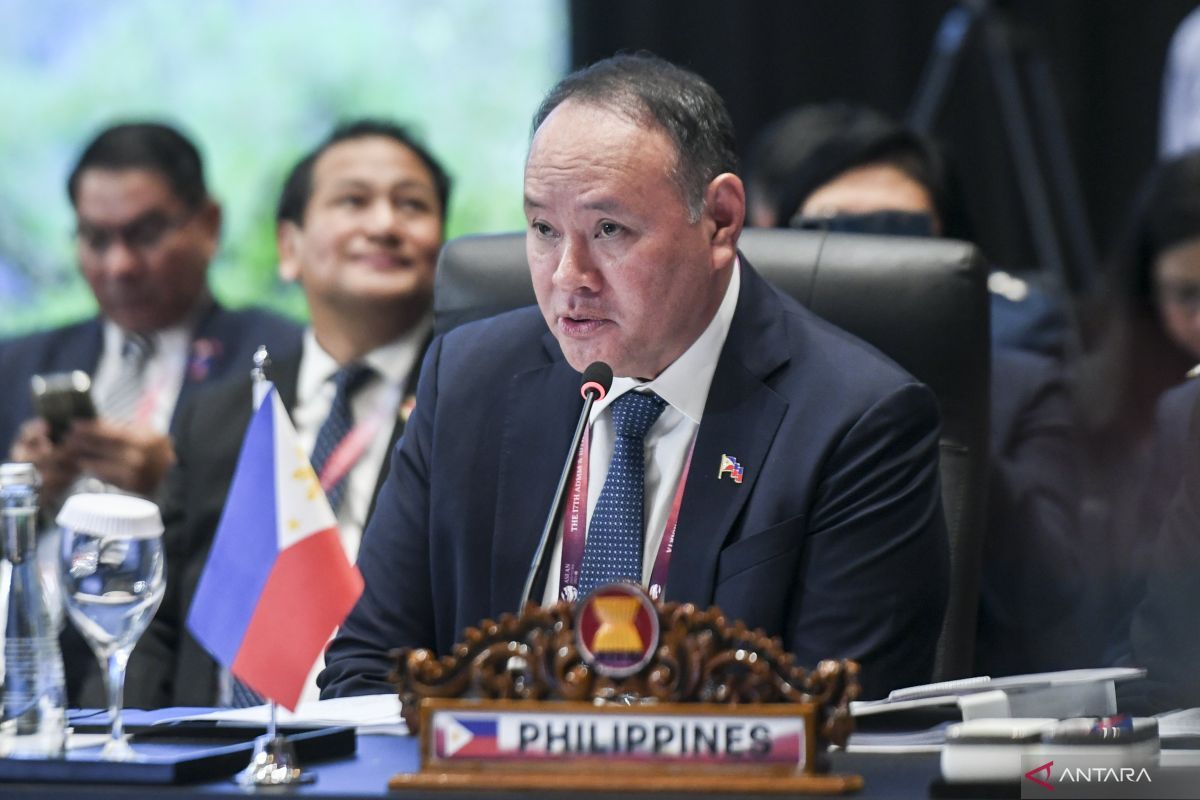
Philippine Defence Minister Gilberto Terolado’s hardline stance against China is no longer seen as merely related to defence policy and the South China Sea dispute. Ahead of the 2028 Philippine General Election, this rhetoric has the potential to possess a domestic political dimension, as issues of sovereignty and security hold significant electoral appeal.
Indo-Pacific geopolitics observer Sukron Makmun assesses Teodoro’s position as one of the most vocal Philippine officials against China, noting it must be viewed within the context of Philippine domestic political dynamics. “Teodoro is no longer just a defence official expressing the Philippines’ objections to China’s actions. He has become one of the most vocal faces of Manila’s increasingly tough policy towards Beijing,” said Sukron.
According to him, such an attitude could be part of building a political image, even though Teodoro has not yet declared an intention to run in the 2028 election. In July 2026, Teodoro stated he was not yet considering political plans for 2028 and chose to focus on his duties as defence minister. However, Sukron suggests that political image-building can occur long before a formal candidacy is declared. “Politics does not always work through official declarations,” he noted.
Regarding domestic politics, Sukron highlighted Teodoro’s statement that candidates demonstrating a pro-China stance would lack eligibility for the 2028 election. He believes this indicates that the issue of relations with China has entered the political debate ahead of the election. While the Philippines has an interest in defending its rights under international law, particularly regarding maritime disputes in the South China Sea, Sukron argues that these interests must be distinguished from the use of anti-China rhetoric as a domestic political instrument.
“Teodoro may believe that China is a threat to the Philippines. At the same time, a hardline position against China can provide political advantages domestically. Both possibilities can coexist,” he said. He noted that problems arise if political rhetoric begins to influence the direction of national policy or if a confrontational stance becomes a political official’s identity.
Tensions between Manila and Beijing are not limited to political statements. The disputes between the two nations primarily concern territorial claims and vessel activities in the South China Sea, which have repeatedly triggered tensions in recent years. In June 2026, China imposed sanctions on Teodoro and his family after Beijing assessed that his statements and policies were damaging China-Philippines relations. This development has further positioned Teodoro as a prominent figure in the tensions between the two nations.
The Philippine Department of Foreign Affairs (DFA) stated that Beijing’s sanctions on Teodoro and his family are viewed as unfriendly acts that further complicate bilateral relations. “While the imposition of sanctions is China’s sovereign prerogative, the Philippines views it as an unfriendly act that further complicates bilateral relations,” said Philippine Foreign Affairs Department spokesperson Analyn Ratonel in a recent statement.
In terms of cooperation with South Korea, the Philippines continues to strengthen ties. On Monday (7/9), South Korea and the Philippines agreed to expand defence and weapons industry cooperation, including personnel exchanges and joint military exercises, according to the South Korean Ministry of Defence. South Korean Defence Minister Ahn Gyu-back met with Philippine Defence Minister Gilberto C. Teodoro Jr. in Seoul during Teodoro’s visit for the Seoul Defence Dialogue 2026.
Both nations agreed to strengthen regular consultations between their respective defence authorities and expand cooperation in personnel exchanges and joint training. However, Sukron warned that firmness in defending national interests is different from hostility. He noted that a defence minister has a responsibility to ensure national security while considering the strategic consequences of public communication. “Firmness is different from hostility.”
He assessed that using increasingly confrontational language might provide rhetorical advantages in the short term, but ongoing verbal escalation could narrow the space for diplomacy and make managing defence and diplomatic relations more difficult. If China continues to be positioned as the primary threat while diplomacy is perceived as a form of weakness, the room for compromise may shrink further.
Sukron also reminded ASEAN nations not to view regional security issues solely through the lens of the US-China rivalry. He argued that the increasing rivalry between these two powers requires Southeast Asian nations to maintain strategic autonomy. ASEAN needs space to manage great power competition without being forced into a specific camp.
Finally, Sukron stated that Indonesia does not occupy the same position as the Philippines in the South China Sea territorial disputes. Therefore, the experiences and perceptions of the Philippines regarding China cannot serve as a direct reference for Indonesian foreign policy. “Indonesia is not involved in the same territorial disputes as the Philippines in the South China Sea. Therefore, there is no reason to adopt the entirety of the Philippine perception towards China.”
Source: jawawa.id (https://jawawa.id/newsitem/teodoros-hardline-stance-against-china-seen-as-potential-political-capital-1788886346)
Originally published by Media Indonesia (https://mediaindonesia.com/internasional/931246/sikap-keras-teodoro-terhadap-tiongkok-dinilai-berpotensi-menjadi-modal-politik), translated from Indonesian