
Tent Placement for Pilgrims in Armuzna Based on a By-Name System
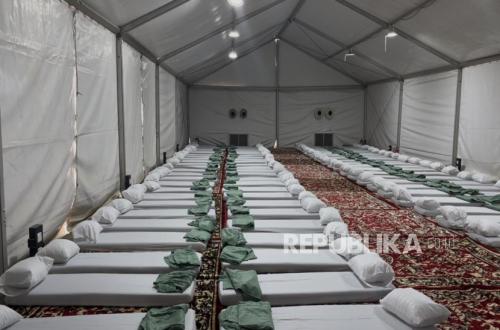
REPUBLIKA.CO.ID, MAKKAH — The government has assured the readiness of the 2026 Hajj operations, particularly during the Armuzna phase (Arafah, Muzdalifah and Mina), to be conducted more orderly and well planned. A key focus is ensuring tents are prepared with cluster (kloter) markings and now based on a by-name system, so as to prevent overcrowding at a single point.
Minister of Hajj and Umrah Mochamad Irfan Yusuf said all pilgrim movement scenarios have been crafted tightly, starting from departure from hotels to Arafah on 8 Dzulhijjah and then continued movements to Muzdalifah and Mina. This arrangement is intended to prevent congestion both at hotels and on the routes pilgrims take.
‘The schedule has been set strictly. We must not have any buildup, either at the hotel or during travel,’ he said at the Amirul Hajj meeting on Thursday (21 May 2026).
In addition to mobilization arrangements, tent readiness at Arafah and Mina is also a major concern. Each tent has been prepared in detail, not only based on the kloter system but also now oriented towards a by-name system to ensure more orderly and organized pilgrim distribution.
In the same opportunity, the Indonesian Ambassador to the Kingdom of Saudi Arabia Abdul Aziz Ahmad also outlined the importance of coordination in placing pilgrims in Arafah and Mina based on experiences from previous years. He warned that tent placement issues had previously been a challenge causing disorder on the ground.
‘What I want to share is that from past experience, tent placement in Arafah has often been a battleground,’ he said.
He cited the experience when three kloter pilgrims were supposed to occupy tents that had been prepared, but were instead occupied by others due to a lack of coordination on the ground.
Nevertheless, he noted that in the end the pilgrims still obtained suitable tents from the Saudi government. However, the incident served as an important lesson that coordination must be strengthened to avoid similar chaos. ‘That is, in fact, an indication that we were lacking in coordination at that time,’ he emphasized.