
Tencent Targets Southeast Asia with ‘WorkBuddy’ Virtual Assistant
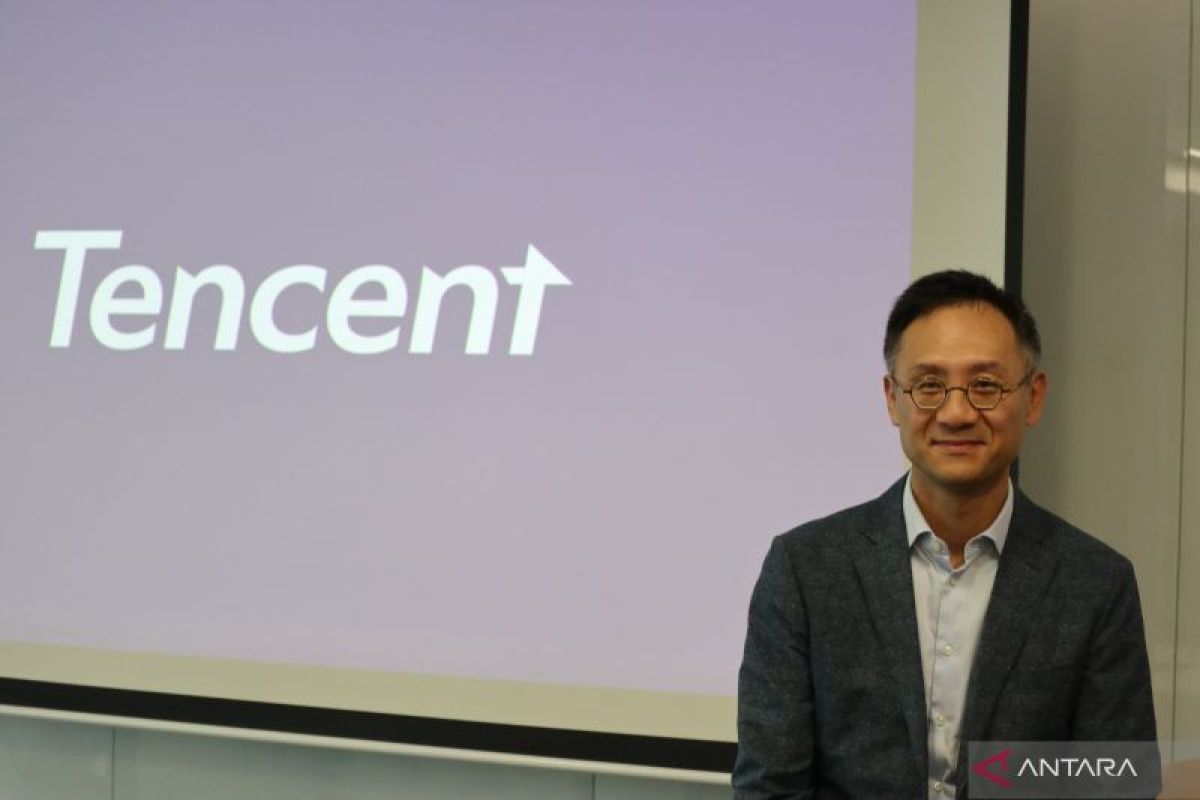
Shenzhen (ANTARA) – Chinese technology company Tencent is targeting several Southeast Asian countries to market its artificial intelligence (AI) agent WorkBuddy, which can act as a personal assistant and carry out complex tasks for office workers.
“We have only just started offering some AI products, such as WorkBuddy, to Southeast Asia. There is a lot of interest in the region in bringing cost-effective and efficient products to market,” Tencent Senior Executive Vice President and Chief Executive of its Cloud and Smart Industries Group, Dowson Tong, told journalists from several countries at the company’s headquarters in Shenzhen, Guangdong province, on Wednesday (28 October).
Tencent’s WorkBuddy AI agent has been available to individual users in China via iOS, Android and HarmonyOS since March 2026. In Indonesia, the application was launched on 14 July 2026.
An AI agent is an advanced form of artificial intelligence that not only answers questions but can also perform tasks automatically. While conventional AI “only” helps users think, an AI agent can help them take action and complete work.
“The product is still relatively new, so we are continuing to add features and strengthen it for different types of workloads, for office workers as well as businesses,” Dowson said.
He said Tencent was refining the AI agent’s functions in its domestic market before taking it overseas to serve customers in multiple regions.
“Particularly in Indonesia, we have many important customers already using our cloud services, big data systems and various other technologies. As a result, we have heard of very strong interest in adopting Tencent’s AI technology,” Dowson said.
He said Tencent would work with partners to provide the technology, drawing on their existing computing resources and seeking to bridge the gap between computing capacity and applications that create real value for users.
“There are also local models that we need to integrate into WorkBuddy so we can adapt the product to local ecosystems and the devices popular in particular markets. Over the next year, we will continue expanding our infrastructure across Asia, the Middle East, Europe and the Americas,” Dowson said.
“Capacity alone is not enough. As demand for computing, networking, memory and storage grows, we must also ensure that all of these needs remain economically viable. That is why we continue to optimise our hardware and software architecture to provide more cost-effective computing and inference,” he said.
Dowson said Tencent understood that customers prioritise security and do not want their sensitive data used by service providers.
“They want the model services, agents and deployment environment to remain entirely under their control. That is why we have software-based solutions that can be deployed on customers’ own infrastructure or on our public cloud,” he said.
Tencent can also provide a virtual private cloud (VPC), accessible only to the customer and entirely under its control.
“There is also demand for context encryption. We have therefore added features to ensure that the entire model inference pathway can be encrypted, with cryptographic verification, so that no one can see what is being processed by the GPU and so on,” Dowson said.
In Indonesia, Tencent has worked with XLSmart to organise and support the migration of systems involving more than 1,000 microservices and terabytes of data. The work was coordinated by a large number of AI agents and completed in just 4.5 months.
Tencent Cloud has also worked with Indonesian ride-hailing and delivery company Gojek to migrate more than 1,000 microservices to Tencent Cloud. GoTo uses more than 50 Tencent Cloud products, including Cloud Virtual Machine (CVM), Cloud Block Storage (CBS), Web Application Firewall (WAF), Tencent Kubernetes Engine (TKE) and Elasticsearch Service (ES). The migration was completed in four hours and 54 minutes, one hour ahead of schedule.