
Temporary Housing in Aceh Fails to Meet Promise of Being Completely Free, Public Works Minister Reveals Reasons
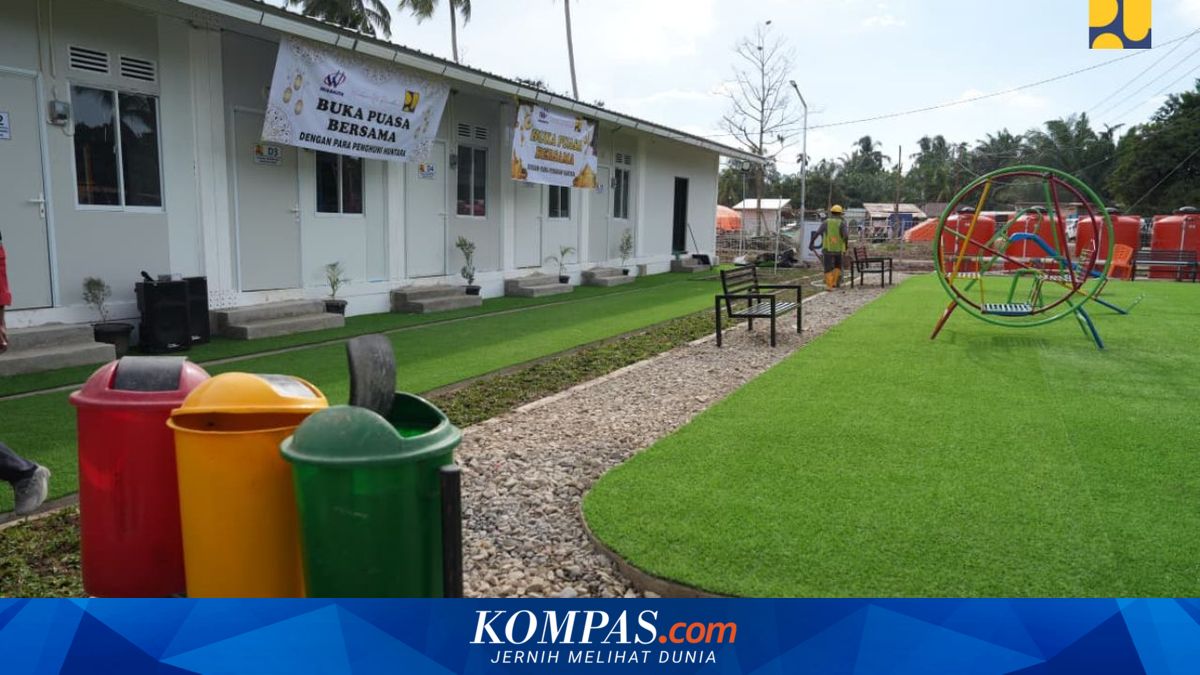
JAKARTA – Temporary housing (Huntara) in Aceh, particularly in Aceh Utara, Tamiang, and Pidie Jaya, has been criticised by disaster survivors. Based on field reports in Aceh Utara, flood survivors have complained about the obligation to pay electricity bills, which were initially promised to be free. The Minister of Public Works has provided clarification on several fundamental obstacles hindering the acceleration of construction and the complexity of inter-agency coordination in this humanitarian project. According to him, the main issue lies in differences in funding sources. Huntara built by the Ministry of Public Works is funded from the state budget (APBN), while others come from contributions by agencies like BNPB or through Corporate Social Responsibility (CSR) schemes from private companies and state-owned enterprises (BUMN). “In principle, we continue to coordinate with relevant parties, including communicating with the Ministry of Energy and Mineral Resources and PLN, to provide relief for the affected communities regarding electricity costs. We understand the position of the community as subjects who must be protected,” stated Dody on Sunday (29/3/2026). Dody emphasised that, although temporary, the building specifications still adhere to healthy house standards. One Huntara block typically consists of 12 units with integrated sanitation and kitchen facilities. “Public Works standards are very rigid in ensuring habitability. However, the challenge arises when other institutions also build Huntara in the same location with different standards or funding schemes. This often creates perceptions of injustice among the community,” he added. Nevertheless, the government is reluctant to provide an absolute deadline for the total completion of this project. The fluctuating nature of demands is the primary reason. Often, after an area is declared complete, new requests emerge from local governments or community groups in other sub-districts demanding similar facilities from the ministry. “Field dynamics frequently occur where communities specifically want only the Ministry of Public Works’ version of Huntara due to its quality standards. This causes the workload to become concentrated and difficult to establish a static endpoint,” explained Dody. In addition to electricity issues, delays in Huntara construction in Aceh Tamiang and Aceh Utara are also triggered by difficulties in procuring technically suitable land. Land provided by local governments is often still active oil palm plantations or areas requiring extensive processing. The cleaning of disaster remnants is also carried out with a more measured approach. In Pidie Jaya and Kandang, the government implements a Cash for Work or Cash Labour Intensive (PKT) pattern with wages of Rp 100,000 per person. However, this approach still prioritises technical standards. Flood sediment must be measured by volume (cubic metres) precisely before being moved using heavy equipment to designated disposal sites.
Source: jawawa.id (https://jawawa.id/newsitem/temporary-housing-in-aceh-fails-to-meet-promise-of-being-completely-free-public-works-minister-reveals-reasons-1774792278)
Originally published by Kompas (https://www.kompas.com/properti/read/2026/03/29/202924921/huntara-di-aceh-tak-sesuai-janji-serba-gratis-menteri-pu-beberkan?utm_source=ABC&utm_medium=rss), translated from Indonesian