
Tempeh Entrepreneur's 17-Year Journey: From Surviving Crises to Home Renovation and Supplying Free Meals
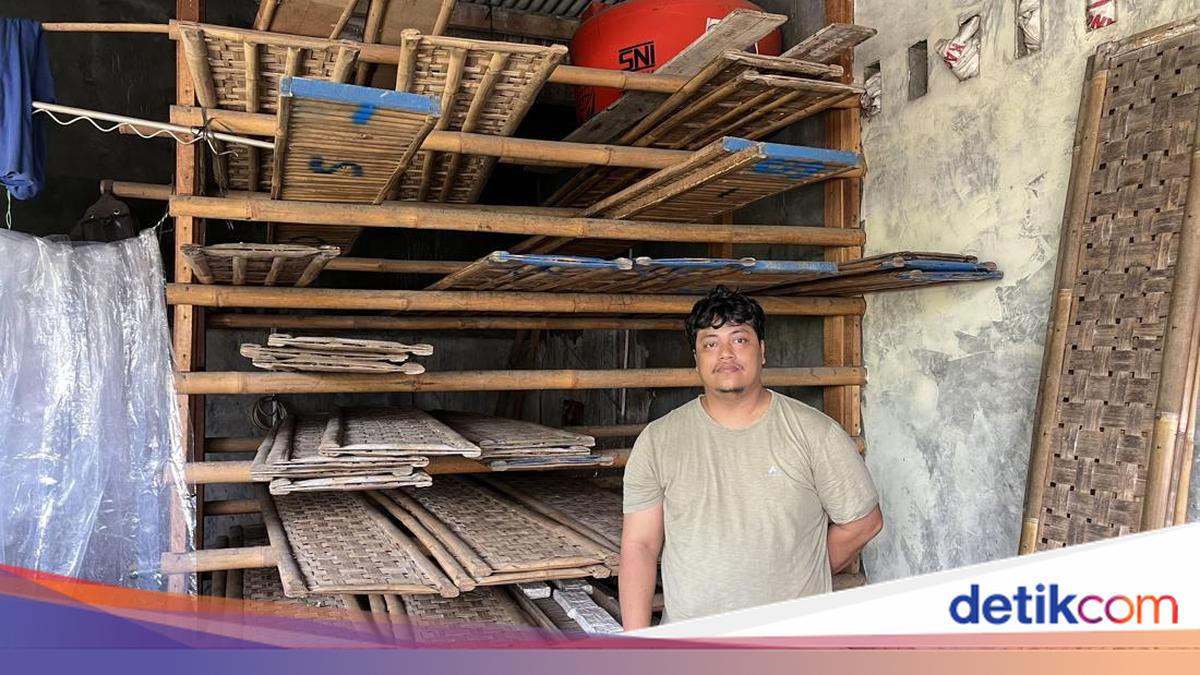
The sound of saws and hammers can be heard loudly from the front of Bambang Setiawan’s house in South Cikarang, Bekasi Regency. Several workers are busy working on the front of the house, which is currently undergoing renovation.
This house renovation is one of the results of Bambang’s long journey managing a tempeh business inherited from his father. Since 2009, Bambang has continued the family business, which has grown alongside an increasing number of customers.
He started the tempeh business from the bottom. Before managing the business himself, Bambang first understood every stage of production, including working as a labourer in the enterprise. According to him, that experience was vital to understanding how to manage a business effectively.
“We couldn’t manage this immediately. We still had to learn from the bottom; I started by working as a manual labourer,” Bambang said when met at his home in Cikarang, Bekasi Regency, some time ago.
In the early stages of his business, Bambang only served a few customers. However, amidst those conditions, he continued to strive to maintain product quality and customer trust so that the business could grow.
“It is essentially about maintaining our customers’ trust; we must not disappoint them,” said Bambang.
Throughout his journey, Bambang’s business has not been free from challenges. One of the difficult periods he faced was during the COVID-19 pandemic in Indonesia. The rise in the price of soybeans, the primary raw material, caused production costs to increase significantly.
At that time, Bamberm was in a difficult situation as he had to keep selling prices affordable for customers while raw material prices were rising.
“We cannot raise our selling prices arbitrarily. If we do, our customers might run away,” said Bambang.
To keep the business running, Bambang applied for a BRI People’s Business Credit (KUR) loan worth Rp 50 million as additional capital. The loan helped him navigate the difficult period and maintain production.
“Alhamdulillah, with that loan, we were able to survive. We could endure it and finally overcome all of it. Alhamdulillah, we are in a stable condition now,” he said.
Following that, Bambang applied for BRI KUR loans twice more, with values of Rp 100 million each. This additional capital was used for business expansion, including purchasing production equipment.
“We needed more capital to buy equipment; what was previously manual has now become semi-manual,” he said.
In a single day, Bambang’s tempeh business can produce approximately 2 quintals of tempeh. The products are marketed through mobile traders, reaching areas across Cikarang and Serang, Bekasi.
From this business, Bambang earns a gross income of more than Rp 20 million per month. This revenue is used, in part, to purchase around two tonnes of soybeans, which can sustain production for approximately 10 days.
Currently, two employees work in Bambang’s tempeh business, earning a monthly salary of approximately Rp 5 million.
“Coincidentally, they are neighbours,” said the 40-year-old man.
The Impact of BRI KUR
Bambang stated that the BRI KUR capital loan has had a significant impact on the sustainability of his business. In addition to maintaining production, the capital support has also improved his family’s economic condition.
“Indirectly, our family’s economy has also become stable,” said Bambang.
One of the benefits experienced by Bambang is that he was able to renovate his house. He mentioned that the renovation was only carried out recently after the business conditions stabilised.
“Alhamdulillah, I can renovate my house. Even though it is not large, Alhamdulillah,” said Bambang.
Becoming an MBG Supplier
The development of Bambang’s tempeh business has also led him to become one of the suppliers for the Free Nutritious Meal (MBG) programme. Initially, he received an offer to supply tempeh to the Nutrition Fulfilment Service Unit (SPPG).
After an inspection process, his tempeh products were assessed in terms of both quality and price. Now, Bambang supplies the requirements for several MBG programmes in the Cibarusah area, Bekasi Regency.
“Alhamdulillah, we have several [orders]; the goods and the price are suitable, so we supply for several MBG programmes,” said Bambang.
Deliveries are made approximately two to three times a week, depending on the demand from the SPPG. Each delivery consists of about 100 to 200 packs. From these additional orders, Bambang estimates an additional profit of around Rp 800,000 to Rp 1.2 million.
BRI’s Support for MSMEs
The BRI Unit Serang Bekasi officer, Sicillia Susan, stated that BRI continues to support the development of MSMEs through the distribution of KUR funds. The programme is expected to help MSME players increase their business capacity.
“The goal is indeed for BRI, as a government programme, to help the MSMEs located around BRI,” said Susan when interviewed separately.
For every KUR application by a customer, BRI always conducts a survey to check the business prospects and the customer’s ability to repay the instalments. Susan noted that customers with a clear business concept typically utilise the capital well, allowing their businesses to grow.
“On average, if the customer has a proper concept, a proper business, and the money is truly used for the business, Alhamdulillah, they will progress. They will certainly be in a better position than before we provided the credit,” said Susan.
Source: jawawa.id (https://jawawa.id/newsitem/tempeh-entrepreneurs-17-year-journey-from-surviving-crises-to-home-renovation-and-supplying-free-meals-1782697951)
Originally published by detikcom (https://news.detik.com/berita/d-8551534/kisah-bambang-usaha-tempe-17-tahun-lewati-krisis-renovasi-rumah-dan-pasok-mbg), translated from Indonesian