
Teluk Wondama Regency sets four key development focuses for 2027
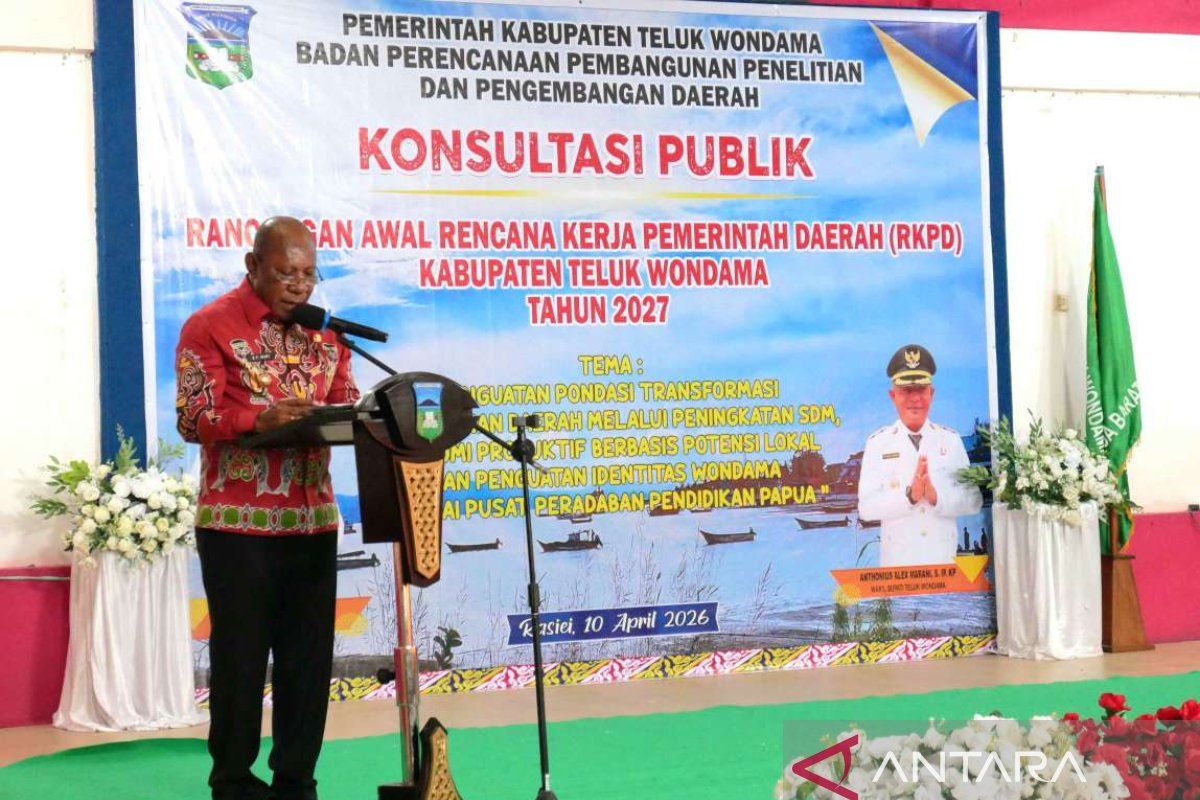
Wasior (ANTARA) - The Teluk Wondama Regency Government in West Papua has established four main focuses for the direction of regional development policy in 2027, encompassing improvements in human resource quality to strengthening the economy based on local potentials. Regency Head Elysa Auri in Wasior on Saturday stated that these four focuses form the basis for preparing the regional government’s work plan (RKPD), which was preceded by public consultation to ensure more targeted implementation next year. The first focus covers human resource enhancement through strengthening the education, health, and government apparatus sectors. The second focus involves developing a productive economy that utilises local potentials. “The second focus will later be directed towards downstreaming, empowering micro, small, and medium enterprises (UMKM), and increasing the added value of flagship commodities,” Auri said. Next, she said, the third focus targets strengthening Teluk Wondama’s identity as a centre of educational civilisation in Papua through the development of historical, customary, and cultural values. Fourth, improvements in infrastructure and regional connectivity. The establishment of these four development programme focuses is inseparable from the regional government’s limited financial capacity, yet it does not neglect the quality and standards of public service delivery. “We are not creating overly ambitious programmes. With limited budgets, the most important thing is that the programmes run well and their benefits are felt by the community,” she stated. She acknowledged that development in Teluk Wondama still faces various challenges, including inadequate human resource quality, an economic structure reliant on primary sectors, infrastructure limitations, and inter-regional disparities. Nevertheless, Teluk Wondama possesses natural resource potentials in the marine, fisheries, tourism, and historical value sectors that can be optimised to address various development challenges gradually. “We are not creating overly ambitious programmes due to limited financial capacity. However, the programmes undertaken are in line with community needs, so that the community can feel the benefits,” Auri explained.