
Telkomsel develops digital innovations to strengthen digital sovereignty
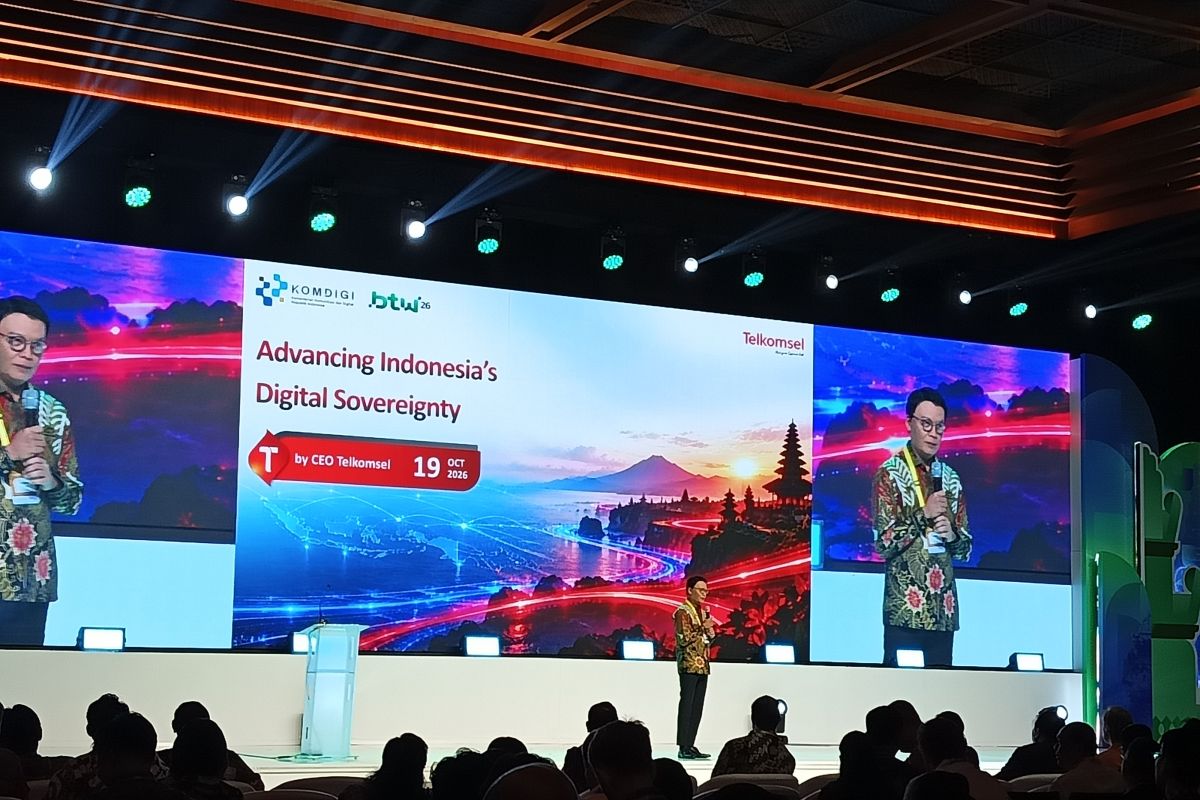
Denpasar (ANTARA) – Telkomsel is developing a range of digital technology innovations, from artificial intelligence (AI), search engines and digital security to education and green-energy-based smart-home solutions, as part of its strategy to strengthen Indonesia’s digital sovereignty.
Telkomsel President Director Nugroho said at the Bali Tech Week 2026 forum in Sanur, Denpasar, on Monday that Indonesia must not become merely a market for global technological development.
He said Indonesia’s large population gave the country the potential to develop its own technology by strengthening national capabilities, talent and the digital ecosystem.
“Indonesia has a very large market, and we cannot just be a market. We need our own technology and capabilities, supported by our own talent,” Nugroho said.
He explained that Telkomsel could no longer rely solely on connectivity services to drive the company’s growth. Expanding services beyond connectivity was becoming increasingly important as business opportunities grew in AI, the Internet of Things (IoT) and digital solutions for companies.
According to Nugroho, global telecommunications industry trends show that revenue growth from retail connectivity is tending to slow, while other sectors, including business services and digital technology, continue to grow.
Telkomsel is therefore expanding the development of digital solutions for both individual customers, or business-to-consumer (B2C), and corporate customers, or business-to-business (B2B).
One of the innovations under development is Octa, an AI platform designed to broaden access to artificial intelligence technology. It provides access to AI application programming interfaces (APIs), applications and smart assistants that developers, businesses and creators can use to build solutions suited to the needs of Indonesian society.
Octa also incorporates an approach to managing multiple AI models, or large language models (LLMs). This enables Telkomsel to select models suited to particular uses and to the cost-efficiency requirements of customer services.
In addition to Octa, Telkomsel has introduced Adelia, an AI assistant designed to be more relevant to Indonesian language and culture. It combines information search, internet browsing and AI-based conversation to help users find information.
Telkomsel is also developing Syskamling, an AI-based digital security solution intended to help detect digital fraud and scams. Nugroho said the development was expected to strengthen user protection and increase public trust in digital activities.
In education, Telkomsel has introduced Sacred Octagon, an interactive game-based mathematics learning solution that uses AI and the GASING method. The programme was developed in collaboration with mathematics professor Yohanes Surya to help improve young people’s mathematical literacy.
In the smart-home sector, Telkomsel is developing IndiHome Aura. The solution integrates connectivity, IoT and green energy, including the use of solar panels to support renewable energy consumption in households.
Nugroho stressed that the development of these solutions was part of Telkomsel’s commitment to supporting President Prabowo Subianto’s Asta Cita agenda, particularly its goals of technological independence and Indonesia’s digital sovereignty.
He said strengthening digital sovereignty required the development of technology relevant to society’s needs, improvements in human-resource capabilities and collaboration with various partners.
Through the development of Octa, Adelia, Syskamling, Sacred Octagon and IndiHome Aura, Telkomsel is seeking to expand its contribution to a national digital ecosystem that is independent, secure, inclusive and sustainable.