
Telkom Streamlines Subsidiaries with Two Simultaneous Mergers
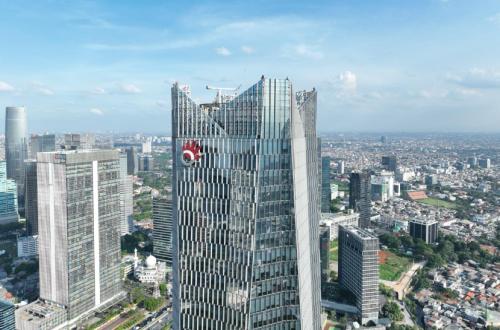
JAKARTA – PT Telkom Indonesia (Persero) Tbk (Telkom) is continuing its programme to streamline subsidiaries across TelkomGroup through two proposed mergers: PT Infrastruktur Telekomunikasi Indonesia (Telkominfra) into PT Telkom Akses, and PT Nusantara Sukses Investasi (NSI) into PT Graha Sarana Duta (GSD). Summaries of the merger plans for both corporate actions have been announced publicly in accordance with the Limited Liability Company Law.
The mergers continue Telkom’s commitment to accelerating streamlining in line with shareholder aspirations through PT Danantara Asset Management (Persero). They are also part of Telkom’s transformation from an operating holding company into a strategic holding company under the TLKM 30 strategic initiative. Of TelkomGroup’s 68 subsidiaries, 50 are targeted by the streamlining programme. Telkom has so far completed the restructuring of 28 entities. With these two proposed mergers now entering the corporate-action stage, the company is continuing to restructure the remaining 22 entities, with completion targeted before the end of 2026.
Telkom President Director Nanang Hendarno said the accelerated streamlining was being carried out in accordance with the principles of good corporate governance.
“Streamlining is a shareholder mandate that we are carrying out with full responsibility. Every merger decision is subject to comprehensive assessment, independent due diligence, and approvals at each required level in accordance with the articles of association and applicable laws and regulations. We want to ensure that every portfolio-restructuring step is accountable and delivers measurable added value for TelkomGroup, shareholders and all stakeholders,” Nanang said.
Telkom Akses to become integrated infrastructure manager
Telkom Akses and Telkominfra have complementary business portfolios. Telkom Akses focuses on managing fibre networks, including fibre access and fibre backbone. Telkominfra manages non-fibre infrastructure, ranging from core networks and service nodes, power solutions and submarine cable communication systems (SKKL) to base transceiver stations (BTS), IP radio and towers. Both companies also provide services covering infrastructure planning, construction, operations and maintenance.
Under the merger, these portfolios will be integrated into a single entity, enabling Telkom Akses to manage a broader range of digital infrastructure, from data centres and STOs to terrestrial and submarine backbones, access networks, radio access networks (RAN) and towers. The integration will allow customers—including mobile operators, internet service providers, other operators and hyperscalers—to obtain infrastructure services through a single partner. It also creates opportunities to consolidate procurement and partner management, reduce duplicated functions and improve operational efficiency. TelkomGroup will thereby strengthen its capacity to support Indonesia’s connectivity and digital-transformation needs.
Simplifying the property portfolio structure
Meanwhile, the merger of NSI into GSD is part of an effort to simplify the ownership structure of TelkomGroup’s property portfolio. NSI’s ownership of its subsidiaries will transfer directly to GSD, allowing the group to remove intermediary entities that no longer add value and manage assets more efficiently. The move will also create room for more integrated management of TelkomGroup’s property portfolio.
Unlocking value for TelkomGroup
Overall, the streamlining programme supports Telkom’s role as a strategic holding company focused on setting strategic direction, managing the portfolio, allocating capital and creating value at group level. Subsidiaries, meanwhile, will be tasked with operations in line with their respective mandates and business focuses. A leaner structure is expected to reduce duplicated costs, speed up decision-making, and improve transparency and the measurability of each business line’s performance for investors and other stakeholders.
Telkom Strategic Business Development and Portfolio Director Seno Soemadji said every entity was assessed against objective and measurable criteria.
“Within the strategic-holding framework, each subsidiary has a clear mandate and performance accountability. We assess the entire portfolio against one measure: its contribution to strengthening the core business and creating value for TelkomGroup. The mergers of Telkominfra into Telkom Akses and NSI into GSD are the outcome of that assessment, and are being carried out transparently and in accordance with applicable rules.”
Telkom said the transition would take employees’ rights and interests into account in accordance with applicable regulations. Employment arrangements will consider the principle of continuity of employment and their alignment with the policies and internal rules of the receiving companies.
Creditors’, customers’ and business partners’ rights and obligations will transfer to the companies receiving the merged entities, ensuring that existing services and co-operation continue. Both mergers will follow the required stages, including approval by the extraordinary general meetings of shareholders (EGMS) of each participating company and approval from Indonesia’s Ministry of Law.
Telkom will continue restructuring other entities under the streamlining programme in stages, with each entity subject to assessment and independent due diligence. The company will inform the public of further developments in accordance with applicable disclosure requirements.