
Telkom Expands Investment in Data Centres and Digital Connectivity
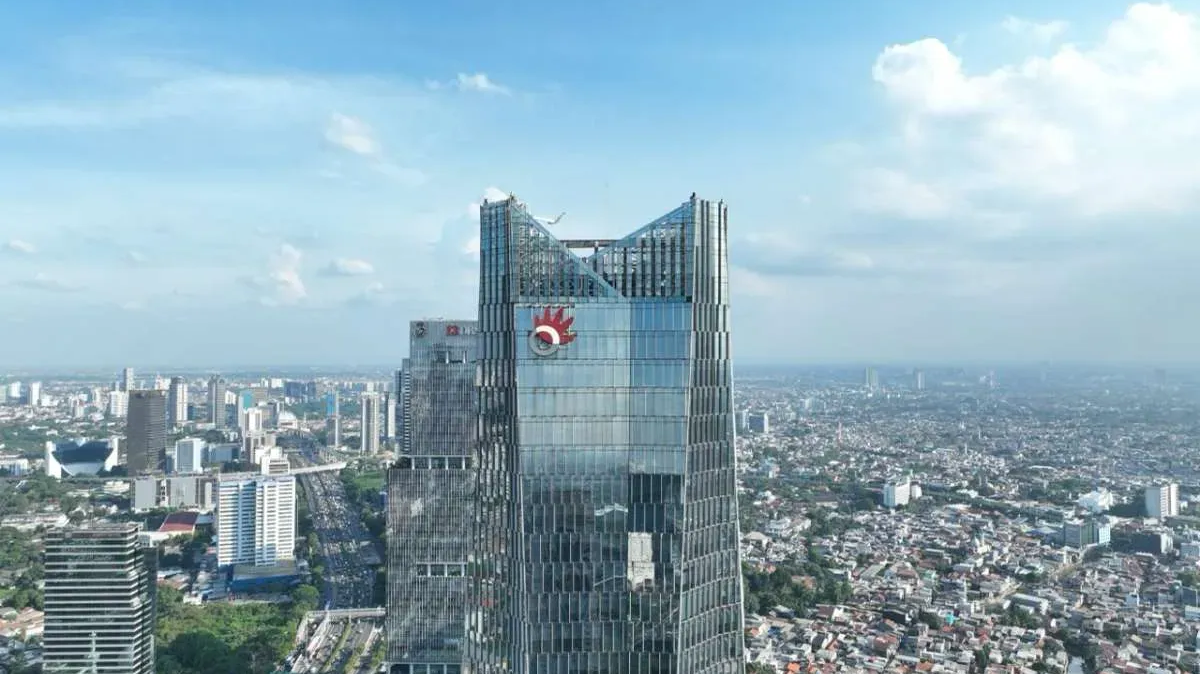
Expansion of data centres and international connectivity could reshape Telkom’s investment strategy in 2027. BRI Danareksa Sekuritas has maintained its buy recommendation on TLKM shares, with a target price of Rp3,500 per share, citing growth opportunities in the company’s digital business. Kafi said the development of NeutraDC Batam and the transformation of PT Telekomunikasi Indonesia International (Telin) could strengthen Telkom’s long-term prospects.
However, the funding required for expansion and the risk of insufficient investment in 5G networks remain concerns. The planned development of NeutraDC Batam has increased significantly in scale. According to Kafi, plans that initially covered three colocation data-centre zones, each with a capacity of 18 MW, have shifted to a facility with a total capacity of 118 MW to meet demand for artificial intelligence (AI) infrastructure.
The development is divided into two projects. BTM-1 has a capacity of 18 MW, all of which is under contract. Its initial 6 MW phase is targeted to begin operating in the fourth quarter of 2026.
BTM-2, meanwhile, is designed to have a capacity of 100 MW. It is expected to begin serving customers in 2028, making it an important part of Telkom’s data-centre expansion plans. Although Batam’s market prospects remain promising, providing supporting infrastructure is a major challenge. The availability of electricity and water could affect the smooth development of data-centre facilities in the area.
Kafi noted that planned data-centre projects in Batam have a total capacity of 1.5 gigawatts (GW), while their electricity requirements are estimated at 2 GW. By comparison, the region’s installed power-generation capacity is currently only about 1 GW. Limited water supplies are also a constraint. Batam’s reservoirs, which depend on rainfall, are considered to have limited additional capacity to meet the growing needs of the data-centre industry.
To address these issues, BP Batam requires data-centre operators to provide their own power plants and water desalination facilities. These requirements add to the investment companies must make before developing their facilities.
Data-centre development costs rise
Kafi estimates that the requirement to build supporting infrastructure adds US$1.1 million per MW to the capital expenditure for BTM-2. This is equivalent to about 14% on top of the estimated data-centre construction cost of US$7 million to US$9 million per MW.
Despite these challenges, NeutraDC Batam is considered to have a relative advantage, having secured 90 MW of electricity supply. The company is also backed by Medco as its joint-venture partner.
Although investment requirements are substantial, the ability to secure energy supplies is an important factor in keeping the project on track. Its implementation will still need to take account of funding requirements and the investment timetable.
Telin could increase Telkom’s business value
Beyond data centres, Telkom’s international connectivity business through Telin is seen as having growth potential that is not yet fully reflected in the group’s valuation. Rising demand for connectivity to support AI and cloud computing is one factor underpinning its prospects.
Kafi said more than 85% of Telin’s submarine-cable capacity has been sold. The recently launched Bifrost cable is expected to reach full capacity sales in the first quarter of 2027. Telin is also shifting its focus from conventional international voice services to connectivity.
The transformation is expected to raise earnings before interest, tax, depreciation and amortisation (EBITDA) to Rp2 trillion in 2026, in line with management guidance. In the long term, Telkom aims for connectivity to account for 80% of Telin’s revenue. The company is also targeting a valuation of Rp40 trillion to Rp45 trillion for Telin by 2030.
To support these targets, Telin plans capital expenditure of Rp32 trillion through 2031. Kafi views the business as a valuable asset that has not received sufficient attention within the Telkom group, while also offering investors exposure to growth in data centres and digital connectivity.
Telkom capital expenditure could rise in 2027
Expansion at NeutraDC and Telin could drive an increase in Telkom’s consolidated investment. While the company’s focus in 2026 is expected to be on controlling capital-expenditure intensity, Kafi sees scope for Telkom to increase investment again in 2027 to expand its digital-business capacity. Telin’s planned capital expenditure of Rp32 trillion through 2031 equates to an average of about Rp6.4 trillion a year. On that basis, Telkom’s consolidated capital expenditure in 2027 could reach about Rp35 trillion, above BRI Danareksa Sekuritas’ initial estimate of Rp29 trillion.
That projection does not include the investment required for the NeutraDC Batam BTM-2 project, estimated at Rp13 trillion to Rp17 trillion. The project’s implementation remains dependent on the divestment process for NeutraDC, while management is said to have begun exploring loan financing to support construction. In terms of funding capacity, Telkom’s debt position is considered to leave room for expansion. BRI Danareksa Sekuritas recorded the company’s net debt-to-EBITDA ratio at 0.6 times.
The ratio indicates relatively low leverage and is one factor supporting the financing of investment. Nevertheless, higher capital expenditure could weigh on free cash flow (FCF) in the short term. Kafi believes that Telkom’s shift towards high-value data-centre and submarine-cable assets could improve the visibility of its long-term growth. This potential is among the considerations behind the positive view on TLKM shares.
TLKM share recommendation and investment risks
BRI Danareksa Sekuritas has maintained its buy recommendation on TLKM shares, with a target price of Rp3,500 per share. The assessment takes into account growth opportunities in data centres and international connectivity, including the potential contributions of NeutraDC and Telin.
Investors should continue to monitor risks related to the company’s capital-allocation priorities. A key concern is the possibility of insufficient investment in 5G networks, which could affect Telkom’s competitiveness in the telecommunications business in the future.