
Telehealth and AI expected to expand healthcare access
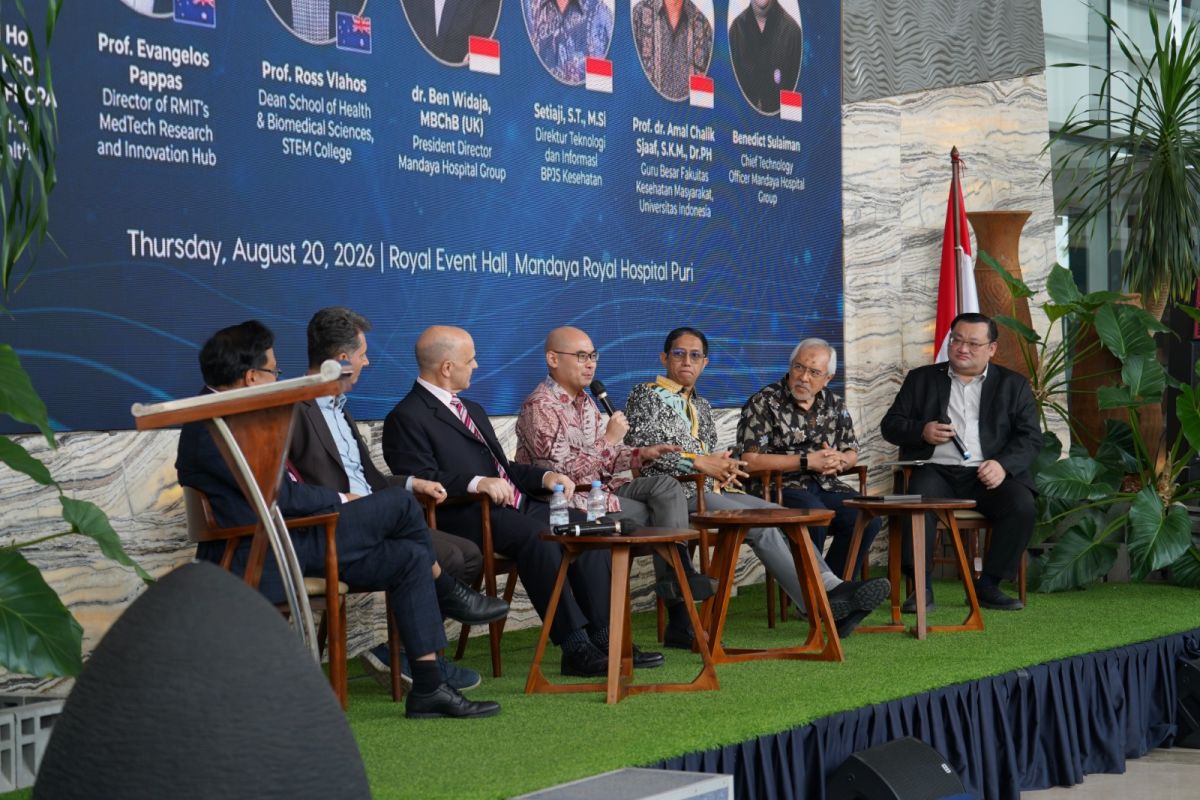
Jakarta (ANTARA) - Telehealth and Artificial Intelligence (AI) are being encouraged to expand access to healthcare services in Indonesia, especially amidst the inequality in the distribution of healthcare workers and diverse geographical conditions.
“Indonesia’s healthcare priorities require solutions that are not only innovative but also relevant to the realities faced by patients and healthcare workers in Indonesia,” said the Director of RMIT (Royal Melbourne Institute of Technology) Indonesia, Tantia Dian Permata Indah, in a written statement received in Jakarta on Thursday.
In a health forum titled “Healthier Futures, Sooner: How Technology Closes the Gap in Care” in Jakarta, the discussions focused on the use of technology for healthcare services, including telehealth, remote patient monitoring, AI, wearable sensors, biomarkers, and interconnected health systems.
These discussions are directly related to the Indonesian healthcare system, which faces challenges such as geographical conditions, an increasing burden of chronic diseases, and an uneven distribution of healthcare professionals. Medical personnel remain concentrated in urban areas and on Java, while eastern Indonesia suffers from significant shortages.
Health technology is considered capable of augmenting the capacity of healthcare workers to reach patients in areas facing limited access. Telehealth and remote monitoring, for instance, can support services without always requiring patients and healthcare providers to be in the same location.
Meanwhile, AI, biomarkers, and wearable devices serve as supports for earlier diagnosis, patient condition monitoring, as well as prevention and rehabilitation. The use of such technology still requires the involvement of healthcare professionals to ensure implementation meets clinical needs.
“Research yields the greatest value when its benefits reach patients and improve daily practices. Researchers, clinicians, and healthcare organisations need to work together from the outset so that new ideas can be implemented safely and effectively in healthcare,” said Professor Ross Vlahos from RMIT University.
The forum brought together researchers, clinicians, and health sector leaders from Australia and Indonesia to discuss the application of health technology in real-world services. RMIT University and Mandaya Hospital Group also discussed opportunities for joint research development and the application of research findings in clinical practice.
“Combining RMIT’s research expertise with Mandaya’s local clinical knowledge can help us identify relevant solutions for Indonesia and explore how these solutions can be applied responsibly in real healthcare services,” said the President Director of Mandaya Hospital Group, Dr Ben Widaja.
The collaboration between RMIT and Mandaya has the potential to expand through joint research, the application of research findings into clinical practice, healthcare workforce development, and technology trials aimed at addressing health challenges in Indonesia.
Source: jawawa.id (https://jawawa.id/newsitem/telehealth-and-ai-expected-to-expand-healthcare-access-1788465132)
Originally published by Antara (Indonesian) (https://www.antaranews.com/berita/5725288/telehealth-dan-ai-diharapkan-perluas-akses-layanan-kesehatan), translated from Indonesian