
Telecommunications Networks in 7 Flores Regions Back to Normal After Earthquake
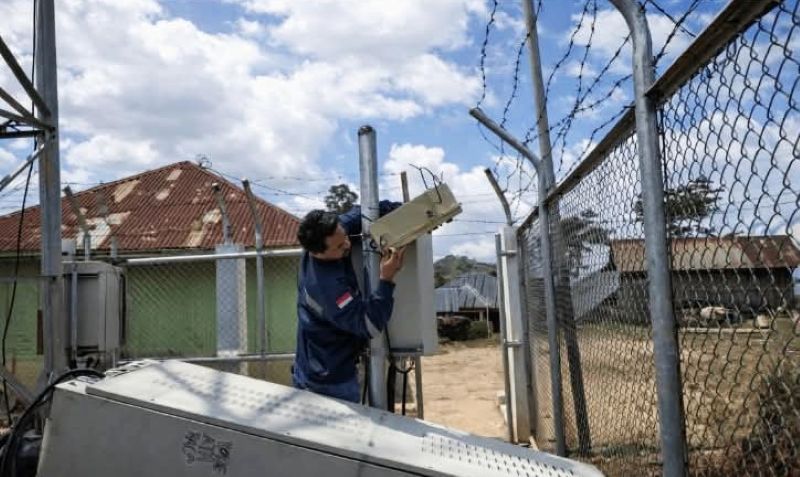
Telkomsel has confirmed that all telecommunications networks affected by the earthquake in Flores, East Nusa Tenggara, were back in operation by Tuesday (18/8). Recovery was carried out in stages to ensure the public regained access to communication and information amid post-disaster conditions.
Previously, network disruptions occurred in seven districts: Sikka, Ende, Ngada, Nagekeo, East Manggarai, Manggarai, and West Manggarai. Of the 735 Telkomsel sites operating in the region, more than 400 experienced disruption due to the earthquake.
Vice President of Area Network Operations for Java Bali at Telkomsel, Nugroho Adi Wibowo, said the recovery process involved deploying technical teams, adding electrical power support, and coordinating with various parties to reach affected locations.
“Post-disaster network recovery requires joint effort and rapid response. Since the beginning of the incident, the Telkomsel team together with Telkom Group and all relevant partners have been working on the ground to restore services,” Nugroho said.
According to him, network recovery is not only about restoring telecommunications infrastructure. Connectivity is also needed by the public to communicate with family, obtain important information, and support coordination during the emergency response period.
One of the challenges in the network recovery process was the disruption of electricity supply in several locations. The earthquake caused damage to some electricity distribution infrastructure, including transformers, poles, and network cables.
To keep sites operational while waiting for electricity supply to return to normal, Telkomsel deployed 44 fixed generators, 27 mobile generators, and 29 battery backup packs. Several mobile generators had to be brought in from outside Flores. The mobilisation of these devices faced challenges because some road sections were damaged and affected by landslides.
“We carried out various scenarios to accelerate recovery, including optimising available resources on site, mobilising generators, and bringing in device support from outside the region. All efforts were made while prioritising the safety of teams working in the field,” Nugroho said.
In addition to electricity issues, landslides on several road sections also made it difficult to mobilise personnel and equipment to disrupted sites.
The technical team then mapped the condition of each site based on the level of damage and its impact on public services. In this process, Telkomsel coordinated with Telkom Group, local governments, regulators, PLN, BPBD, and various other relevant parties.
Although all affected sites have returned to operation, Telkomsel is continuing monitoring at several locations. Monitoring is carried out to ensure network quality, stability of electricity supply, and the condition of supporting infrastructure are maintained.
“In disaster conditions, connectivity has a much greater meaning. The public needs it to inform family, obtain official information, and support coordination among various parties in disaster management,” Nugroho said.
Therefore, Telkomsel ensures the recovery process does not stop after all sites are back in operation. Network optimisation and monitoring continue to be carried out to maintain service quality for the public in the earthquake-affected Flores region.