
Teikyo University expert examines the legal status of generative AI works
Under Japan’s Copyright Act, a work is an expression creatively produced from thought or emotion in the fields of literature, academia, art or music.
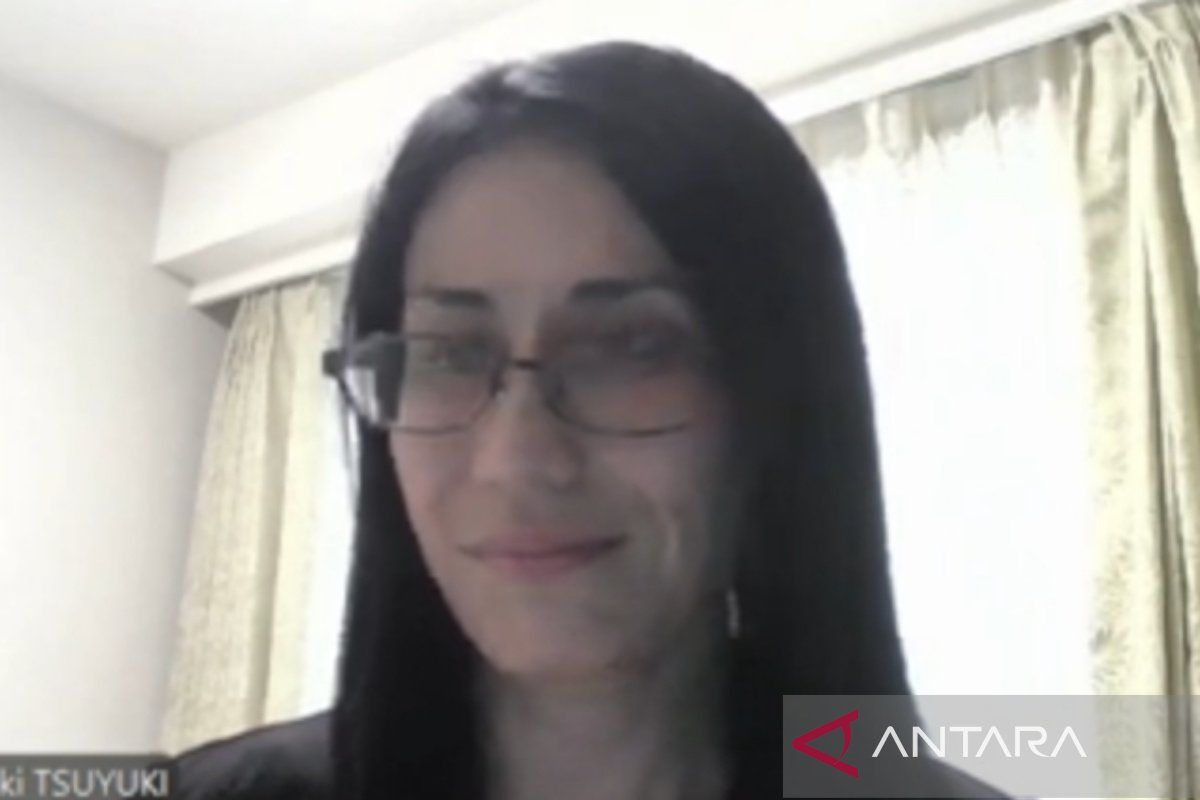
Purwokerto (ANTARA) — Professor Miyuki Tsuyuki, a legal expert at Teikyo University, Japan, highlighted the legal status of generative artificial intelligence works and the role of human involvement in determining copyright protection.
Speaking at the 4th International Conference on Law, Governance, and Social Justice (ICOLGAS) 2026 in Purwokerto, Banyumas Regency, Central Java, on Tuesday, she outlined the legal challenges arising from the rapid development of generative artificial intelligence.
“Under Japan’s Copyright Act, a work is an expression creatively produced from thought or emotion in the fields of literature, academia, art or music,” said Miyuki, who participated online.
According to her, this provision places human mental activity as an essential element in determining what constitutes a work. The development of generative AI has therefore raised questions about the position of humans in the creation of machine-generated works.
According to Miyuki, AI output that uses data selected by humans and is generated based on human instructions can be categorised as a work eligible for copyright protection.
Meanwhile, generative AI output that uses data selected by a machine and is generated based on human commands presents a different problem.
“Such output is not categorised as a work protected by copyright,” she said.
However, she questioned the possibility of exceptions or new standards regarding the use of prompts, particularly when human involvement in producing AI output is substantial.
She cited a case in Japan in which an individual was suspected of reproducing an AI-generated image without permission.
“The image was created using Stable Diffusion, with its creator using more than 20,000 prompts to produce the final image,” she said.
Beyond copyright status, Miyuki highlighted the potential for legal violations arising from generative AI output.
These risks cover intellectual property rights, such as copyright, trademarks, patents and designs.
“Risks may also concern personal rights, including privacy, image, publicity, name and honour. Even trade secrets such as customer lists, recipes, technical knowledge and algorithms could be affected,” she said.
At the training stage, she said, questions arise over the use of copyrighted works as data to train AI without the permission of rights holders.
She explained that Japanese law, through Article 30, Paragraph (4), permits the use of works for data analysis under certain conditions, provided the stipulated requirements are met.
According to Miyuki, the rapid pace of AI development means new legal issues continue to emerge.
“Situations that are currently considered new problems will eventually become issues of the past once they have been tested, examined and resolved through the development of the law,” she said.
Source: jawawa.id (https://jawawa.id/newsitem/teikyo-university-expert-examines-the-legal-status-of-generative-ai-works-1789466222)
Originally published by Antara (Indonesian) (https://www.antaranews.com/berita/5742017/pakar-teikyo-university-soroti-status-hukum-karya-ai-generatif), translated from Indonesian