
Tehran Attack Sparks Global Condemnation and Peace Calls
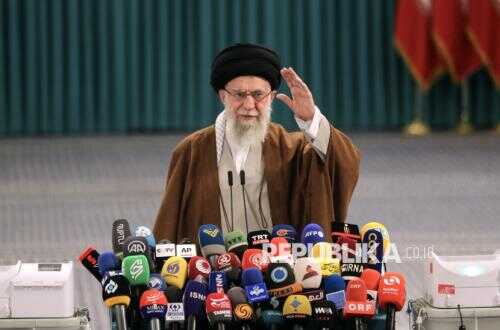
The Indonesian Ulama Council (MUI) has expressed profound grief over the death of Iran’s Supreme Leader Ali Khamenei, following a series of military attacks conducted by the United States and Israel against Iranian territory. The statement, issued through MUI Circular Letter No. Kep-28/DP-MUI/III/2026 and signed by MUI Chairman Anwar Iskandar and Secretary General Amirsyah Tambunan, conveys the council’s condolences to the Iranian people and prays for the deceased as a martyr.
The MUI strongly condemns the Israeli attacks supported by the United States, deeming them contrary to humanitarian values and Indonesia’s constitutional commitment to uphold world order based on independence, perpetual peace, and social justice. The council views the military operations as a serious escalation that risks drawing the Middle East into a broader open conflict. Airstrikes reportedly targeting a primary school in Iran and killing approximately 160 children are characterised as grave violations of civilian protection principles and breach Article 2, paragraph 4 of the United Nations Charter, which prohibits the use of force against a nation’s territorial integrity and political independence.
However, the MUI regards Iran’s retaliatory strikes against Israeli and American military bases as justified self-defence under international law, provided they target military installations. Iran launched missile attacks on Israel and US military facilities in the Middle East following initial assaults on 28 February 2026 that struck multiple locations in Iran, including the capital Tehran. Iran’s national television confirmed Khamenei’s death from the missile strikes. On the same day, Iran’s Supreme National Security Council Secretary Ali Larijani announced that the Assembly of Experts would convene immediately to begin the process of selecting a new Supreme Leader according to constitutional procedures.
Within the broader geopolitical context, the MUI views this attack not as an isolated incident but as part of a larger regional strategic configuration, including alleged efforts to weaken Iran’s position in the Persian Gulf and limit its support for Palestinian liberation. Regarding the Israeli-Palestinian conflict, the MUI urges other nations to serve as mediators and halt the use of military force as a political pressure instrument.
The MUI also examines the US role in the initiative known as the Board of Peace (BoP), purportedly aimed at managing the Palestinian conflict. However, the council questions the effectiveness and direction of this policy, whether it genuinely pursues just peace or merely reinforces an inequitable security architecture. Consequently, the MUI urges the Indonesian government to withdraw its membership from the BoP if it is deemed ineffective in advancing Palestinian independence.