
Teachers’ Welfare Remains Uneven as National Education System Bill Urged to Set Fair Pay Standards
JAKARTA — Teachers’ welfare remains a challenge in efforts to improve the quality of national education. The low incomes of some honorary teachers and the lack of pay standards that account for differences in living costs across regions have drawn attention during discussions on the Draft Law on the National Education System (RUU Sisdiknas).
An online survey by the Institute for Demographic and Poverty Studies (IDEAS) and GREAT Edunesia Dompet Dhuafa in May 2024, covering 403 teachers in 25 provinces, found that 74 per cent of the honorary or contract teachers surveyed earned less than Rp2 million a month. The findings highlight the need for stronger policies to ensure educators receive a decent income.
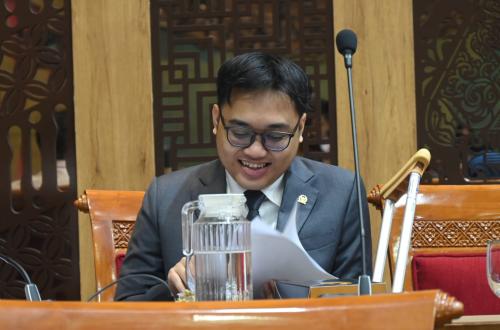
Muhammad Hilman Mufidi, a member of the House of Representatives’ Commission X from the National Awakening Party (PKB), said that the fair-pay standards proposed in the RUU Sisdiknas should take into account living costs in each region. A single national figure would not work, he said, because living costs, goods prices and people’s basic needs differ from one area to another.
“I don’t think a fair standard can be one figure for the whole of Indonesia. Prices of goods and housing costs vary, as do people’s needs for clothing, food and shelter in each region. The measure therefore needs to reflect expenditure in the area where a teacher works, be adjusted for inflation and refer to the provincial or regency/municipal minimum wage, which would be much better,” Hilman said in Jakarta on Wednesday (25 November 2026).
He said teacher pay standards should be drawn up with inflation and the provincial minimum wage (UMP) and regency/municipal minimum wage (UMK) in mind. This would make welfare policies for educators more responsive to the economic conditions in the areas where they work.
The differences are evident in Hilman’s electoral district, East Java II. Under the East Java Governor’s Decree on 2026 UMK rates, the minimum wage in Pasuruan Regency is Rp5,187,681, while in Probolinggo City it is Rp3,045,172 — a gap of more than Rp2.1 million.
Statistics Indonesia (BPS) recorded annual inflation of 3.23 per cent in October 2026. Inflation in the food, beverages and tobacco group stood at 4.82 per cent.
Hilman also highlighted the lack of robust provisions requiring education providers to pay educators a decent income. He said schools and universities that failed to meet their welfare obligations under the law should face sanctions.
“If a school or university is unable to provide decent welfare in accordance with the applicable laws and regulations, I believe it should and ought to be sanctioned. This could range from a reprimand and administrative penalties to the most serious measure, a review and revocation of its licence. Decent welfare for teachers, lecturers and education staff is essential if pupils and students are to receive a good-quality education,” he said.
The issue is linked to several provisions in current education legislation. Article 14(1)(a) of Law No. 14 of 2005 on Teachers and Lecturers gives teachers the right to an income above the minimum cost of living and to social welfare guarantees.
However, Article 15(3) of the law states that teachers employed by education units run by the community are paid in accordance with an employment contract or collective labour agreement. A similar provision applies to lecturers under Article 52(3).
Separately, Law No. 27 of 2026 on Employment Protection stipulates that minimum wages are set on the basis of decent living needs, economic conditions and employment. It also prohibits employers from paying wages below the minimum wage.
The sanctions provisions in the Teachers and Lecturers Law do not specifically list violations of the salary-payment obligations set out in Articles 15 and 52 as grounds for penalties under Article 79. That article provides for sanctions including reprimands, written warnings, restrictions on activities and the suspension of an education unit’s operations for breaches of other provisions.
For higher education institutions, Article 70(3) of Law No. 12 of 2012 on Higher Education requires the governing body to provide basic salaries and allowances to lecturers and education staff. However, breaches of this obligation are not included among the violations subject to sanctions under Article 92.
The RUU Sisdiknas, which brings together the National Education System Law, the Teachers and Lecturers Law and the Higher Education Law, is expected to offer an opportunity to strengthen protections for educators’ welfare. In July 2026, the House of Representatives’ Commission X submitted the draft to the House’s Legislation Body for harmonisation before it is designated as a House legislative initiative.
Hilman said he supported the demands raised by students over teachers’ welfare during demonstrations marking National Teachers’ Day 2026. The Alliance of Indonesian Student Executive Bodies (BEM SI) presented seven demands at a rally on Jalan Medan Merdeka Selatan in Central Jakarta on Wednesday afternoon. One of its main demands was a guarantee of decent pay and welfare for all teachers, particularly honorary teachers and those who are not state civil servants (non-ASN).
“In principle, I agree with and support the voices raised by the students. I believe they are expressing concerns that need to be heard. Teachers have struggled for the future of all of us, for the future of our children,” Hilman said.
The government previously increased the monthly incentive for non-ASN teachers from Rp300,000 to Rp400,000 per person in 2026. Hilman welcomed the policy but said the increase had not fully addressed teachers’ welfare concerns.
He said he hoped deliberations on the RUU Sisdiknas would provide an opportunity to strengthen protections and income security for educators. Improving the quality of education, he said, must go hand in hand with ensuring that teachers, lecturers and education staff receive decent welfare.
Source: jawawa.id (https://jawawa.id/newsitem/teachers-welfare-remains-uneven-as-national-education-system-bill-urged-to-set-fair-pay-standards-1795618385)
Originally published by Republika (https://news.republika.co.id/berita/tp2aj3522/kesejahteraan-guru-belum-merata-ruu-sisdiknas-didorong-atur-standar-upah-layak), translated from Indonesian