
Teachers in the Social Media Era: Exemplarity That Never Goes Offline
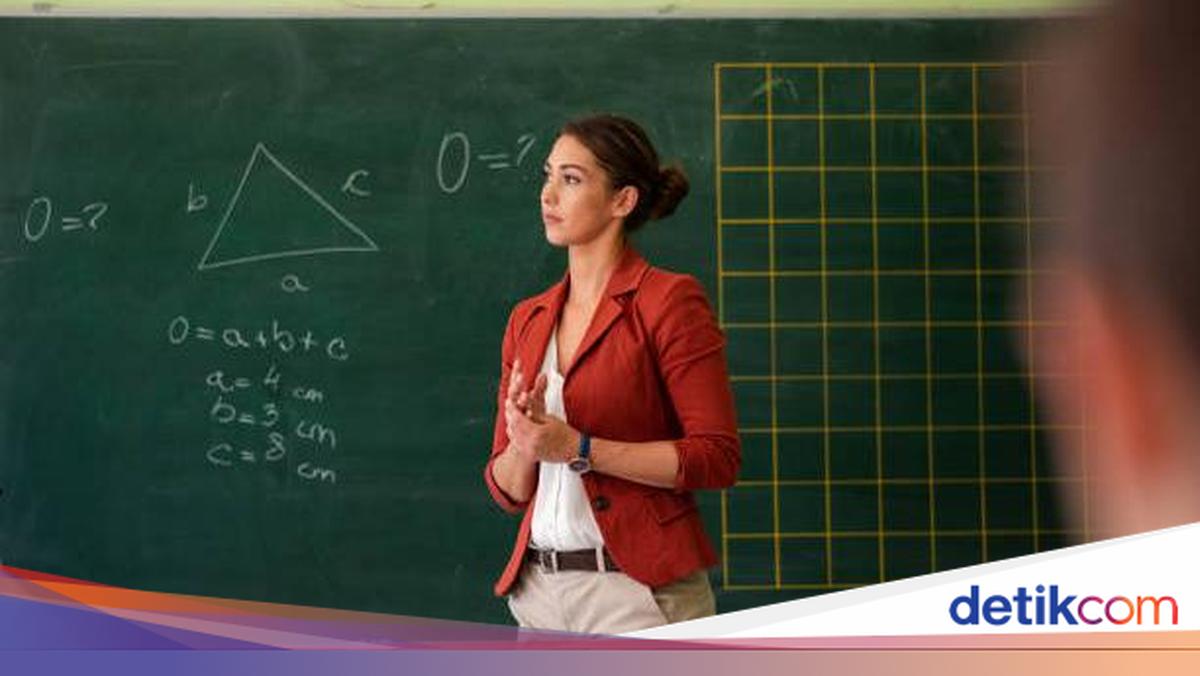
Being a teacher in the age of social media is evidently far more complex than simply standing in front of a classroom. In the past, a teacher’s role model status was primarily seen through how they taught, spoke, dressed, and interacted with students. Today, that footprint extends to mobile phone screens. What is uploaded, commented upon, or even recorded by others can quickly become public consumption.
An incident that occurred in Pekalongan Regency some time ago provides food for thought. Circulating CCTV footage showed a headmaster and a teacher engaging in inappropriate conduct within the school environment. The local government subsequently took administrative action against both individuals.
It is certainly unfair to use the behaviour of a few to judge millions of dedicated Indonesian teachers. I also do not wish to view such incidents solely through the lens of sensation. There is an educational question that I believe is far more important: What happens when someone who teaches values every day demonstrates behaviour that contradicts those very values?
This question becomes increasingly relevant in an era where almost everyone carries a camera in their pocket. Mistakes that might previously have been known only to a few can now move from one mobile phone to another in minutes or even seconds. Schools no longer possess walls that can truly separate the educational space from the public sphere. Teachers may go home after school hours, but their role as an exemplar never truly goes offline.
When Teachers Enter Social Media
I do not belong to the group that believes teachers should avoid TikTok, Instagram, YouTube, or other social media platforms. On the contrary, teachers need to be present there. Our students are growing up in a digital ecosystem and spend a significant portion of their lives in that space.
Many teachers have proven that social media can be an extraordinary educational space. Material that was once heard by only 30 students in a classroom can now reach thousands of people. Mathematics teachers can make formulas seem simple, history teachers can bring past events to life, while religious and civic teachers can bring conversations about values into a space closer to the younger generation.
The issue is not whether teachers use social media or not. The problem arises when the logic of social media begins to override the awareness of being an educator. The desire for likes, comments, followers, and going viral sometimes thins the boundary between personal expression and professional dignity.
We certainly do not need to criticise every teacher who dances on TikTok. Teachers are not humans without private lives. They are allowed to joke, sing, dance, holiday, have hobbies, and show other sides of their lives.
However, freedom of expression never exists in isolation. It is always accompanied by an awareness of context and consequences. The issue becomes different when content is created during lessons, involves students without considering privacy, carries the school’s identity, contains inappropriate elements, or displays behaviour that contradicts the values taught to students.
‘Digugu lan Ditiru’ in the Digital World
We know the Javanese expression ‘guru digugu lan ditiru’ (a teacher is trusted and imitated). Their words are believed, and their behaviour is emulated. In the social media era, the meaning of this expression has not disappeared; rather, its scope has expanded. Students no longer know their teachers only through interactions at school. They can find their teachers’ social media accounts, view their uploads, read their comments, and even witness how their teachers respond to differing opinions in the digital space.
This is where Albert Bandura’s social learning theory remains highly relevant. Humans learn not only through advice but also by observing the behaviour of others. For a child, a teacher is one of the adult figures whose behaviour possesses educational power.
I refer to this need as ‘digital teacher exemplarity’. Simply put, digital exemplarity is the ability of an educator to maintain consistency between the values they teach in the classroom and the behaviour they display in the digital space.
This does not mean a teacher’s social media account must become a school notice board, nor does it mean every post must contain moral instruction. Digital exemplarity begins with simple things: knowing boundaries, respecting privacy, maintaining appropriate communication with students, understanding digital footprints, and being aware of the consequences of what is published.
Through its guidelines on Global Citizenship Education in a Digital Age, UNESCO also places educators in a vital position to prepare students to act ethically and responsibly, both in the physical and digital worlds. This means a teacher’s digital competence is not enough to be measured by the ability to use learning applications or create attractive presentations. There is a more fundamental competence: ethical proficiency in using technology.
Teachers Are Not Angels
Amidst these demands, there is one thing I believe must be emphasised: Do not use the need for exemplarity as a reason to eliminate a teacher’s private life.
We sometimes hold teachers to a moral standard that is almost impossible. A small mistake is recorded, shared, and then judged en masse on social media. Yet, teachers are also human. They can be tired, make errors, have personal problems, and require private space. Therefore, digital exemplative behaviour must not turn into moral surveillance over every aspect of a teacher’s life.
What we need is not a teacher who pretends to be perfect, but a teacher who possesses professional awareness. There is a difference between a human error and an action that damages professional dignity, violates students’ rights, or contradicts the responsibilities of an educator.
Source: jawawa.id (https://jawawa.id/newsitem/teachers-in-the-social-media-era-exemplarity-that-never-goes-offline-1789013447)
Originally published by detikcom (https://news.detik.com/kolom/d-8656526/guru-di-era-media-sosial-keteladanan-yang-tak-pernah-offline), translated from Indonesian