
Teachers and Parents of MBG Recipients Voice Concerns at Constitutional Court Hearing
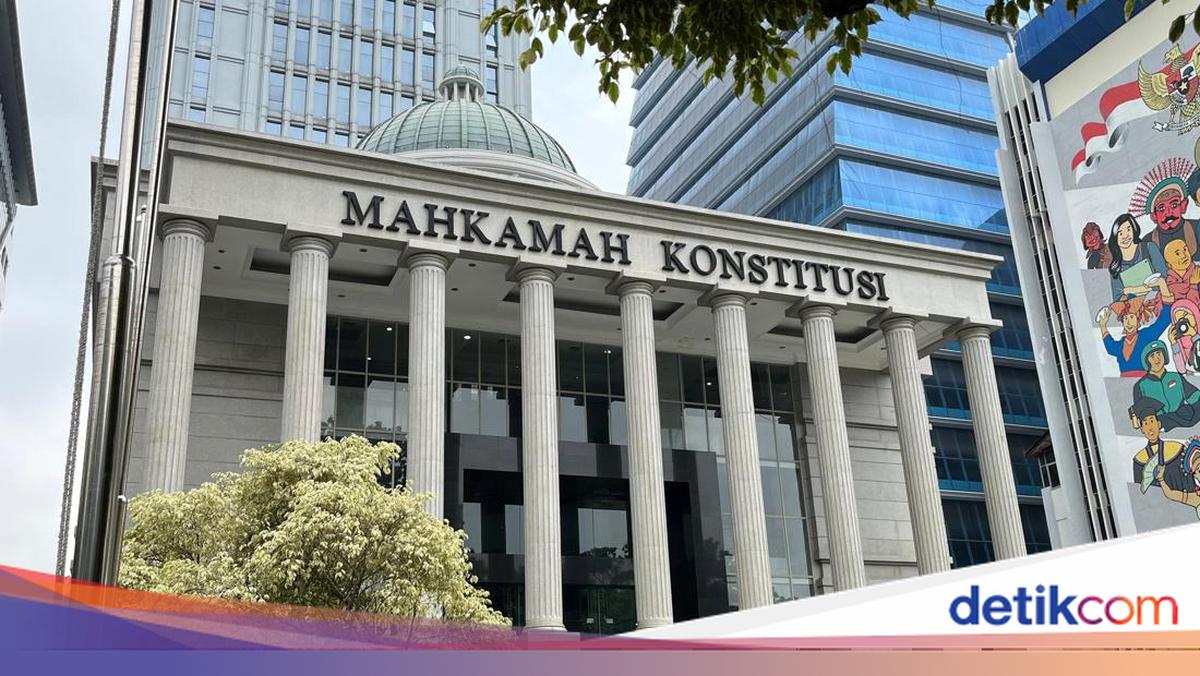
The Constitutional Court (MK) held a follow-up hearing on a lawsuit concerning the education budget for the free nutritious meal programme (MBG) in the 2026 state budget (APBN). During the session, teachers and parents of MBG recipients shared their grievances about the programme’s implementation.
The hearing for cases number 40, 52, and 55/PUU-XXIV/2026 took place at the MK Building in Central Jakarta on Monday (15/6/2026). Iman Zanatul Haeri, a history teacher at Madrasah Aliyah Al-Tsaqafah, Pondok Pesantren Yayasan Said Aqil Siroj (SAS) and Head of Teacher Advocacy at the Education and Teachers Association (P2G), along with Rika Iffati Farihah, a mother of MBG recipients, appeared as witnesses for the petitioners.
Iman initially recounted the impact felt by teachers after the MBG programme began. He stated there had been mass terminations of honorary teachers and part-time government contract teachers (P3K) who were deemed already prosperous following the introduction of MBG. “In short, all types of teachers are affected by MBG,” Iman said.
Iman claimed to have surveyed 239 teachers, with results showing 92 teachers felt their workload had increased and learning time had decreased since MBG was introduced. He said other complaints included insufficient income, salary delays, reduced educational facilities, late allowances, and the absence of opportunities to be appointed as full P3K teachers. “From the survey, several main themes emerged from fellow teachers: career uncertainty, declining welfare, allowance cuts, reduced education budgets, increased workload, policy inequality, and psychological impact. What did teachers say? ‘I doubt continuing my career as a teacher.’ I curated hundreds of responses down to 11 key points,” he stated.
Iman also mentioned findings that additional teaching hours for part-time high school P3K teachers were not paid, duties as a homeroom teacher received no honorarium, and roles as activity supervisors obtained no compensation. He also cited findings of P3K teachers comparing their honorariums with the income of SPPG (Nutrition Fulfilment Service Unit) staff. “Many more elementary school teachers in Banyuwangi, East Java, part-time P3K teachers, said this—I must convey this because it is testimony, not my words—‘As a teacher recently appointed as a part-time P3K, I am truly anxious about the sustainability of my status. Moreover, the salary I receive as a part-time P3K is very low. In the end, I cannot help but compare my income to that earned by SPPG officers,’” he recounted.
Iman stated the majority of survey respondents indicated that MBG implementation disrupted teaching and learning activities in schools. Some respondents highlighted the quality of the MBG menu, resulting in much food not being consumed by students. “The most frequently cited impact was the reduction of effective hours due to the distribution, collection, and return of containers, which strongly contradicts the Law on Teachers and Lecturers, often taking place during lesson time,” he said.
Iman said many respondents also conveyed that the MBG programme added to teachers’ burdens because they had to be involved in the food distribution process, counting packages, and ensuring the return of food containers. He stated that filing the judicial review at the MK was an effort to evaluate the budget for teacher welfare.
Rika, the mother of two children receiving MBG in Sleman, claimed she was asked not to lodge complaints on social media regarding MBG. She said she was instructed to submit complaints directly to the SPPG or the school. “The school accepted MBG without even consulting us as parents. We were simply notified that the school would receive MBG. We were not asked for consent. Some time later, after MBG started running, negative news began to emerge. There were poisonings, there were problems. The school again informed us that we were not allowed to convey these complaints on social media but had to go through the school or the SPPG,” she said.
Rika questioned the importance of MBG in all regions with differing economic levels. She stated she had no issue if MBG were provided to underdeveloped, frontier, and outermost (3T) regions. Rika also highlighted that children’s food preferences differ and cannot be standardised with a single menu. She said many children did not eat the MBG menu, which instead caused waste. “So it is rather strange because the child is not attending school, but we must come to school to collect the MBG. This is troublesome, especially if, for example, the family is on holiday out of town. So sometimes it often ends up not being eaten, not collected, and somehow the school then has to deal with that waste, that rubbish,” she said.
Rika then highlighted the MBG snack menu, which she considered unhealthy, and the abundance of plastic packaging in the food. Rika assessed that the large MBG budget would be better used to improve teacher welfare, add library books, and renovate classrooms. As a parent, she felt she did not benefit from the existence of MBG. “So we feel we are not benefited by MBG. MBG has no positive effect on its recipients, including our children. It even tends to be negative because they end up afraid of food poisoning, and they also become accustomed to ultra-processed foods and so on,” she said.
Source: jawawa.id (https://jawawa.id/newsitem/teachers-and-parents-of-mbg-recipients-voice-concerns-at-constitutional-court-hearing-1781520914)
Originally published by detikcom (https://news.detik.com/berita/d-8533142/guru-dan-ortu-murid-penerima-mbg-curhat-di-sidang-mk), translated from Indonesian