
Tea Plantation Collaboration Boosts Women Workers' Welfare and Global Competitiveness
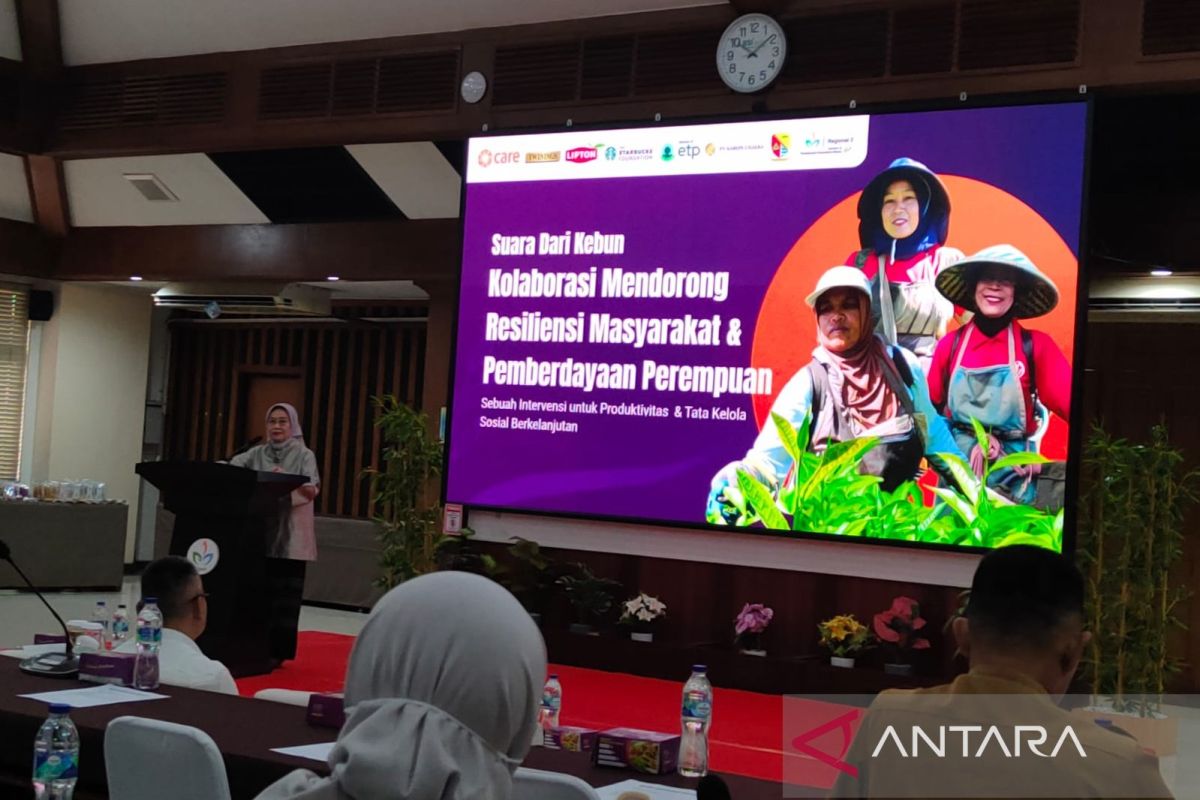
Women tea plantation workers face a double burden. Before dawn, they manage household duties, then spend the day picking tea in the fields. Bandung (ANTARA) – Multi-stakeholder collaboration led by CARE Indonesia in tea plantations is key to improving women workers’ welfare and equality, while boosting the commodity’s global competitiveness. According to Iriana Ekasari, Chair of the Indonesian Tea Council, in Bandung on Monday, Indonesia’s tea industry can no longer rely solely on taste quality in international auctions as global markets increasingly prioritise women workers’ rights and environmental sustainability as premium criteria. This legendary West Java commodity, which once dominated European, Egyptian and Russian markets since the early 1900s, is now being pushed to adopt a new narrative based on Sustainable Development Goals (SDGs). ‘The world has changed. Gender equality and youth empowerment are now key determinants for global consumers when choosing tea products. Worker rights are no longer seen by companies as costs or operational expenses, but as new revenue streams through special women-focused product labels,’ Iriana said during a public discussion titled ‘Multi-stakeholder Collaboration to Achieve Inclusive, Productive, and Sustainable Tea Plantations’ at PTPN 1 Regional 2 Office in Bandung. Iriana added that labelling tea as produced through care for women workers, who bear the double burden, is expected to push international prices beyond standard auction rates. The multi-stakeholder collaboration is implemented by CARE Indonesia through Community Development Forums (CDFs) in the tea plantations of Banjarsari, Margaluyu, and Indragiri villages in Bandung Regency, in collaboration with state-owned enterprise PT Perkebunan Nusantara (PTPN) 1 Regional 2 and private company PT Kabepe Chakra. CARE Indonesia CEO Dr Abdul Wahib Situmorang explained that the CDFs, launched in 2023, serve as a shared space bringing together workers, communities, plantation management, village governments, and community protection groups. To date, the CDFs have strengthened village-level mechanisms for women and child protection through the Women and Child Protection Task Force (SAPPANA), dialogue forums, and accessible complaint channels. Additionally, community capacity-building via the CDFs covers leadership, communication, gender equality, disaster risk reduction, alternative livelihood development, and gender-based violence prevention. Abdul added that the most significant change from the programme is the emergence of safe spaces and increased confidence among communities to actively participate in decision-making, both in tea-picking jobs and community life. Women are now actively contributing opinions, leading forums, and driving solutions for their communities. ‘The programme has shown a significant increase in community participation, with 1,812 people directly involved in CDFs across three plantation areas in three villages. 91.7% of community members feel they have an active role in decisions affecting their welfare. Additionally, women now hold 145 positions within the CDF structure, including 34 leadership roles,’ he said. Abdul further explained that the CDFs established in the three villages have also spurred community initiatives directly improving local welfare. Through the development of three Community Business Groups (KUBE) in Malabar, Pasir Malang, and Nagara Kanaan plantations, with varied businesses such as tea stalls, LPG sales, fertilizer sales, dried lemons, coffee, mushrooms, and processed vegetables and fruits. These business developments were based on local resource potential and community needs. The three CDFs have generated annual revenue of Rp75.6 million by November 2025 through these ventures. Abdul added that the CDFs now reach 1,000 women workers across the three plantation villages most in need. ‘Women tea plantation workers face a double burden. Before dawn, they manage household duties, then spend the day picking tea in the fields. Through the CDFs, they are trained in leadership, disaster mitigation, and gender equality, enabling them to confidently voice their rights to company management,’ Abdul said. The programme’s direct impact was acknowledged by Agus Margono, head of Indragiri village in Rancabali subdistrict. Of his 4,000 constituents, around 60% are women tea workers. ‘Initially, changing mindsets was difficult due to workers’ limited time. But now the group has 80 members, 70 of them women. The SAPPANA task force at village level also emerged from the CDF,’ Agus said.