
TBS Prices Plunge as Deputy Agriculture Minister Issues Ultimatum to Palm Oil Mills
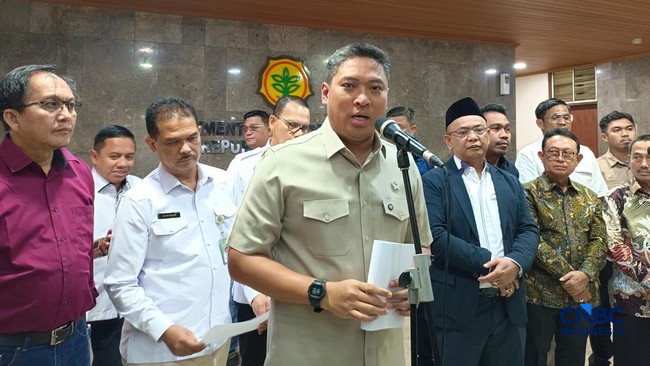
Deputy Agriculture Minister Sudaryono has stated that the government will take action against palm oil mills (PKS) purchasing fresh fruit bunches (TBS) below the set price, with penalties ranging from administrative sanctions to business license revocation. The remarks came after the government received numerous complaints from palm oil farmers regarding plummeting TBS prices following the announcement of the single-door natural resource export policy. “If any regulatory violations are suspected during implementation, the Ministry of Agriculture, under Permentan No. 13 of 2024, can impose sanctions as per applicable regulations, including administrative penalties or license revocation, depending on the issuing authority,” Sudaryono said at a press conference in his Jakarta office on Tuesday, 26 May 2026. Additionally, the Ministry of Agriculture has partnered with the National Police Food Task Force to monitor potential violations on the ground. “The Ministry of Agriculture has also collaborated with the National Police Food Task Force to address any legal violations,” he added. Sudaryono revealed that the government has identified 139 palm oil mills across Indonesia that have reduced TBS purchase prices for farmers following President Prabowo Subianto’s recent announcement of the single-door export policy. “We hope this announcement will prompt adjustments in TBS purchase prices. We urge all palm oil mills across Indonesia to adhere to the set prices, as we have identified 139 mills nationwide that have lowered their TBS purchase rates,” he said. The price reductions vary significantly, with some areas in West Sulawesi seeing drops of up to Rp1,200 per kilogram. “Some prices have fallen by Rp50, others by Rp300, with variations reaching Rp1,200 per kg in West Sulawesi. We are monitoring all data and will assess why and how these changes occurred, which is a major concern for the Ministry of Agriculture,” he added. According to Sudaryono, the main issue is that many palm oil mills are purchasing TBS below the provincial benchmark prices. He explained that TBS benchmark prices are set through agreements between local governments, the industry, and farmer associations in each province. “The pricing mechanism for TBS is determined at the provincial level. These prices are agreed upon by regional governments, industry representatives, and farmer associations. Thus, the benchmark prices set in each province aim to ensure all parties are satisfied,” he clarified. Therefore, the government is urging all palm oil mills to comply with the established benchmark prices. “We expect all PKS across Indonesia to adhere to the benchmark prices, which are designed to benefit all stakeholders,” he stressed. When asked about potential sanctions for mills purchasing at lower prices, Sudaryono stated that the government will first conduct evaluations and summon the concerned companies. “We will inform them first, then evaluate if necessary. We will call them in to understand the issues and reasons behind the price drops,” he said. However, he stressed that the government will not hesitate to impose sanctions if intentional violations harming farmers or national interests are found. Sudaryono said the government is currently allowing a transition period for the single-door export policy implementation, running from 1 June to 31 August 2026 before phased execution begins. The government hopes the transition period will alleviate downstream panic and stabilise TBS prices. He also assured the government will not allow palm oil farmers to be disadvantaged by the new policy. “The government will not sacrifice economic interests, farmers, or the industry, as farmers cannot sell without a supported industry,” he concluded.