
TBS Foundation Promotes the Emergence of Green Talent Through Greenovate
The demand for talent capable of providing sustainable business solutions continues to rise alongside the accelerating transition towards a green economy. However, the number of green workers in Indonesia remains relatively limited. Data from the Ministry of National Development Planning/Bappenas for 2025 notes that the proportion of green workers has only reached approximately 3.45 million people, or 2.6 per cent of the total national workforce.
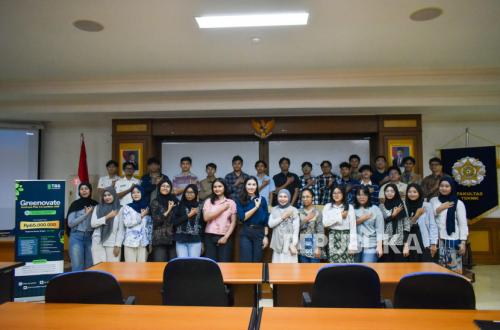
To support talent development in this field, the TBS Foundation is hosting Greenovate, a green talent development competition that encourages students from various Indonesian universities to develop sustainability ideas into business solutions with the potential for real-world impact. Anugraha Dezmercoledi, Executive Director of the TBS Foundation, stated that Greenovate is designed to bridge the potential of the younger generation with the experience of practitioners, ensuring that the resulting innovations have the opportunity to evolve into relevant solutions for society.
“We believe Indonesian students possess great potential to provide solutions to various sustainability challenges. Through Greenability, they not only gain space to develop ideas but also the opportunity to learn directly from practitioners, strengthen business models, and build the networks required for these innovations to grow further,” Anugraha said in a statement on Friday.
He added that amidst increasing sustainability challenges, an ecosystem is needed to connect the academic world with industry players, sustainability practitioners, and investors so that innovations can become implementation-ready solutions. Greenovate provides a mentoring process and business model reinforcement to ensure participants produce mature and sustainable solutions rather than just mere ideas.
Enthusiasm for the programme is evident from the more than 150 sustainable business ideas submitted by over 400 students from various Indonesian universities. Following a selection process, the eight best teams have advanced to the grand final. These finalists represent the University of Indonesia, Bandung Institute of Technology, Gadjah Mada University, Mulawarman University, Palangka Raya University, University of North Sumatra, Tanjungpura University, and Cenderawasih University.
The diverse innovations developed by the finalists cover issues such as the circular economy, clean energy, water security, waste management, and the development of eco-friendly materials. The programme also emphasises inclusivity; all finalist teams include female representation, and six of the eight Greenovate mentors are women experienced in the fields of sustainability, business, energy, and technology. This approach is expected to create wider opportunities for women to contribute as innovators and leaders within the green economy ecosystem.