
TBS Expands Asian Waste Business with Rp 7.77 Trillion Investment
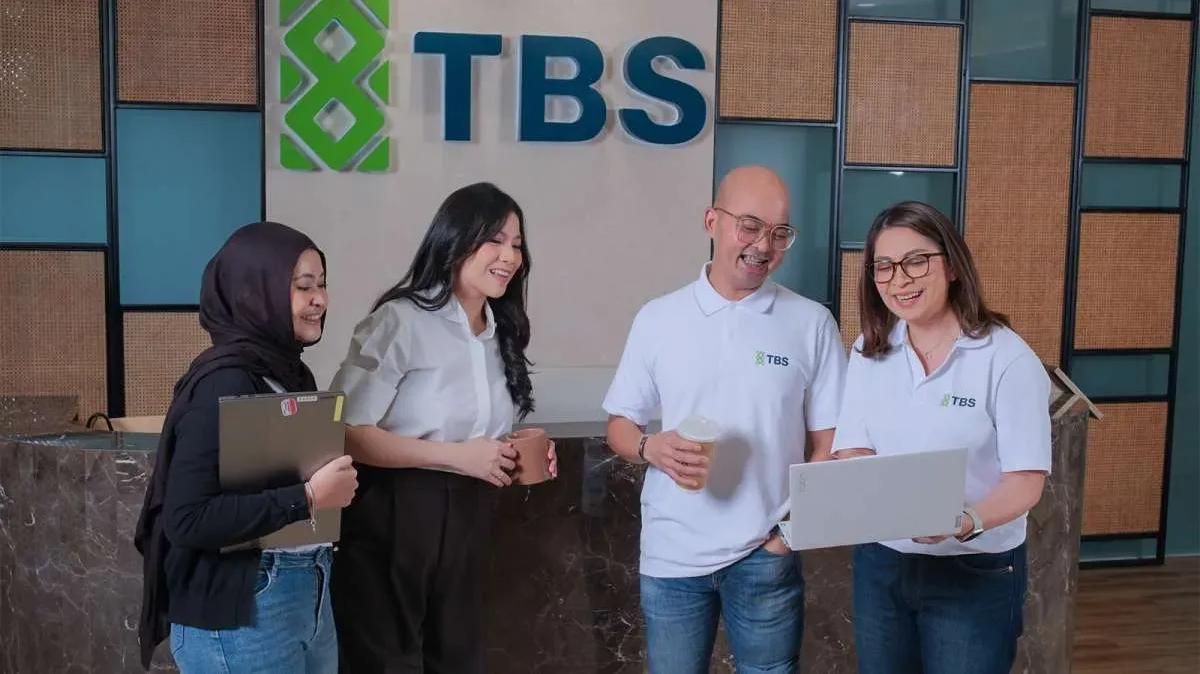
TBS Energi Utama’s expansion of its waste-management business in Asia has secured strategic funding of up to S$555 million, equivalent to around Rp 7.77 trillion. The investment commitment comes from HPS Investment Partners, part of BlackRock, according to Investasi.
The funding is intended to scale up waste-management operations through development and acquisitions across Asia. The strategy positions TBS in integrated waste management, rather than limiting its activity to converting waste into electricity.
The investment will be made in stages through the purchase of newly issued preference shares in SBTH Asia Holdings Pte. Ltd. (SBTH), as well as other instruments. SBTH is the holding company for TBS’s waste-management business platform.
Capital from the initial and subsequent funding rounds is expected to support both organic growth and acquisitions. This structure will give the company room to expand its services and increase operational capacity in several Asian markets.
This approach differs from the waste-to-energy projects, known as PSEL, being promoted by Danantara in Indonesia. TBS has chosen to focus on a regional network of waste-management businesses offering a range of services.
Waste business chain as a source of revenue
TBS’s waste-management portfolio includes the collection of household and industrial waste, sorting, recycling, medical-waste treatment and industrial-waste processing. The company also uses waste to generate steam for industrial customers.
The range of activities enables the company to generate revenue from several stages of waste management. Income sources include waste collection and processing services, the recovery of reusable materials, and the supply of steam for industrial use.
Leonardo Lijuwardi, an analyst at NH Korindo Sekuritas Indonesia, said an integrated approach could offer greater growth opportunities than a business model relying solely on waste-to-energy power plants.
Leonardo said the industry has a long operational chain encompassing collection, transport, sorting, recycling and final treatment. Each stage can provide a separate revenue stream for companies capable of offering end-to-end services.
In a statement on Tuesday (27 October), Leonardo said: “Each stage has revenue potential. An integrated business model can therefore create more diversified sources of income.”
TBS operations in Singapore and Indonesia
In Singapore, TBS operates its waste-management business through Cora Environment, formerly known as Sembcorp Environment and SembWaste. Its activities include the collection of household, commercial and industrial waste, alongside sorting and recycling services through material-recovery facilities.
Cora also operates an energy-from-waste (EfW) facility in Singapore with the capacity to process about 360,000 tonnes of waste a year. The facility produces around 1.2 million tonnes of industrial steam annually to meet the needs of customers on Jurong Island.
Unlike PSEL projects that generate electricity, Cora’s EfW facility uses heat from waste incineration to produce high-pressure steam. Energy recovery is therefore one part of the company’s portfolio, rather than its sole operational activity.
TBS also owns Asia Medical Enviro Services (AMES), which specialises in medical-waste management in Singapore. In Indonesia, PT Arah Environmental Indonesia provides medical, industrial and household waste-treatment services in 15 provinces.
Waste volumes and growth opportunities
Together, the three companies collected around 760,000 tonnes of waste in the first half of 2026. Cora, meanwhile, serves more than 470,000 households and businesses in Singapore.
Leonardo said the breadth of services could help generate recurring revenue while expanding the business through regional growth. The regular need for waste-management services in both household and industrial sectors is an important part of the business model.
He said: “Companies with collection networks, recycling facilities and the ability to convert waste into energy have the potential to earn more stable revenue and improve efficiency through operational integration.”
The regional strategy is consistent with TBS’s decision not to prioritise involvement in PSEL projects being developed by Danantara in Indonesia. The company stated this position in October 2025.
Leonardo said HPS’s investment commitment of up to Rp 7.77 trillion could strengthen TBS’s funding capacity to build waste-management facilities and acquire similar companies across Asia. The funding forms part of the company’s strategy to expand its integrated cross-border business.
Source: jawawa.id (https://jawawa.id/newsitem/tbs-expands-asian-waste-business-with-rp-7-77-trillion-investment-1793123437)
Originally published by demokratis.co.id (https://demokratis.co.id/tbs-bisnis-limbah-investasi-asia), translated from Indonesian