
Taxation, Justice, and the State's Mandate
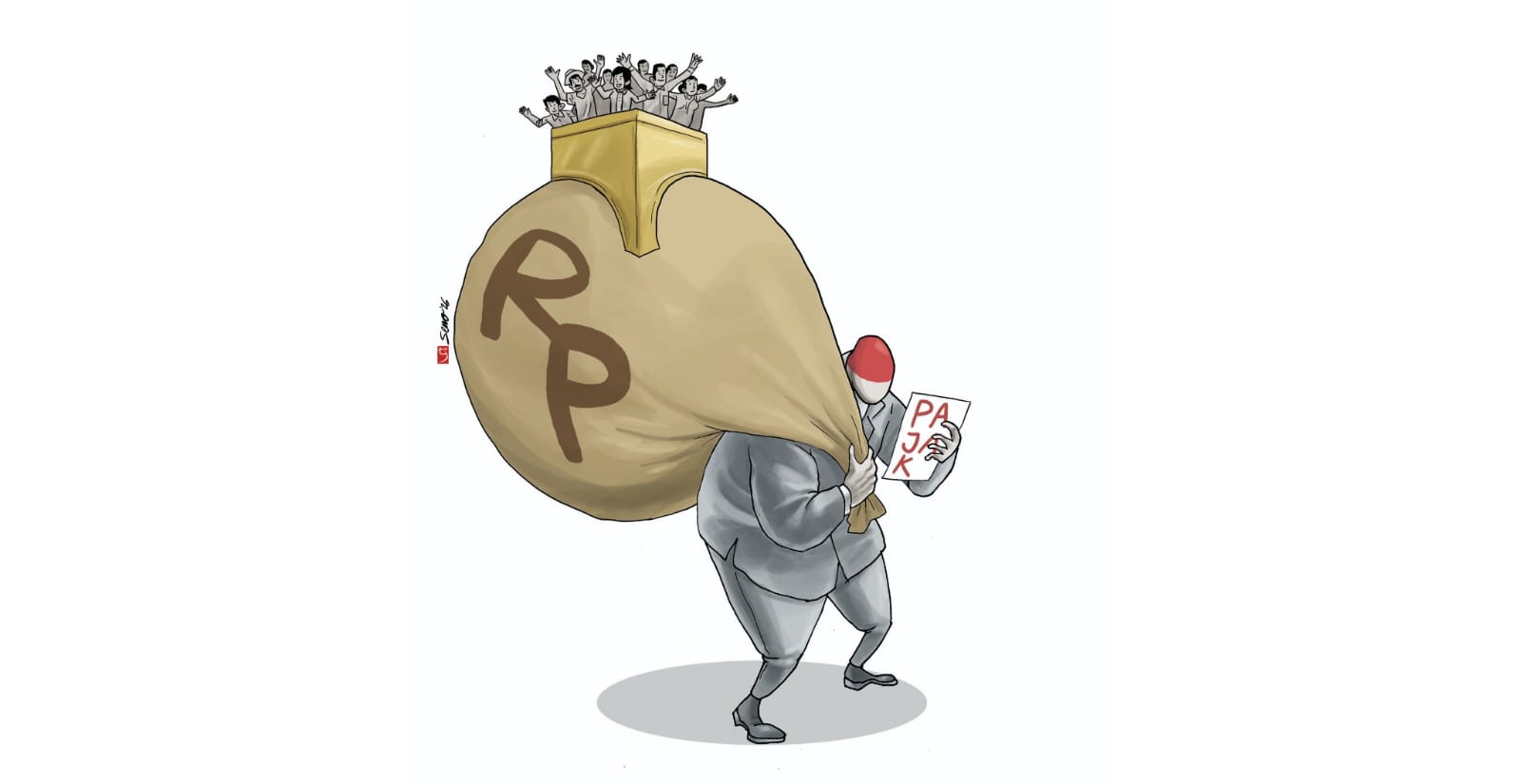
Amidst the discussions regarding the election of the Rais Am and General Chairperson of PBNU during the 35th Nahdlatul Ulama Congress, one theme discussed in the Bahtsul Masail Maudlu’iyyah deserves public attention: equitable taxation. While the issue may lack the fanfare of organisational leadership competition, its implications touch almost every citizen, as the debate concerns not just the legality of taxation, but the moral boundaries of when the state may take a portion of the people’s wealth and to whom the burden should be placed.
It is nearly impossible for a modern state to provide education, healthcare, infrastructure development, social protection, security, and various public services without adequate tax revenue. The more critical question is: what conditions of justice must be met so that the state’s authority to levy taxes possesses moral and religious legitimacy?
This is where the treasury of Islamic jurisprudence (fiqh) offers a vital principle: tasharruf al-imam ’ala al-ra‘iyyah manuthun bil-mashlahah—the actions of a leader towards their subjects must be tied to the public interest. This rule carries a powerful message for fiscal policy. Power regarding state finances is not absolute. The state gains the authority to collect a portion of citizens’ wealth because there is a public interest that must be realised. In other words, the state’s right to collect taxes is not a blank cheque; it is limited by the objective of public welfare.
THREE DIMENSIONS OF JUSTICE
Tax justice possesses at least three dimensions: horizontal justice, vertical justice, and justice in the use of tax revenue. Horizontal justice requires that those with relatively equal economic capacity bear an equal burden of obligation. Vertical justice requires that those with greater economic capacity bear a larger burden compared to those with less.
Both ideas resonate strongly with Sharia principles. Islam does not separate economic obligations from an individual’s capacity. In zakat, for instance, there are provisions for nisab, differences in types of wealth, and regulations that consider economic capacity. The Islamic principle that ‘Allah does not burden a soul beyond that it can bear’ provides an essential ethical foundation: an obligation should not be constructed by ignoring the real capacity of the person bearing it.
Problems arise when those easiest to tax are the common people, rather than those most able to pay. Formal workers are relatively easy to tax because their income is recorded. Consumers pay taxes almost every time they shop. Owners of vehicles or houses are also relatively easy to identify. Small traders and MSMEs (Micro, Small, and Medium Enterprises) have little choice in designing complex transaction structures to minimise tax burdens.
Conversely, the wealthy and corporations possess more instruments to arrange and plan their tax liabilities. Some of this constitutes legal tax planning, while some may move towards tax avoidance or even evasion. This is where the problem of horizontal justice emerges, as the effective tax burden can differ simply because one party has greater access to various avoidance instruments.
Vertical justice is also compromised if the system results in a heavier proportional burden on low- and middle-income communities compared to those who are far more capable. Therefore, identical rates are not always synonymous with justice. In certain conditions, different treatments are actually required so that the final burden becomes proportional across income groups.
TAXATION AND THE MANDATE
A Sharia perspective takes the discussion of justice one step further. Justice is not achieved merely when taxes are collected proportionally. The next question is: for what purpose is the tax used? This is where taxation meets the concept of amanah (trust/mandate).
Tax revenue does not belong to the government. Citizens surrender a portion of their income because the state promises that those resources will be transformed into better education, healthcare, roads, transport, security, social assistance, and various public benefits. Thus, the rule of tasharruf al-imam ’ala al-ra‘iyyah manuthun bil-mashlahah applies not only when the state collects taxes but continues to apply when that money is allocated and spent.
Therefore, amanah should not be defined merely as preventing the loss of state funds. It also demands that the budget be used effectively, efficiently, precisely, and in favour of community needs. Every rupiah taken from the people carries an opportunity cost. A rupiah paid as tax is a rupiah that a household can no longer use for consumption, children’s education, health, or productive activities. Consequently, the state has a moral responsibility to ensure that the social benefit of that rupiah is greater when managed through the public budget.
From this perspective, the priority and quality of government spending are integral to tax justice. High revenue and large budget realisations do not inherently reflect success if they are not accompanied by improvements in public services. The ultimate measure is not how much money can be collected, but how much welfare is generated for the community. If tax money is used more for non-priority interests, enjoyed by certain groups, or fails to reach those most in need, the goal of justice has not been achieved.
In this context, corruption is an issue inseparable from justice. When citizens have sacrificed part of their purchasing power to pay taxes, but that money is subsequently corrupted…
Source: jawawa.id (https://jawawa.id/newsitem/taxation-justice-and-the-states-mandate-1788303111)
Originally published by Media Indonesia (https://mediaindonesia.com/opini/928620/pajak-keadilan-dan-amanah-negara), translated from Indonesian