
Tax Revenue at Risk Due to Free Nutritious Meal Programme, Former BGN Chief's Letter Under Scrutiny
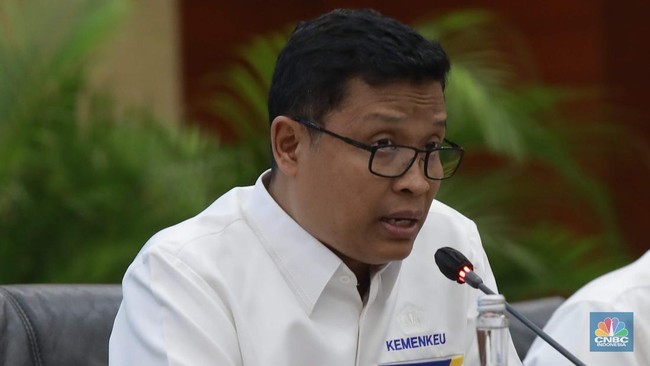
The Directorate General of Taxes (DJP) at the Ministry of Finance has identified a potential risk of state revenue loss from the implementation of several government priority programmes. This is triggered by policy confusion at the level of implementing agencies and the suboptimal management of aid funds in the field.
Director General of Taxes Bimo Wijayanto explained that one vulnerable point lies in the implementation of programmes at the National Nutrition Agency (BGN) and the construction of the ‘Red and White’ Village Cooperatives. He stressed that any determination regarding taxable objects must refer to statutory provisions to avoid causing losses to the state treasury.
“There is some policy confusion, I would say. There is a circular letter from the former Head of BGN which stipulates that all MBG (Free Nutritious Meal) grants are not subject to tax. Whereas the determination of taxable and non-taxable goods should be based on the law,” he said in an online broadcast, quoted on Saturday (20/6/2026).
Bimo highlighted the policy of categorising daily operational incentive funds for nutrition service unit kitchen managers as grants or aid. According to the tax authority, these funds technically remain an object of Income Tax (PPh) because they are managed by business entities that seek profit in their operations.
“Of course, based on the provisions applicable today, based on the law and the regulatory framework under the law, these funds are still an object of Income Tax because they are managed by business entities that indeed obtain profit from their operations,” he stated.
Beyond the nutrition sector, the DJP is wary of the potential loss of tax from Self-Build Activities (KMS) on the Red and White Village Cooperative projects. Indications of suboptimal management have resulted in the realised value of building material expenditure being at risk of falling below the stipulated budget, thereby triggering an unabsorbed tax gap.
“Along with the increasing transactions carried out by these cooperatives, without continuous education on tax rights and obligations, there will be a risk of non-fulfilment of formal obligations as taxpayers, such as reporting, calculating, and withholding or collecting taxes,” Bimo explained.
To mitigate these risks, the ministry is pushing for the integration of financial transaction data between ministries and programme implementing agencies in real-time. The tax authority is seeking to take a proactive approach to capture digital economic data in order to close manipulation loopholes that could disrupt the national tax revenue target.
“So that a more real-time exchange of data occurs, so that the Directorate General of Taxes can also more easily mitigate potential losses at an earlier stage,” he concluded.