
Tax Revenue Accelerates, but Hundreds of Trillions in Restitution Pose a Burden
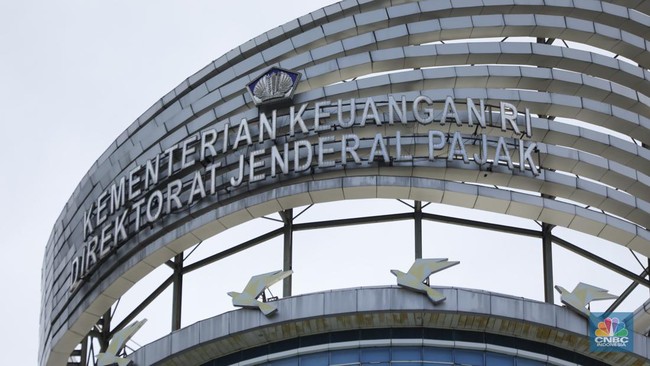
The Directorate General of Taxes (DJP) at the Ministry of Finance recorded a 23% growth in tax revenue from January to June 2026. Director General of Taxes Bimo Wijayanto stated that the revenue growth is in line with increased public activity.
“We recorded very good tax revenue. From January to June, we recorded growth of more than 23%,” he said, as quoted on 6 July 2026.
Bimo revealed that tax revenue realisation by the end of June 2026 had nearly reached half of the target set in the State Budget (APBN). “Tax revenue realisation at the end of June 2026 is around 45%, the final figure will likely be in the APBN,” Bimo said.
With realisation at around 45% by the end of June, tax revenue is estimated to have reached approximately Rp1,061 trillion, although this figure is still an estimate based on the percentage provided by the DJP. For context, the tax revenue target in the 2026 APBN is set at Rp2,357.7 trillion.
This performance is an improvement compared to last year. According to CNBC Indonesia records, national tax revenue realisation by the end of June 2025 was recorded at Rp831.3 trillion, or about 38% of the target.
The improvement in tax revenue was mainly supported by strengthening national economic activity and the increasingly better implementation of the Coretax administration system. “Tax revenue continues its positive growth trend in line with the growth of economic activity and the increasingly better implementation of Coretax,” said Finance Minister Purbaya Yudhi Sadewa.
Purbaya claimed that the strong growth in tax revenue is an indication that real economic activity continues to move and make a real contribution to state revenue. He explained that one of the main pillars of tax revenue growth came from Corporate Income Tax (PPh Badan) and Corporate Income Tax Deposits, which showed significant improvement. As of May 2026, PPh Badan revenue reached Rp167.3 trillion, growing 23.9%. This increase was sharp compared to the growth in April 2026, which was only Rp135.2 trillion.
“This shows that companies are still growing and have good performance. Previous concerns that the business world was experiencing a slowdown have proven unfounded,” the Finance Minister stressed.
However, amidst the effort to collect tax payments, restitution payments remain a burden. Tax restitution is the refund of excess tax payments to taxpayers because the amount paid is greater than the amount owed.
In the period from January to April 2026, total restitution reached Rp160 trillion. This value is equivalent to the restitution value for nine months in the 2025 period. This figure surprised Purbaya, who estimates that restitution for this year could reach Rp500 trillion. This value is quite fantastic compared to the previous year’s figure of Rp360 trillion.
With the large amount of restitution, Purbaya suspects there is collusion within the DJP. “If multiplied by the other four months, that’s Rp500 trillion. Last year it was Rp360 trillion, with that figure there should be no complaints. This means the tax officials themselves are playing games,” Purbaya said at his office.
Purbaya suspects that the issue of restitution being tightened in the early period was also manipulated by unscrupulous tax officials in collusion with businesspeople, so that the government would not interfere with the excess tax refund process. “Maybe some are playing games with tax officials, making a fuss so that restitution is accelerated, so the tax officials can get something again. Then they tell me that restitution is good, and so on, because with this it gets jammed,” he revealed. “It means the tax officials themselves are playing games. So they are being intimidated, because the real figure is significantly higher.”
Purbaya also said he found practices where businesspeople who do not have a business entity still receive restitution from the DJP. “They don’t have a business but ask for a lot of restitution. I was also surprised, some said they didn’t pay VAT but could get restitution first, that’s called accelerated restitution because of collusion,” he explained.
Purbaya said he wants to ensure that tax refunds do not leak and ultimately harm the state, and that restitution runs according to the rules. He has issued a new regulation tightening the restitution process. The latest regulation regarding the procedure for preliminary refunds (accelerated restitution) is regulated in Minister of Finance Regulation Number 28 of 2026. This regulation revokes the previous regulation and provides tightening and digital-based simplification, including cutting the accelerated VAT restitution limit for Taxable Entrepreneurs (PKP) from Rp5 billion to Rp1 billion.