
Tax Office Targets Google and Others, Prepares Strengthened Global Minimum Tax Rules
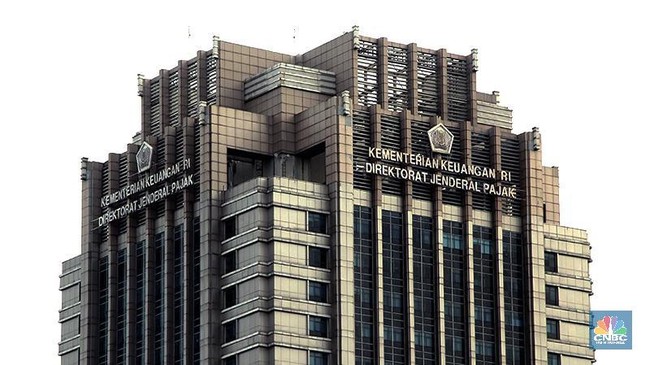
Director General of Taxes Bimo Wijayanto has confirmed that the imposition of taxes on global digital companies such as Google will be carried out through the implementation of the Global Minimum Tax (GMT) scheme. He stated that multinational digital companies like Google are already registered as taxpayers at the Foreign Investment Tax Service Office (KPP PMA), making it possible to collect taxes from them. However, Bimo emphasised that the implementation of income tax collection will refer to the GMT scheme in stages, as agreed globally. “Because our GMT implementation is phased. So we will see the treatment under the Global Minimum Tax, the treatment from Pillar 1 and Pillar 2,” he said when met at the DPR RI Building, Jakarta, on Wednesday (17/6/2026). “The important thing is that we secure the transactions here,” Bimo stressed.
The government has regulated the implementation of GMT in Indonesia through the issuance of Minister of Finance Regulation (PMK) Number 136 of 2024. However, the detailed administrative procedures for implementing the global minimum tax have not yet been completed and will be finalised by the Directorate General of Taxes this year. The GMT scheme currently in effect in Indonesia involves the imposition of a top-up tax for multinational enterprises (MNEs) with a minimum consolidated gross turnover of 750 million euros that do not pay tax at a rate of at least 15% in the jurisdictions where they operate.
“For the 2025 tax year, the top-up tax payment must be made no later than 31 December 2026,” Bimo said during a working meeting with Commission XI of the DPR at the end of last year. The calculation of the top-up tax in Indonesia utilises the Income Inclusion Rules (IIR), Undertaxed Payment Rules (UTPR), and Qualified Domestic Minimum Top-up Tax (QDMTT) mechanisms. The IIR requires the ultimate parent entity of an MNE group to pay additional tax on constituent entities subject to an effective tax rate of less than 15%. Meanwhile, QDMTT is a policy that can ensure the minimum tax is paid in the country of origin. UTPR applies when the IIR is not implemented by the country of domicile of the ultimate parent entity or intermediate parent entity. The additional tax imposed under UTPR is equivalent to that under IIR and will be allocated to UTPR jurisdictions based on a specific formula.
In 2025, the IIR and QDMTT mechanisms have effectively come into force, accompanied by outreach to taxpayers and tax officials, IT infrastructure preparation, the drafting of a Director General of Taxes Regulation on GMT Administrative Procedures, and preparation for the exchange of information (EOI) between countries. In 2026, UTPR will come into effect, alongside the commencement of global minimum tax payments for the 2025 tax year, continued outreach, IT preparation, and EOI. In 2027, the submission of the Global Anti-Base Erosion (GloBE) Information Return (GIR) and notifications from constituent entities to the Director General of Taxes will begin, along with the submission of tax returns for GloBE implementation and EOI implementation. Finally, in 2028, a risk assessment will be conducted, accompanied by the exchange of GIR and notifications with countries that have agreed to implement GMT in accordance with OECD initiatives.