
Tax Office Partners with Pertamina as First SOE to Adopt Cooperative Compliance
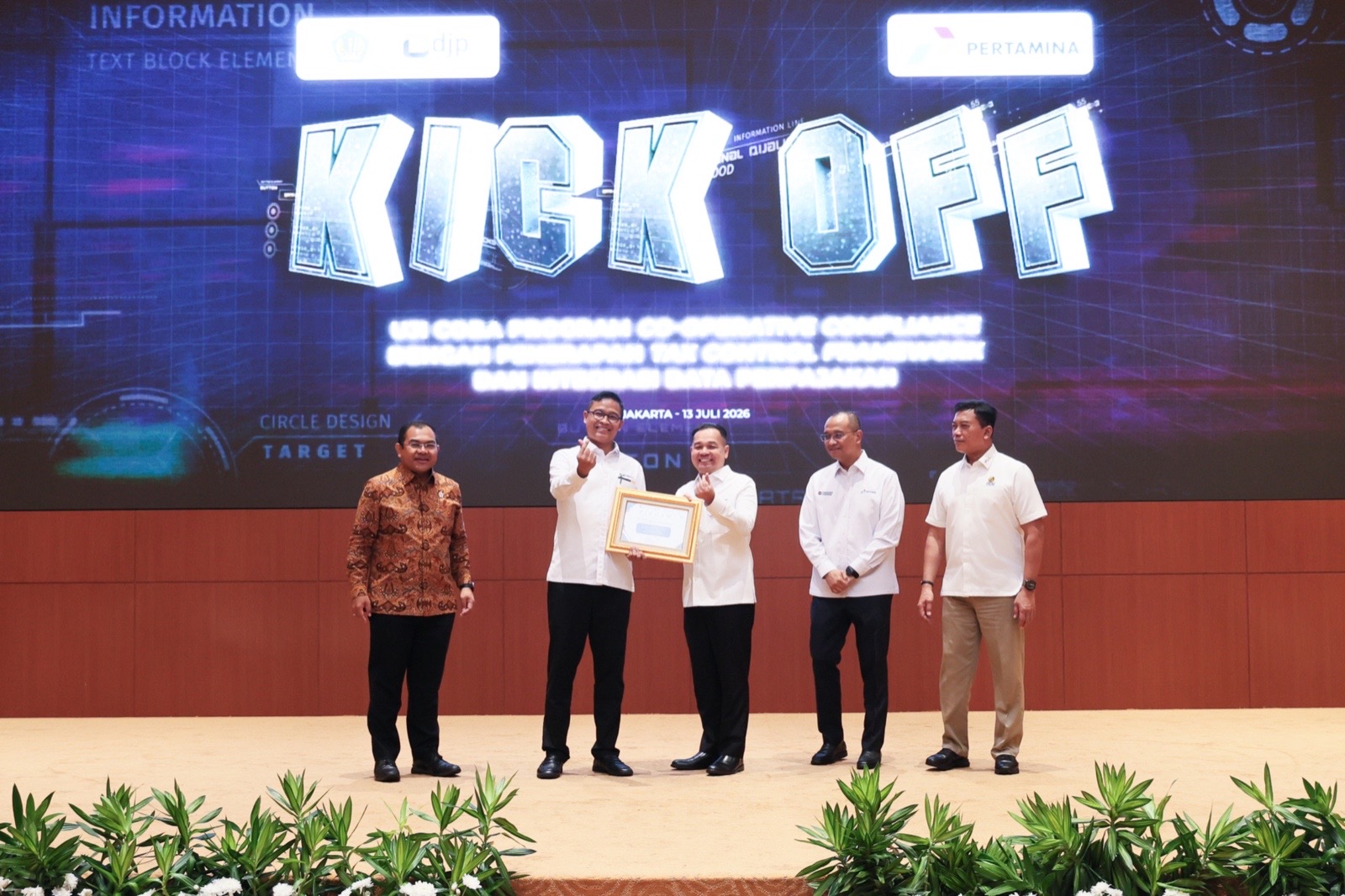
IKPI, Jakarta: The Directorate General of Taxes (DJP) at the Ministry of Finance is changing its approach to supervising major taxpayers, prioritising a collaborative approach over post-violation enforcement.
The new strategy is being realised through the implementation of Cooperative Compliance, beginning with the signing of a Tax Compliance Framework together with PT Pertamina (Persero).
This agreement makes Pertamina the first state-owned enterprise (SOE) in the energy sector to adopt an oversight mechanism based on trust between the tax authority and the taxpayer.
Director General of Taxes Bimo Wijayanto described the implementation of the cooperation as an important step in transforming the national tax administration system.
“Today’s milestone, the implementation of the cooperative compliance model with a tax compliance framework agreed together with the largest energy-related SOE, namely Pertamina. This is a dream we have long woven together, the first evolution of a modern trust-based tax system,” Bimo said at a press conference in Jakarta on Monday (13 July).
He explained that the concept of cooperative compliance is built on the principles of mutual trust, information openness, accountability and integrity between the DJP and the taxpayer.
Through this approach, both parties are expected to build a more transparent relationship whilst also serving as an example for other state-owned companies.
“This is the embodiment not only of transparency, but also accountability and integrity. Of course, both parties are expected to become an inspiration for other SOEs,” he said.
According to Bimo, the primary aim of the scheme is not merely to pursue additional state revenue, but to ensure the DJP obtains earlier information on transactions or corporate actions that could carry tax consequences.
In this way, potential reporting errors and differences in the interpretation of rules can be minimised from the outset.
For example, when Pertamina undertakes business expansion or new investment, the DJP is expected to already know about it so that compliance issues do not arise later.
Nevertheless, Bimo estimated that the implementation of the model could also help maintain Pertamina’s tax revenue contribution in the range of Rp 400 trillion to Rp 500 trillion each year as the company’s business activities grow.
“Specifically from Pertamina, we can already roughly calculate that if its revenue is stable — although this year its revenue will certainly increase — at least between Rp 400 and Rp 500 trillion a year, because we see a great many business developments and investments being made by Pertamina. But the essence is not the revenue target,” Bimo said.
“The essence is that there will no longer be any sudden surprise if there turns out to be a transaction resulting from investment or business development that is unknown to the DJP and possibly forgotten in Pertamina’s reporting,” he added.
Going forward, the DJP will extend the implementation of cooperative compliance to several other SOEs, including PT PLN (Persero) and PT Pelabuhan Indonesia (Pelindo).
After that, a similar scheme will also be offered to private companies, particularly multinational business groups that have already applied the model in OECD member countries.
“Certainly, those that have already applied the cooperative compliance model in OECD countries, the multinational holding companies, will follow in subsequent stages,” Bimo concluded.