
Tax Office Enlists Village Officers to Boost Oversight, Economist Urges Realistic Targets
JAKARTA – Fajry Akbar, Head of Research at the Center for Indonesian Taxation Analysis (CITA), has proposed that the government lower its tax revenue targets while simultaneously cutting expenditure, given that business conditions and public purchasing power remain weak. According to him, this approach would be more realistic than continuing to push for revenue optimisation when the tax base has yet to see significant improvement.
“If we use ILO (International Labour Organization) data, the average income of workers in Indonesia is the lowest in ASEAN. It is only natural that our tax ratio is among the lowest in the region,” Fajry said in Jakarta on Saturday (18 July 2026).
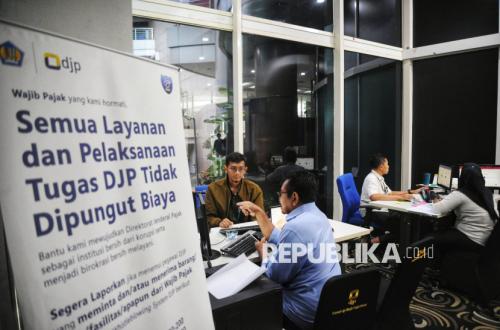
The statement came in response to the Directorate General of Taxes (DJP) expanding its taxpayer compliance supervision model through Circular Letter Number SE-8/PJ/2026 on Guidelines for Taxpayer Compliance Supervision. Under the regulation, the DJP is broadening its use of information technology and expanding its regional database coverage down to the village level.
In addition to direct visits, the DJP will utilise remote sensing and web scraping technology, as well as build information networks by enlisting Bintara Pembina Desa (Babinsa, village non-commissioned military officers) and Bhayangkara Pembina Keamanan dan Ketertiban Masyarakat (Bhabinkamtibmas, community police officers) in order to widen the tax base data.
Responding to the new supervision model, Fajry said the DJP must still prove that the data obtained genuinely comes from untapped tax revenue potential. Otherwise, he cautioned, the new approach risks creating disputes with taxpayers.
“It will certainly generate new disputes, especially if the data quality is low or if tax officials interpret the data differently,” he said.
Fajry further commented on the involvement of Babinsa and Bhabinkamtibmas in gathering information. According to him, the DJP needs to clarify what building information networks means, along with its limits.
“Unfortunately, this circular letter does not explain what is meant by building information networks, nor how far its boundaries extend. On one hand, this creates a militaristic impression in tax revenue collection, which should be a civilian domain. On the other hand, it raises concerns among micro, small and medium enterprises (UMKM) in rural areas,” he said.
Fajry argued that excessively high tax revenue targets could actually encourage excessive supervision practices over taxpayers.
He noted that economic growth in the first half of 2026 has been driven largely by government spending. For that reason, he said, tax revenue supervision should be directed towards sectors that directly benefit from that spending.
“What has driven the economy in the first half? Mostly government spending. Who enjoys that government spending? SPPG entrepreneurs and related parties. Those are the ones whose taxes should be pursued,” he said.
Source: jawawa.id (https://jawawa.id/newsitem/tax-office-enlists-village-officers-to-boost-oversight-economist-urges-realistic-targets-1784476296)
Originally published by Republika (https://ekonomi.republika.co.id/berita/tifho2490/djp-gandeng-babinsa-perkuat-pengawasan-pajak-ini-catatan-dari-ekonom), translated from Indonesian