
Tax Office Enlists Village Military Officers for Oversight, Deputy Speaker Warns Against 'Terrorising' Taxpayers
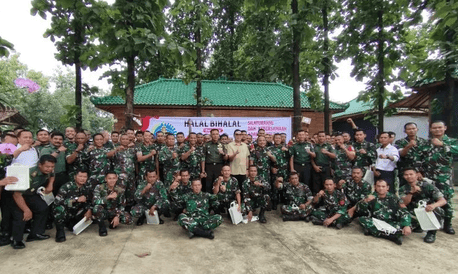
Deputy Speaker of the Indonesian House of Representatives (DPR RI) Saan Mustopa has responded seriously to the Directorate General of Taxes’ (Ditjen Pajak) policy of involving Village Supervisory Non-Commissioned Officers (Babinsa) and Community Security and Order Supervisors (Bhabinkamtibmas) in the taxpayer oversight scheme. Saan cautioned that the involvement of security and defence apparatus elements must not cause intimidation or fear among the public or business actors.
“Regarding tax officers partnering with Babinsa, it must not create an impression of intimidation. So, frightening taxpayers, as if taxpayers are being intimidated and causing a sense of fear. Most importantly, taxpayers must not feel terrorised,” Saan stated at the Parliament Complex, Senayan, Jakarta, on Tuesday (21/7/2026).
The NasDem Party politician urged the Directorate General of Taxes to re-evaluate the impact and urgency of this policy. In his view, tax supervision and collection are administrative taxation tasks, not the domain of village law enforcement or defence institutions.
Saan stressed that the tax authority should prioritise a persuasive, educational, and professional approach. He expressed concern that a repressive impression could disrupt the business climate and erode public trust in taxation institutions.
“This is very important. So, before implementing this, it is crucial for the tax authority to consider the impact of partnering with institutions whose duties and domains are not aligned. Once again, this is very important,” Saan asserted.
This policy emerged following the circulation of Director General of Taxes Circular Number SE-8/PJ/2026 concerning Guidelines for Taxpayer Compliance Supervision. The regulation explicitly lists Babinsa and Bhabinkamtibmas as part of building a tax information network.
Based on the circular, supervision is carried out through various approaches, ranging from visitations, canvassing, to the use of remote sensing technology and web scraping. The involvement of village-level officers is intended to support systematic identification and data collection for effective supervision.
In addition to information networks, the Directorate General of Taxes also employs other methods such as economic area diagnostics, mirroring audit results, and taxation partnerships. However, Saan insisted that the boundaries of authority must be maintained so that the administrative function of taxation does not shift into a security approach.