
Tax Office Assures Babinsa Involvement Not for Hunting Tax Data
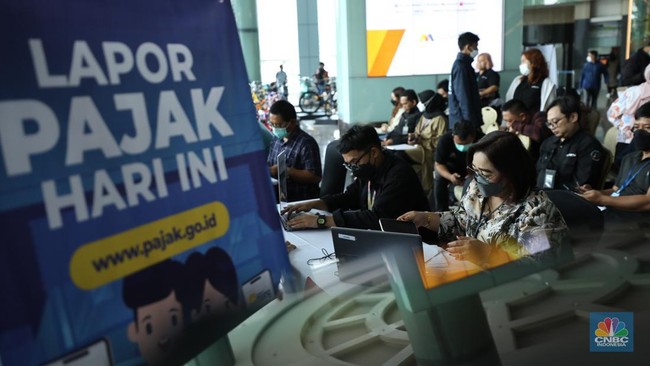
The Directorate General of Taxes (DJP) at the Ministry of Finance has assured that the involvement of village supervisory non-commissioned officers (Babinsa), who are part of the Indonesian National Armed Forces (TNI), is not intended for hunting tax data. In a post on its official Instagram account, the DJP stated that the involvement of Babinsa and community security and order supervisors (Bhabinkamtibmas) from the police force is limited to supporting coordination in the field when required by tax officers during field reviews. In many situations, regional apparatus, including Babinsa, serve as companions or witnesses to verify that officers have conducted visits in accordance with procedures. “The news regarding Babinsa participating in hunting tax data in villages is confirmed to be UNTRUE. Regional apparatus are not executors of tax audits, but merely support coordination so that field visits by officers proceed according to procedure,” the DJP stated. The DJP noted that this practice of involving Babinsa for coordination support is not new and has been carried out previously, similar to other government activities. The DJP further explained that tax officers are now increasingly relying on technology and digital data analysis for accurate, risk-based supervision. With the support of information systems, digital data, satellite imagery, open media, and various other data sources, the DJP considers that supervision can be conducted more accurately and based on risk. “This step focuses on improving data quality without adding new obligations or expanding audits massively,” the post read. The issue arose following the issuance of Director General of Taxes Circular Letter Number SE-8/PJ/2026 concerning Guidelines for Taxpayer Compliance Supervision, dated 15 July 2026. The circular instructs tax officers to foster sustainable taxpayer compliance through supervision related to the self-assessment system. Supervision is carried out on both registered and unregistered taxpayers, including activities such as requesting explanations on data and information held by the DJP, as well as obligations on land and building tax objects. For registered taxpayers, supervision involves monitoring periodic payments and material compliance, while for unregistered taxpayers, it involves extensification activities. Regional supervision is conducted through economic data collection within working areas to expand the database and improve territorial control. Field data collection can involve visiting residences, business premises, or workplaces, while non-field collection utilises information technology and remote sensing. The circular also lists various supervisory methods, including visitation, canvassing, direct observation, and building information networks through Babinsa or Bhabinkamtias. Other methods include remote sensing technology, web scraping, media information analysis, journal reviews, taxpayer dissections, economic area dissections, and taxation partnerships, provided they do not contravene legal provisions.