
Tax does not stop at the counter
Vehicle tax is not merely a figure paid once a year. Behind it lies a relationship between citizens who fulfil their obligations and the government that holds the mandate to manage revenue.
Surabaya (ANTARA) - A city that keeps moving demands that public services move as well. Matters that were once synonymous with queues, counters, and trips to service offices are now gradually being brought closer to residents.
This change is not solely about technology, but about how the state reduces the distance between itself and society in meeting everyday needs.
One example can be seen in vehicle tax services, which are beginning to follow the rhythm of people’s lives. The state is required not only to collect, but also to provide services that are easy, fast, and close at hand.
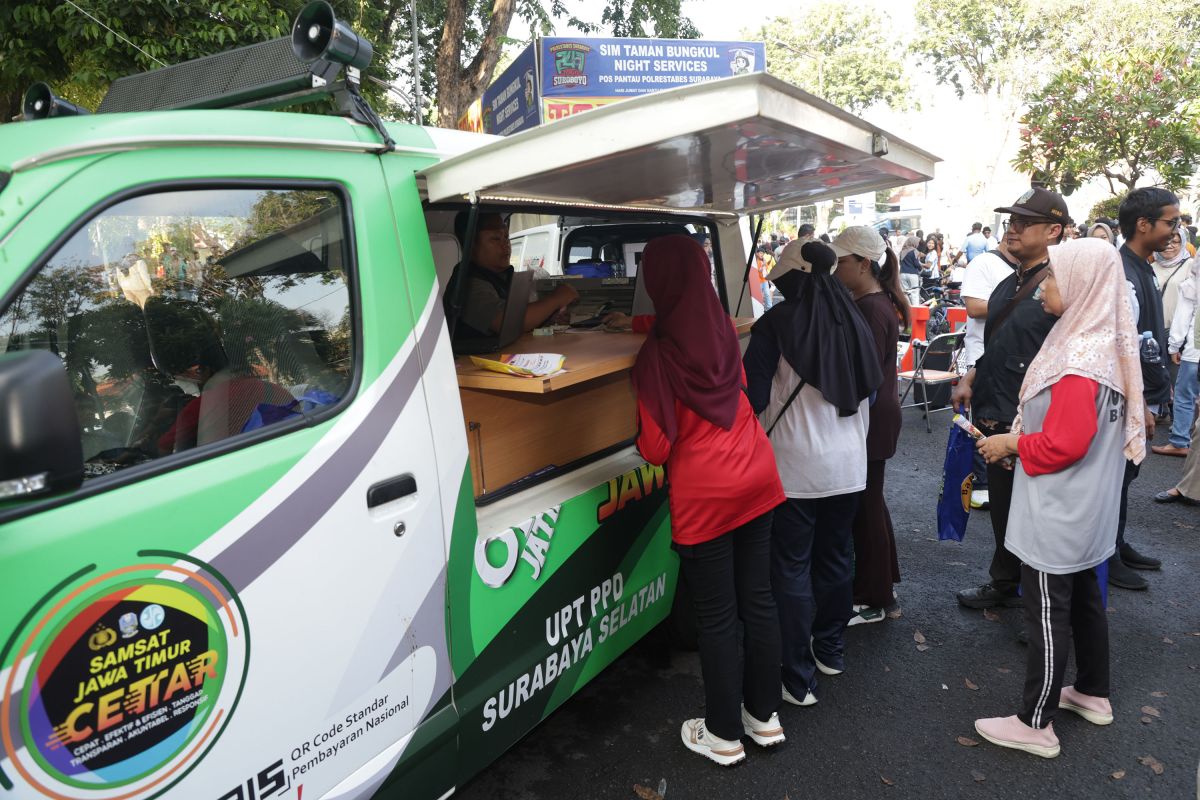
This picture is visible in the city of Surabaya, East Java. The Surabaya city government, together with the East Java provincial government, is expanding vehicle tax payments through ATM Samsat QRIS, a number of sub-district offices, and public spaces such as car free day.
This step shows that paying tax is gradually no longer synonymous with coming, queuing, and then going home.
The change appears simple, but it carries important meaning. For the public, distance and time are part of the cost of compliance. The more complicated the payment process, the greater the chance that tax obligations will be postponed. Therefore, increasing the number of payment channels is not merely technological innovation, but a strategy to cut administrative barriers.
Surabaya has a strong reason to expand these services. Data from the Electronic Registration and Identification (ERI) of the National Police Traffic Corps (Korlantas Polri) as of 14 November 2025, quoted by Databoks, recorded 3.85 million motor vehicles in Surabaya, with motorcycles reaching 3.09 million units. The large number of vehicles shows the scale of vehicle tax services that the government must reach.
However, ease of service does not automatically mean high compliance. QRIS can cut queues, but it does not by itself resolve the problems of vehicles that change hands without a title transfer, owner addresses that are no longer current, vehicles that are no longer in use but still registered, or taxpayers who only act when there is a penalty amnesty.
Therefore, the measure of service success needs to be broadened. The government is not enough if it only counts the number of payment channels or the number of incoming transactions. A more important measure is whether more vehicles are administratively compliant, arrears are reduced, and the vehicle database is increasingly accurate.