
Tax Directorate Seizes Six Assets Worth Rp 1.7 Billion in Riau Islands
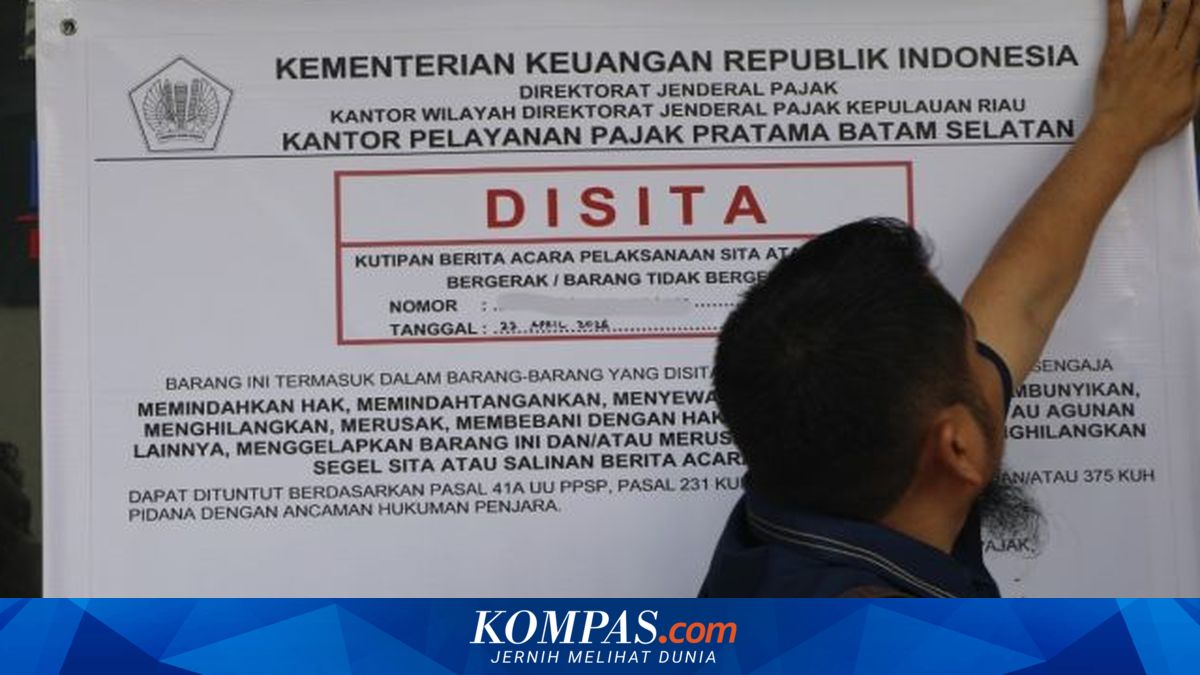
The Riau Islands Regional Office of the Directorate General of Taxes has seized six assets belonging to taxpayers, with an estimated value of Rp 1.7 billion. This action is intended to optimise tax collection.
“There are six assets that we have seized with a total estimated value of Rp 1,723,574,507,” said the Head of the Examination, Collection, Intelligence, and Investigation Division of the Riau Islands DJP Regional Office, Mampe Tua Hasiholan, in an official statement received in Batam on Thursday (23/4/2026).
This activity aims to enhance the effectiveness of tax collection. The DJP also seeks to strengthen the performance of field enforcement officers.
“This simultaneous seizure activity is expected to increase the enthusiasm and motivation of enforcement officers in carrying out optimal collection actions through smart, careful, and thorough strategies. It also aims to provide a deterrent effect for taxpayers (TP) to promptly settle their tax debts,” he said.
“We involved the Tanjung Pinang Primary Tax Office, Batam Medium Tax Office, Tanjung Balai Karimun Primary Tax Office, and South Batam Primary Tax Office,” he added.
The implementation is being carried out in stages. The Batam Medium Tax Office and South Batam Primary Tax Office have already begun seizures on 22 April 2026.
The Tanjung Pinang Primary Tax Office and Tanjung Balai Karimun Primary Tax Office are scheduled to follow on 27 April 2026.
“In detail, the Batam Medium Tax Office has seized one asset, South Batam three assets, Tanjung Balai Karimun will seize one asset, and Tanjung Pinang also one asset,” he explained.
“Based on Minister of Finance Regulation No. 61 of 2023, if after 14 days from the date of seizure, the taxpayer has not paid the tax debt and collection costs, the official will announce the auction of the seized goods to be auctioned,” he said.
This activity is part of efforts to strengthen tax collection in a more measured and intensive manner. The DJP hopes this step will encourage taxpayer compliance and maintain state revenue.