
Taspen pushes for civil servant social security programme reform
Jakarta (ANTARA) - PT Taspen (Persero) is pushing for a reform of social security programmes for civil servants (ASN) to ensure the sustainability of benefit payments amidst an increasing claim ratio in recent years.
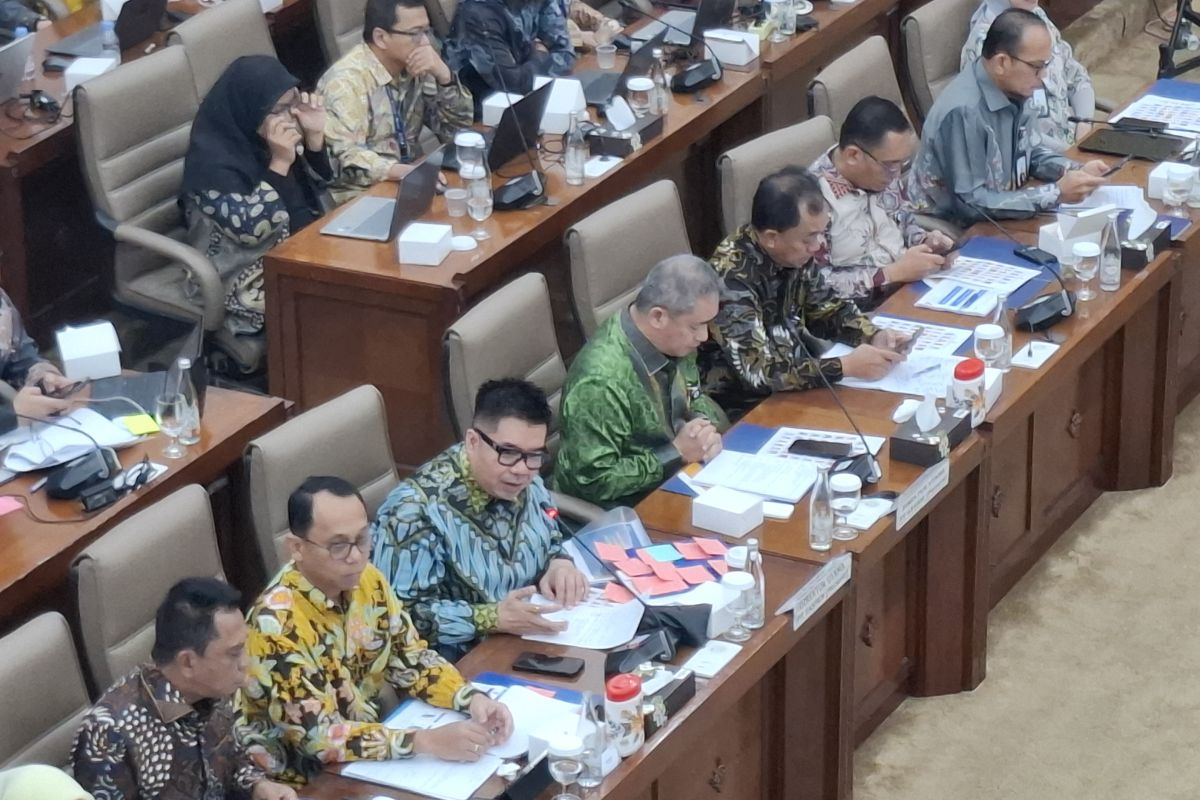
Taspen President Director Rony Hanity scale noted that the claim ratio for the Old Age Savings (THT) programme has consistently remained above 250 per cent and is projected to continue rising over the next 10 years. “If we look at Taspen, the claim ratio is consistently above 250 per cent and is expected to continue to rise over the next 10 years; therefore, a comprehensive programme reform is required,” Rony stated during a hearing with Commission VI of the Indonesian House of Representatives (DPR RI) at the Parliament Complex, Jakarta, on Wednesday.
According to him, this reform involves not only internal management within Taspen but also requires government support as the programme owner to maintain the sustainability of civil servant social security. Rony suggested that one step to consider in this reform is the involvement of the government as an employer through a contribution scheme to strengthen programme funding in the future. “In the future, there may need to be government contributions as the employer,” he added.
In addition to programme reform, Taspen is also encouraging the accelerated issuance of government regulations as derivative rules of Law Number 20 of 2023 concerning Civil Servants, to clarify the company’s position as the manager of civil servant social security programmes. Rony explained that these derivative regulations are also necessary to regulate the implementation of pension and old-age savings programmes for Government Employees with Work Agreements (PPPK), including contribution schemes and funding mechanisms.
He added that settling the government’s payment obligations for past pension benefits that have not been funded or paid to the pension programme manager, known as unfunded past service liability (UPSL), is also a crucial factor in strengthening the sustainability of civil servant social security. According to him, Taspen’s UPSL currently reaches IDR 25.8 trillion, and the company is still awaiting a settlement scheme from the government. “If the UPSL payment is made, it will greatly assist Taspen’s sustainability in the future amidst the quite high claim ratio,” he revealed.
Furthermore, Commission VI of the DPR RI, in its meeting conclusion, supported Taspen in coordinating with the government as well as relevant ministries and agencies to accelerate the completion of regulations for the implementation of the Civil Servant Law. This support also includes the institutional strengthening of Taspen, the strengthening of PPPK membership, the settlement of the UPSL payment mechanism, and the reform of THT, work accident insurance (JKK), and death insurance (JKM) programmes.
Commission VI of the DPR RI and Taspen also agreed that the company should develop a roadmap for the sustainability of pension and THT programmes, which includes financial condition projections, actuarial risks, funding requirements, and mitigation steps to face the increasing claim ratio and changes in the demographic structure of participants.