
Task Force Chief Backs Use of BNPB Ready Funds to Accelerate Permanent Housing
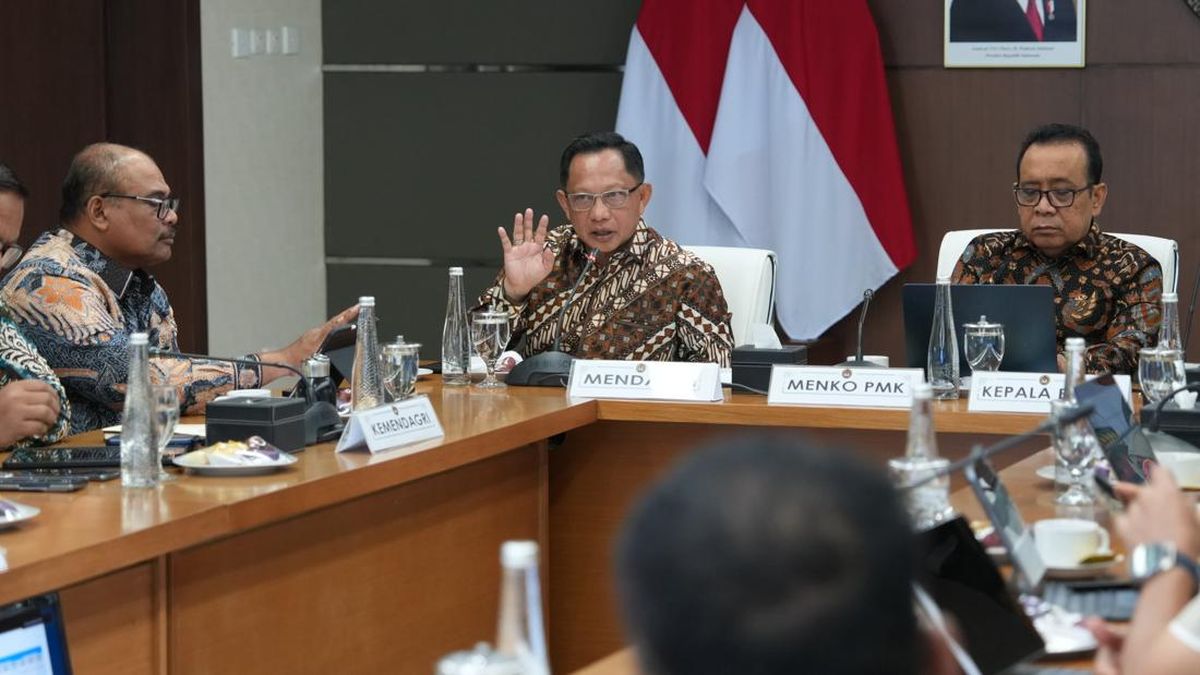
The Minister of Home Affairs, Muhammad Tito Karnavian, who also serves as the Head of the Task Force for the Acceleration of Rehabilitation and Reconstruction (PRR) following the Sumatra disasters, has expressed support for utilising the National Disaster Management Agency’s (BNPB) Emergency Ready Funds (DSP) to accelerate the construction of permanent housing (huntap). This initiative aims to assist communities whose homes were severely damaged by disasters late last year.
Tito made these remarks following a Ministerial-level Coordination Meeting regarding the proposed adjustment of stimulus assistance for severely damaged houses via BNPB’s DSP, held at the Coordinating Ministry for Human Development and Cultural Affairs in Jakarta on Thursday.
Tito explained that the construction of permanent housing is prioritised for residents whose homes were severely damaged or lost due to disasters. Generally, the construction schemes are divided into three categories: in-situ, independent ex-situ, and communal complex ex-situ.
Under the in-situ scheme, houses are rebuilt at the original location if the land is deemed safe, with construction managed by the BNPB. Meanwhile, the independent ex-situ scheme involves residents building houses independently on alternative land they own, as the original location is no longer safe for habitation. This scheme is implemented with budgetary support and supervision from the BNPB.
The communal complex ex-situ scheme is carried out by the Ministry of Housing and Residential Areas (PKP) and other relevant parties. In this scheme, local governments provide the land and supporting infrastructure, while the construction of the residential area is handled by the Ministry of PKP.
Tito stated that the budget for communal permanent housing has been allocated and is beginning to be realised this year.
“As for the in-situ and independent ex-situ housing, which are handled by the BNPB, these are more complex because they are individual efforts. We will use a specific mechanism that we have proposed, known as the Emergency Ready Funds, because the BNPB is flexible. We want to ensure rapid progress,” he said.
In addition to encouraging the use of the Emergency Ready Funds, Tito also proposed an adjustment to the value of the housing stimulus assistance. According to him, the current BNPB assistance of Rp60 million per unit is no longer sufficient to meet needs. Based on calculations, an ideal budget to build one unit of habitable housing requires Rp80 million.
Tito added that the proposal to use the BNPB’s Emergency Ready Funds and the adjustment of the stimulus assistance value will be submitted to the President through the Minister of State Secretary.
“Regarding the budget, we hope that the current Rp60 million can be increased,” he concluded.