
Tariffs, Infrastructure and Incentives Remain Obstacles to Geothermal Investment
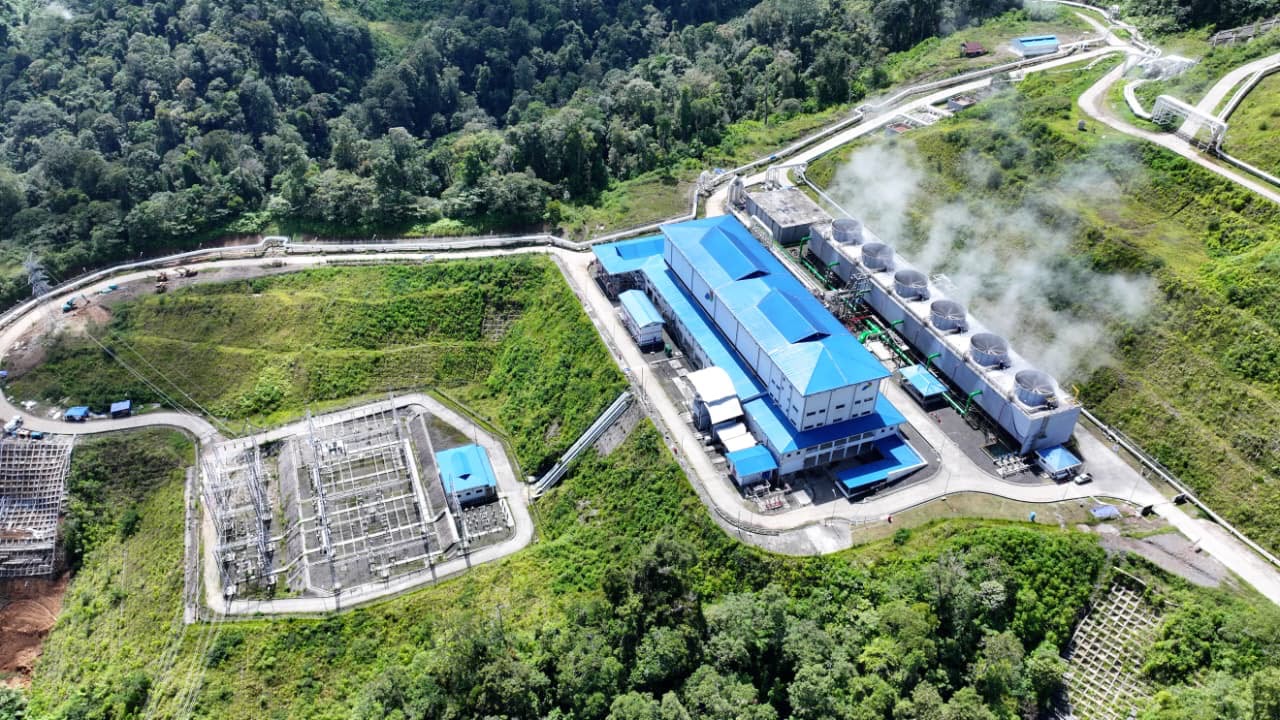
Project economics, limited supporting infrastructure and a lack of fiscal incentives remain the three main obstacles to geothermal investment in Indonesia, despite the renewable energy source’s substantial potential to strengthen national energy security.
Fahmy Radi, an energy economist at Gadjah Mada University (UGM), said the government needed to give clearer priority to developing new and renewable energy (EBT), including geothermal, in support of its energy self-sufficiency agenda.
“Indonesia’s geothermal potential remains considerable, but it has not been explored optimally. That is the challenge,” Fahmy said over the weekend.
According to a presentation by the Geological Agency of the Ministry of Energy and Mineral Resources in August 2026, Indonesia has geothermal potential of around 24 gigawatts (GW) across 368 locations. However, installed geothermal power plant capacity stands at only about 2,776 megawatts (MW), or around 11.6% of the total potential.
The gap demonstrates the significant opportunities for geothermal development, while underscoring the need for more serious efforts to attract investment in exploration and project development.
Fahmy said the centenary of geothermal development in Indonesia, marked by the first drilling at Kamojang Crater in West Java in 1926, should be used to clarify the direction of national energy policy. “The decision is that the priority should be EBT,” he said.
Market and development targets
Fahmy said the market outlook for geothermal electricity remained open, with demand from both households and industry. Power from geothermal sources could also replace some supply from coal-fired plants. “That means there is clearly a market,” he said.
The opportunity is in line with PLN’s 2025–2034 Electricity Supply Business Plan (RUPTL), which targets an additional 69.5 GW of generating capacity. Of this, around 42.6 GW is planned to come from EBT-based power plants, including an additional 5.2 GW of geothermal capacity.
Achieving the target will require long-term investment, particularly in exploration and drilling, which are essential stages in geothermal project development.
PT Pertamina Geothermal Energy Tbk (PGEO) is among the companies active in the sector. It manages 15 geothermal working areas with total installed capacity of 1,932 MW, comprising 727 MW operated directly by the company and 1,205 MW under Joint Operating Contracts.
With this capacity, PGE accounts for around 70% of Indonesia’s installed geothermal capacity. The company aims to increase its directly operated capacity to 1 GW by 2028 and 1.8 GW by 2034, in line with geothermal development under the RUPTL.
Three investment challenges
Despite the market outlook and development targets, Fahmy said several fundamental issues needed to be addressed to accelerate investment.
First, the government and developers need to reach agreement on project economics, including the tariff structure for geothermal electricity. Tariff certainty that takes project economics into account is considered important both to make investment more attractive and to give developers confidence. Fahmy said constructive dialogue between the government and stakeholders was needed to produce a scheme acceptable to all parties.
Second, the availability of supporting infrastructure remains a challenge. Developers have so far also borne the costs of building basic infrastructure, including access roads to project sites, adding to their capital requirements. Fahmy said support from central and regional governments in providing basic infrastructure could ease the burden on developers and improve project economics.
Third, the government should consider offering fiscal incentives, including tax exemptions, to encourage more investors to enter the geothermal sector. “Without those three measures, I think it will be very difficult to make use of geothermal energy,” he said.
Fahmy stressed that achieving energy self-sufficiency required more than developing a range of energy sources. The government also needed to set clear priorities based on domestic resource potential, alongside cooperation between the government, national energy companies and investors. “Developing EBT is an absolute necessity that must be pursued continuously and without delay,” he said.
With geothermal potential still far greater than installed capacity, resolving tariff, infrastructure and incentive issues will be crucial to accelerating the use of geothermal energy in the second century of its development.
Source: jawawa.id (https://jawawa.id/newsitem/tariffs-infrastructure-and-incentives-remain-obstacles-to-geothermal-investment-1793019030)
Originally published by ecobiz.asia (https://ecobiz.asia/tarif-infrastruktur-insentif-jadi-kendala-investasi-panas-bumi/), translated from Indonesian